


Rural Financial Institutions Transformation: Powering India’s Future
Newzdaddy Business Updates
At the Hyderabad edition of the Earth Summit 2025‑26, key leaders emphasised the transformation of rural financial institutions for a digital era. The summit is jointly organised by the National Bank for Agriculture and Rural Development (NABARD) and the Internet and Mobile Association of India (IAMAI).
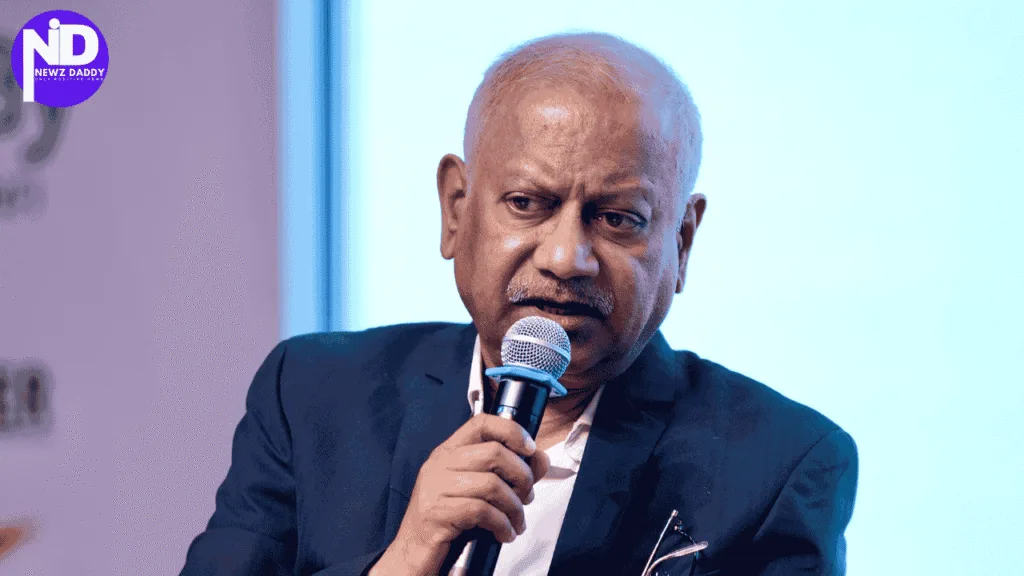
In a fireside chat titled “Lending 2.0: Rethinking Rural Credit for a Digital, Data-Driven Decade”, Shaji K V, Chairman of NABARD, spoke with Neetu Chitkara, India Leader, People Organisation Practice, BCG. He underlined the urgent need for technology-led transformation of rural financial institutions. According to current reporting, NABARD is pushing to modernise cooperatives and rural banks by using digital tools and data analytics (for example, the project of computerising Primary Agricultural Credit Societies, PACS).
Mr Shaji said that NABARD’s own transformation journey is being guided by data and technology. He also highlighted the launch of a new entity, Sahakar Sarathi Pvt Ltd. (SSPL). He envisions it as a major catalyst in rural India’s cooperative ecosystem. He believes India needs home-grown solutions that match its unique rural conditions. According to external news coverage, SSPL is expected to bring cost savings of over ₹1,500 crore annually once fully adopted by rural cooperative banks.
He said SSPL will support nearly 130 million customers across the cooperative banking network by strengthening technology adoption, lifting governance standards, and streamlining processes. The digital enablement, capacity enhancement, and improved service delivery are at the heart of this initiative. This reflects broader trends: for example, computerisation of PACS and linking them via ERP software to state and district co-op banks.
Mr Shaji called on government bodies, cooperative banks, tech partners and development agencies to collaborate and contribute to this initiative. He stressed that only collective effort can build a resilient, efficient and future-ready cooperative ecosystem for rural India. This is in line with NABARD’s vision as the apex body for rural financial institutions.
Later, during the same event, Goverdhan Singh Rawat, Deputy Managing Director of NABARD, spoke on the panel “Agri Exports & Global Value Chains”. He explained that NABARD is developing an entire cooperative stack: they are digitising the base level structure of primary agricultural credit societies, and also promoting the formation of new cooperative societies. Through this structure, NABARD aims not only to deliver credit but also non-credit services to farmers. This is consistent with the Ministry of Cooperation’s broader strategy of strengthening cooperatives via technology.
The Hyderabad session of the Earth Summit 2025-26 is held at the HITEX Exhibition Centre on 20-21 November 2025. It is designed to bring together policymakers, startups, financial institutions, digital platforms, climate-tech innovators and energy enterprises from South, East and North-east India. Reports suggest participation from over 2,000 attendees, 80+ speakers & panellists, 50+ exhibitors, 25+ sessions, and a flagship hackathon. This reflects the scale and ambition of the event.
The Earth Summit is supported by several key national ministries, including the Ministry of Electronics and Information Technology, the Ministry of Environment, Forest and Climate Change, the Ministry of Skill Development and Entrepreneurship and the Ministry of Panchayati Raj, along with the Office of the Principal Scientific Adviser to the Government of India. Their involvement shows that policy, digital infrastructure and cooperative reform are being aligned for rural development.
NABARD is leveraging data, technology and new institutional initiatives like Sahakar Sarathi to transform rural financial institutions. The Earth Summit provides the platform for this vision and for building partnerships across sectors to empower rural India’s future.