


Rural Women Entrepreneurship Shines at WEutsav 2026
EDII Leads The Celebration of Rural Women Entrepreneurship at WEutsav 2026
The vibrancy of India’s rural enterprise ecosystem came alive in Bengaluru on February 14, 2026, as WEutsav, a one-day exhibition celebrating rural women entrepreneurship, was held at the Koramangala Indoor Stadium. The event was supported by the Entrepreneurship Development Institute of India (EDII), Ahmedabad, and organised by WeAct.
This kind of exhibition shows how rural women are slowly becoming a strong part of India’s business world. In India, lakhs of women in villages now run small businesses such as handicrafts, food processing, handloom, and natural products. According to government data, women own around 20 per cent of all small businesses in the country, and this number is rising every year. Many of these women learn skills through training programmes run by institutes like EDII, which was set up in 1983 with support from major banks and financial institutions. EDII has helped train thousands of entrepreneurs, especially women and youth, and many of them now run successful businesses that support their families and communities.
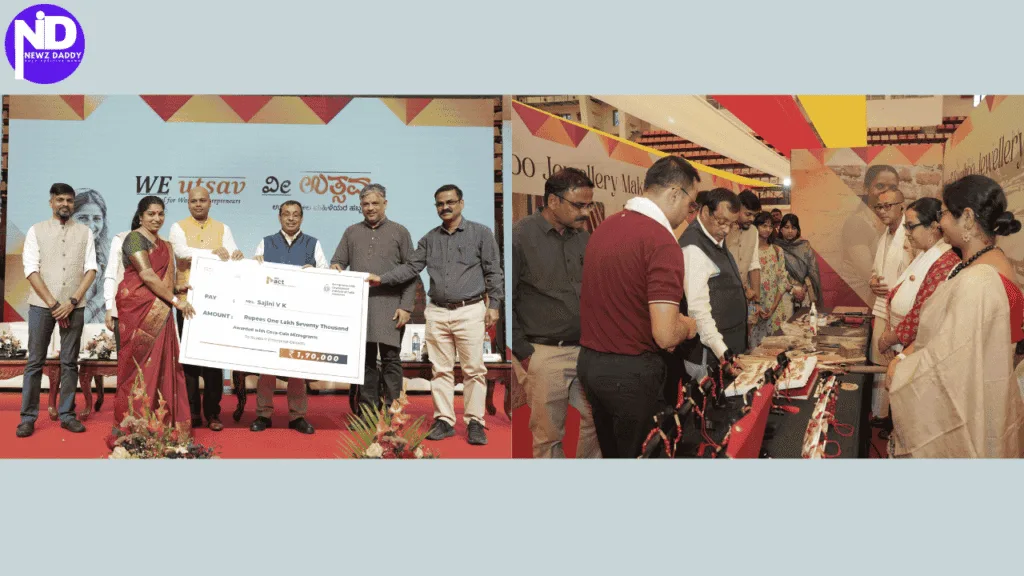
The exhibition was inaugurated by Dr Sunil Shukla (Director General, EDII), in the presence of Mr Daniel Thomas (Vice President, Corporate Social Responsibility), Prof. Dr Yathindra L (Director – NIFT), Mr Pinaki Srimany (Associate Vice President, Corporate Social Responsibility), Mr Suneel Kumar (Joint Director, DIC, Bengaluru), Ms Kirthika Tharan (Founder, Hepta Senz), and Dr Raman Gujral (Director, Department of CSR Partnerships, EDII). WEutsav brought together rural women entrepreneurs from 15 states and witnessed a footfall of approximately 2,000+ visitors. With sales worth Rs. 10,00,000, the exhibition unfolded a vibrant array of handmade, craft-based, sustainable products rooted in India’s rich cultural heritage.
Such exhibitions are very important because they give rural women direct access to buyers. Usually, women in villages depend on middlemen, who often pay them less money. But when they sell directly at exhibitions, they earn more profit and also gain confidence. India’s handicraft sector is one of the largest in the world and provides jobs to more than 70 lakh people, many of them women. These crafts include pottery, embroidery, bamboo work, handloom fabrics, and tribal art. Many of these traditions are hundreds of years old and are passed down from mothers to daughters.
Designed as an immersive experience, WEutsav featured state-wise experience zones, live craft demonstrations, cultural performances, and well-curated sales stalls. Visitors engaged directly with women entrepreneurs, witnessing the journey of products from raw material to finished craft, while understanding the stories of resilience, skill, and enterprise behind each creation.
Live demonstrations help people understand the hard work behind handmade products. For example, a handwoven saree can take several days or even weeks to complete. Natural dyes are often made from plants, flowers, and roots, which is safer for the environment. Many rural women today focus on eco-friendly products because there is a growing demand for sustainable goods both in India and abroad. Experts say that global demand for handmade and eco-friendly products is increasing as people want unique and environmentally safe items.
WEutsav reflects the strength of women entrepreneurs from across India, bringing their enterprise, culture, and innovation to a national platform. At EDII, we are committed to enabling market access, strengthening value chains, and providing the right support systems so that rural women-led businesses become sustainable and scalable within a defined timeframe.” – Dr Sunil Shukla, Director General, Entrepreneurship Development Institute of India.
Access to markets is one of the biggest challenges for rural entrepreneurs. Many women have skills but do not know how to sell their products in cities or online. Organisations like EDII help them learn business planning, packaging, pricing, and marketing. In recent years, digital platforms have also helped rural women sell products across India. With the help of mobile phones and internet access, many women now use social media and online marketplaces to reach customers directly.
At its core, WEutsav highlighted the transition from skill development to sustainable entrepreneurship, emphasising livelihood creation, women’s economic empowerment, and access to markets for rural enterprises. The exhibition was open to the public and offered free entry, attracting students, institutions, corporates, and citizens keen to support women-led rural businesses.
Women’s economic empowerment plays a big role in improving family life. Studies show that when women earn money, they spend more on their children’s education, health, and nutrition. This helps improve the future of the entire family. In rural India, women entrepreneurs are also creating jobs for others in their villages. This reduces migration to cities and helps strengthen the rural economy.
The event also celebrated individual achievements and impact. WeAct member Ms Noorjahan was honoured with the University of Notre Dame Award for Business Building under the Business Initiative, for creating sustainable economic impact through enterprise.
International recognition like this shows that rural entrepreneurs from India are now being noticed across the world. Many global organisations support women entrepreneurs because they see their strong impact on society. These awards also inspire other women to start their own businesses and become independent.
Ms Sajini and Ms Renuka were awarded cash prizes of ₹1,70,000 each under the Coca-Cola Microgrant, in recognition of their efforts to create sustainable livelihoods and drive economic empowerment at the grassroots level.
Microgrants are small financial supports that help people grow their businesses. Even a small amount can help buy tools, raw materials, or machines. Many successful businesses in India started with small grants or loans. These funds help women increase production and earn more income.
WEutsav further encouraged youth engagement, with participation from 25+ top colleges and 50+ college students in an entrepreneurship-focused initiative aimed at fostering innovation and enterprise thinking. Outstanding student teams were announced as winners and recognised for their innovative business ideas, reinforcing the importance of nurturing the next generation of entrepreneurs.
Encouraging young people is very important because India has one of the youngest populations in the world. Entrepreneurship helps create jobs and new ideas. Many colleges now teach entrepreneurship and encourage students to start their own ventures instead of only looking for jobs.
Through WEutsav, WeAct reaffirmed its commitment to strengthening rural entrepreneurship ecosystems by providing women entrepreneurs with visibility, market linkages, and recognition, with institutional support and guidance from EDII.
Events like WEutsav show that rural women are no longer just workers but are becoming business owners and leaders. With the right support, training, and opportunities, they are helping build a stronger and more inclusive economy for India.