


Sagara Pran Talmalala Touches Every Indian Heart
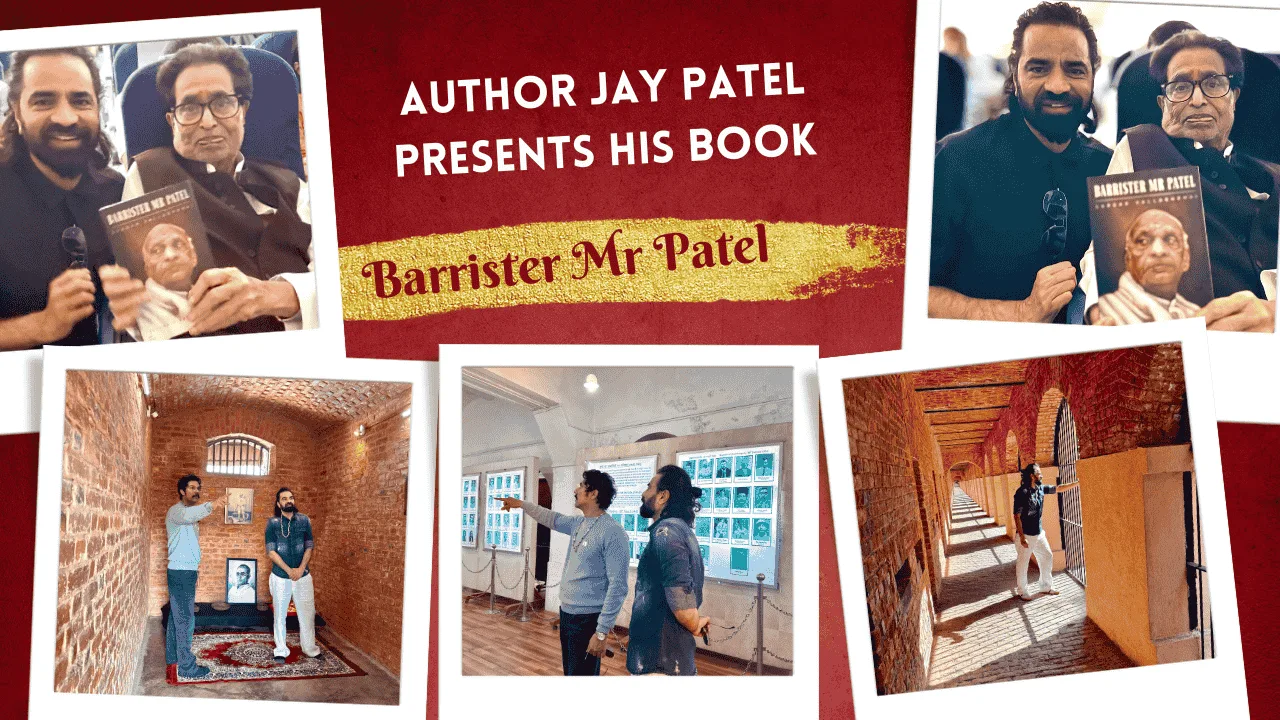
Author Jay Patel Presents His Book Barrister Mr Patel to Padma Shri Pandit Hridaynath Mangeshkar
It was a deeply moving and historic moment when author Jay Patel had the honour of presenting his book, Barrister Mr Patel, to Padma Shri Pandit Hridaynath Mangeshkar, the legendary composer and the younger brother of Bharat Ratna Lata Mangeshkar. This special meeting brought together a modern author and a towering figure of Indian music, showing how stories of the freedom struggle still touch hearts today. The setting, the Andaman and Nicobar Islands, added even more emotion, as the islands are closely linked with many stories of sacrifice from India’s fight for independence.
Also Read:
Jay Patel’s Tribute to Revolutionary Shyamji Krishna Varma
The occasion gained special significance as Patel spent meaningful time with Pandit Hridaynathji and his son Aadinath Mangeshkar in the Andaman & Nicobar Islands, coinciding with the commemoration of 115 years of the iconic patriotic poem “Sagara Pran Talmalala.” The poem was first created in 1909, and this 115-year mark turned their meeting into a living bridge between the past and the present. For the Mangeshkar family, who helped make this poem famous as a song, the visit to this historic land underlined how art can keep the memory of freedom fighters alive.

Often rendered as “Ne Majasi Ne…”, the Marathi poem powerfully expresses the agony, exile, homesickness, and unwavering patriotism of a revolutionary separated from his motherland. The words describe a patriot who feels trapped far from India, speaking to the sea as if it is a friend and witness to his pain. Even today, listeners feel the same ache for the motherland when they hear the song, which is why it is still played at cultural and patriotic programmes across Maharashtra and beyond.
In this evocative work, the sea is personified as a messenger, carrying the patriot’s yearning back to India. Savarkar imagines the ocean as a force that once promised to carry him home, and now he questions why that promise feels broken. This simple but deep image makes the poem easy to understand even for young readers, while still being strong enough to move adults to tears.
The poem was composed around 1909 on the shores of Brighton, England, when Vinayak Damodar Savarkar was a young revolutionary associated with India House, London. At that time, Savarkar was under stress from police surveillance and news of painful events at home, including the death of his young son and the arrest of his brother. Sitting by the cold English sea, he poured his sorrow and love for India into these lines, which later became one of the most famous poems in Marathi literature.
Decades later, it was immortalised in song by Lata Mangeshkar, with music composed by Pandit Hridaynath Mangeshkar, granting it an eternal place in India’s cultural and patriotic legacy. Their soulful rendition, joined at times by other members of the Mangeshkar family, turned the poem into a staple of radio, television and public events, especially on national days. For many Indians, the tune of “Sagara Pran Talmalala” is now as familiar as the national songs they grew up hearing in school.
The commemorative event took place at the site of a newly unveiled statue of Veer Savarkar in Sri Vijayapuram (Port Blair), drawing thousands of attendees and eminent dignitaries, including Union Home Minister Amit Shah, RSS Sarsanghchalak Dr Mohan Bhagwat, Lieutenant Governor of Andaman & Nicobar Islands Admiral D. K. Joshi, Padma Shri Pandit Hridaynath Mangeshkar, actor and filmmaker Randeep Hooda, investor and author Jay Patel, and historian Vikram Sampath. The statue stands close to the place once feared as Kaala Paani, where many revolutionaries, including Savarkar himself, were jailed under harsh conditions by the British. Leaders at the event described the islands as sacred ground, soaked in the sacrifices of countless freedom fighters whose stories are now being retold for a new generation.

The gathering paid tribute to Savarkar’s revolutionary legacy through a series of cultural, literary, and commemorative programmes that reflected the enduring power of his ideas and sacrifices. Recitations of “Sagara Pran Talmalala” and references to Savarkar’s writings reminded the audience of his fierce call for national unity and courage. Speakers also stressed that such events are not just about honouring the past, but about inspiring young Indians to serve the country in their own fields today.
Actor Randeep Hooda, who portrayed Vinayak Damodar Savarkar in his 2024 directorial film Swatantrya Veer Savarkar, revisited the Cellular Jail in Port Blair, where Savarkar was once imprisoned. His film explored Savarkar’s long years in jail, including the suffering in solitary cells and hard labour that gave the Andaman prison its dreaded “black water” reputation. For many viewers, the movie opened a window into aspects of Savarkar’s life that are often left out of school textbooks, sparking new debates and discussions online and in public life.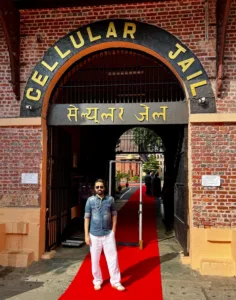
Author Jay Patel, who portrayed Shyamji Krishna Varma in the film, also marked the occasion by revisiting the historic site, symbolically bridging history, literature, and cinema. Shyamji Krishna Varma, like Savarkar, used his time in London to build secret networks and support young Indians in their fight for freedom, especially through India House. By writing about these figures and also playing them on screen, Patel has tried to make complex freedom stories simple and relatable for today’s audience.
Reflecting on the experience, they said, “Sri Vijayapuram (Port Blair). Cellular Jail. 115 years of Sagara Pran Talmalala! To revisit the very Cellular Jail where Veer Savarkar once suffered, where a major portion of Swatantrya Veer Savarkar was filmed, and to witness the unveiling of his statue in what was once the dreaded Kaala Paani, feels deeply personal. History may remember slowly, but truth endures.” Their words echoed the feelings of many who visited the site, where dark prison cells now stand beside new memorials, songs and statues. For those present, the day felt like a circle closing: from Savarkar’s lonely walk on the Brighton shore in 1909 to a crowded, proud gathering in Andaman more than a century later.
The convergence of literature, music, cinema, and history at this momentous event served as a powerful reminder of India’s enduring struggle for freedom and of the revolutionaries and artists who ensured that its spirit continues to resonate across generations. As “Sagara Pran Talmalala” continues to be sung in new versions on television, social media, and live stages, it keeps bringing fresh attention to the ideals of courage and sacrifice that shaped modern India. In the Andaman sea breeze, with the new statue of Savarkar looking on, that timeless message felt alive once again for everyone present.
Also Read:
Jay Patel Embraces Gujarat’s Garba With Heart
New York Honours Indian-Origin Jay Patel with Healthcare Hero Award 2025 for Public Health Impact