


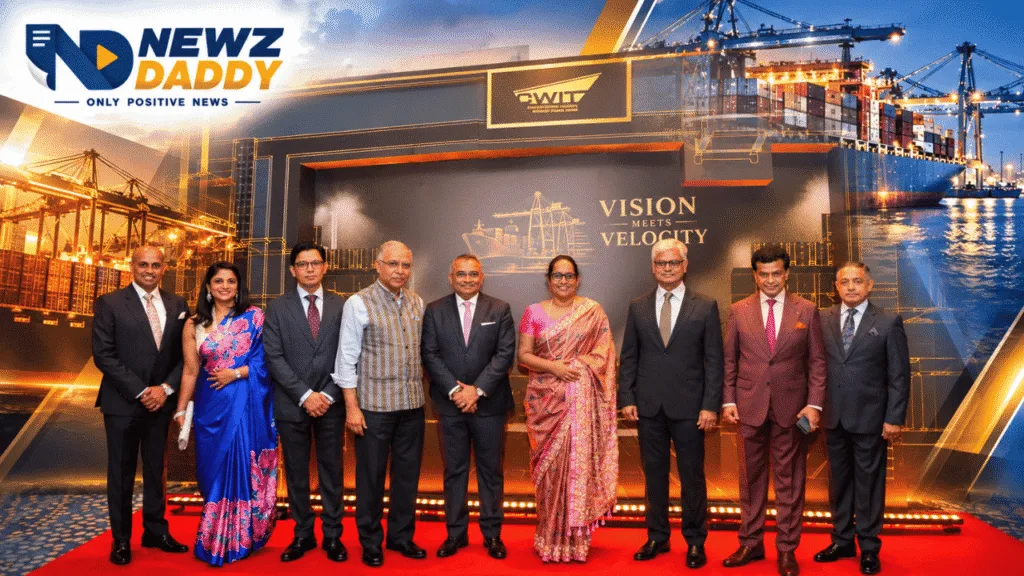
Sri Lanka PM Opens Colombo Terminal’s New Phase II Facility
APSEZ Expands Colombo Terminal Capacity to 3.2 Million TEUs with USD 750 Million Investment
Sri Lankan Prime Minister Harini Amarasuriya inaugurates Phase II of Colombo West International Terminal as the facility records 2 million TEUs in its first 18 months.
COLOMBO, 1 October 2026: Sri Lankan Prime Minister Dr Harini Amarasuriya inaugurated the second phase of the Colombo West International Terminal (CWIT) on Thursday, following a USD 750 million investment by Adani Ports and Special Economic Zone (APSEZ) and its partners.
The expansion has doubled the terminal’s annual handling capacity from 1.6 million to 3.2 million twenty-foot equivalent units (TEUs), the standard measure used in the container shipping industry. The new capacity supports CWIT’s plan to handle nearly 25% of the Port of Colombo’s targeted 13 million TEUs by 2028.
The expansion comes as the terminal marks another operational milestone. CWIT handled 2 million TEUs within its first 18 months of operation, following its earlier record of handling 1 million TEUs within its inaugural year in 2024.
The figures reflect the growing volume of container traffic passing through Colombo, a major port for cargo moving between Asia, Europe and other international markets.
Speaking at the inauguration, Prime Minister Harini Amarasuriya said: “The success of Colombo West International Terminal demonstrates what Sri Lanka can achieve when bold vision, trusted partnerships and modern infrastructure come together. Reaching 2 million TEUs in record time and commencing Phase II today is not just a milestone for the Port of Colombo, but a milestone for our nation’s economic future. As Sri Lanka strengthens its position at the crossroads of global trade, investments such as CWIT are creating jobs, attracting international commerce, enhancing competitiveness, and reinforcing our ambition to become the leading maritime and logistics hub of the Indian Ocean.”
Colombo’s location gives it an important role in international shipping. The port sits close to major East-West sea routes connecting Asian manufacturing centres with markets in Europe, the Middle East and Africa. Many ships stop at Colombo to transfer containers between vessels rather than deliver goods directly to Sri Lanka.
This process, known as transhipment, is a major part of the port’s business. Shipping companies use such ports to move cargo between smaller regional vessels and larger ships operating on international routes. More terminal capacity can give shipping lines additional options when planning their routes and handling cargo.
The Port of Colombo has several container terminals. CWIT’s expansion adds to the port’s ability to handle larger vessels and greater cargo volumes. Its target of 3.2 million TEUs represents nearly a quarter of the port’s planned 13 million TEU capacity by 2028, based on the figures announced for the project.
The terminal is operated by a partnership involving APSEZ, John Keells Holdings and the Sri Lanka Ports Authority (SLPA). The three organisations are working under a 35-year Build, Operate and Transfer (BOT) concession. Under this arrangement, the project partners develop and operate the facility for the agreed period, while the public authority remains part of the long-term port development structure.
The project agreement was signed on 30 September 2021. Construction began in early 2022, and the terminal started operations in April 2025. Its development formed part of Sri Lanka’s wider efforts to attract investment into port infrastructure and strengthen its position in international maritime trade.
The terminal’s physical features support its ability to handle large ships. Its 1,400-metre quay and 20-metre water depth were part of the original development design. The facility uses automated equipment, including rail-mounted gantry cranes, to move containers within the terminal.
APSEZ Whole-Time Director and Chief Executive Officer Ashwani Gupta said: “Doubling CWIT’s capacity to 3.2 million TEUs with a USD 750 Mn investment is a direct statement of confidence from APSEZ and from the global shipping lines. Phase II is a landmark for APSEZ’s international portfolio and sharpens our position across the Indian Ocean’s key trade corridors. With expanded capacity, full automation and deep-water infrastructure, CWIT is built to be Colombo’s premier transhipment gateway and contribute to EXIM cargo in Sri Lanka”
For Sri Lanka, the project also brings employment. CWIT has generated more than 3,000 direct and indirect jobs, according to the announcement. These include work linked to terminal operations and supporting activities. The expansion may create further demand for workers and services as cargo volumes increase, although no additional employment target was announced.
Environmental performance is another part of the terminal’s operations. CWIT is designed for fully electrified operations with zero tailpipe emissions. Its equipment and systems are intended to reduce pollution from terminal activities. The facility has also recorded 17 million safe working hours, according to the company.
The terminal’s growth comes as Sri Lanka continues to develop its port and logistics sector. The country’s location along major shipping routes allows it to serve international cargo movements. Its ability to attract shipping lines and manage growing container traffic will remain important as regional ports compete for business.
For APSEZ, the Colombo project adds to its international operations and expands its presence beyond India’s coastline. For John Keells Holdings, the terminal is a major infrastructure investment in its home market. The Sri Lanka Ports Authority, as the country’s port authority and a project partner, also has a role in the facility’s long-term development.
The next measure of the expansion will be how effectively CWIT uses its increased capacity. Its target of handling nearly a quarter of the Port of Colombo’s planned 13 million TEUs by 2028 will depend on cargo demand, shipping line activity and the port’s ability to manage rising traffic.
With the Phase II expansion now inaugurated, CWIT has moved into a new stage of operations. Its performance over the coming years will help show how the additional capacity affects Colombo’s position in international container shipping and Sri Lanka’s maritime trade.
Must Read:
APSEZ to launch Empty Container Yard at Mundra Port in Gujarat