


Sterling Hospitals Ahmedabad Saves Burned Child’s Life
Newz Daddy Health Care Updates
Sterling Hospitals Saves 10-Year-Old with 86 Percent Burns after Gas Geyser Blast
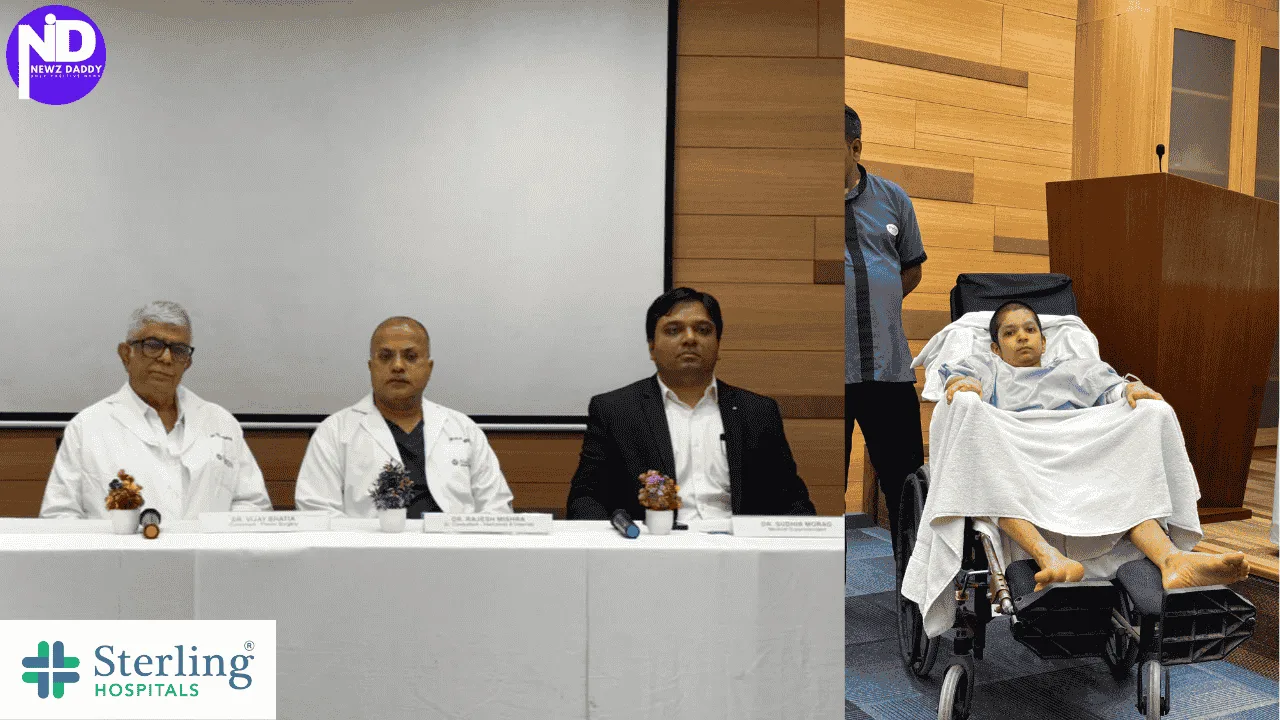
Ahmedabad, 20 February 2026: In a remarkable medical success, Sterling Hospitals, Ahmedabad, has saved the life of a 10-year-old boy who suffered 86 percent burn injuries following a gas geyser blast in Rajasthan. The explosion left the child and his father critically injured. After initial emergency care in Rajasthan, the child was urgently shifted to Sterling Hospitals, Ahmedabad, where a specialised medical team led by Dr Vijay Bhatia began immediate treatment.
Gas geyser blasts are known to be very dangerous, especially inside homes. Such blasts often happen due to gas leaks, poor ventilation, or faulty installation. In India, winter months see more such accidents because families use geysers more often. Medical experts say children are at greater risk because their skin is thinner and burns more deeply compared to adults. This makes early transfer to a specialised burn centre very important.
According to Dr Vijay Bhatia, patients with more than 86 percent burn injuries, particularly children, have a survival rate of only around 10 percent. However, timely intervention, advanced burn care and continuous monitoring played a decisive role in this case. The boy’s father, who sustained nearly 35 percent burn injuries, was also treated successfully at the hospital.
Doctors explain that when burns cover 60 percent of the body, the danger increases sharply. The body loses fluids quickly, and organs such as the kidneys and lungs may stop working properly. Children are even more vulnerable because their immune systems are still developing. Survival depends on quick treatment, clean wound care, and strong organ support in the ICU.
Initially assessed as 86 percent burns at the referring centre, a detailed evaluation at Sterling Hospitals confirmed approximately 86 percent predominantly second-degree burns. Early initiation of collagen-based biological dressing proved critical in saving the child’s life. All vital parameters were carefully maintained until healing, reflecting strong coordination among plastic surgery, intensive care, anesthesiology and nursing teams.
Second-degree burns damage both the outer and inner layers of the skin. These burns cause severe pain, swelling and risk of infection. Collagen dressings help protect the wound and support natural healing. Collagen acts like a cover and helps new skin grow faster. Studies have shown that such biological dressings reduce infection and improve survival in major burn cases.
The incident occurred on 18 January 2026, when a gas geyser blast severely injured the father and son at their residence in Chittorgarh in Rajasthan. The child, who suffered extensive burns, was first admitted to a local hospital before being referred to Sterling Hospitals, Ahmedabad. Dr Vijay Bhatia, Consultant Plastic Surgeon, stated that the child’s critical condition and young age required a carefully planned treatment approach. Medical evaluation confirmed a second-degree burn injury, and treatment using biological skin covers was initiated, which proved effective.
Experts say that the first few hours after a burn injury are called the golden period. During this time, giving fluids, controlling pain, and covering wounds properly can save lives. Special burn centres have trained teams and equipment that normal hospitals may not have. This is why quick referral to a burn ICU is often life-saving.
Dr Vijay Bhatia further explained that in India, burn injuries involving 86 percent of the body are considered extremely serious and carry a high risk of mortality. Survival in such cases generally ranges around 10 percent and depends on factors such as age, timely treatment, availability of burn ICU facilities, infection control and organ support. Despite these challenges, the child responded well to treatment.
In India, lakhs of burn injuries are reported every year. Many happen at home due to cooking accidents, gas leaks, and electrical faults. Infection is one of the biggest dangers after burns because the skin, which protects the body, is damaged. Modern ICUs use strict hygiene, antibiotics, and monitoring to prevent infection and save patients.
Dr Rajesh Mishra, Consulting Senior Intensive Care Specialist, said, “Extensive burns in a child require continuous monitoring and precise critical care management. Our focus was on maintaining stable vital parameters, fluid balance and preventing infection through coordinated teamwork, which was key to achieving a successful outcome.”
Fluid balance is very important in burn patients. The body loses water through damaged skin. Doctors give fluids through the veins to prevent shock. Monitoring heart rate, breathing, and urine helps doctors understand if the body is recovering well.
The anesthesiology team played a crucial role by ensuring safe airway management, effective pain control and stable vital parameters during emergency care and repeated procedures, significantly supporting the child’s recovery.
Severe burns can affect breathing because heat and smoke may damage the airway. Anesthesiology teams help patients breathe safely and manage pain. Pain control is important because it reduces stress and helps with healing.
Mr Santosh Marathe, MD & CEO, Sterling Hospitals, said, “This case highlights the importance of careful teamwork and timely treatment in managing severe burn injuries in children. Sterling Hospitals has senior clinicians like Dr Vijay Bhatia anda qualified medical team for their dedication and expertise, which played a key role in saving the child’s life and supporting a smooth recovery. Following specialised care at Sterling Hospitals Gurukul, the child showed rapid improvement and recovered within six to seven days.”
Recovery in burn cases can take weeks or months. Early healing in this case shows how advanced treatment can make a big difference. Children often heal faster than adults if the infection is controlled and proper nutrition is given.
Adding to this, Mr Raman Bhaskar, Zonal Director, Sterling Hospitals, Ahmedabad, said, “At Sterling Hospitals, our priority is to provide advanced, evidence-based critical care with compassion. Managing an 86 percent burn case in a child requires coordinated efforts across specialities, including plastic surgery, intensive care, infection control and rehabilitation. We are proud of our clinical team for demonstrating exceptional commitment and expertise in ensuring a positive outcome in such a challenging case.”
Rehabilitation is also an important step. It helps patients regain strength and movement. Physiotherapy and follow-up care help prevent scars from affecting daily life.
Following specialised care at Sterling Hospitals’ multispecialty unit, the child showed rapid improvement and recovered within a few days. He required ICU support only briefly and was later shifted to a normal ward as his condition stabilised. His father, who sustained 37 percent burn injuries, also recovered well under treatment at the same hospital. Doctors have confirmed that the injuries will not affect the long-term life expectancy of either patient.
This case highlights how quick action, modern treatment, and teamwork can save lives even in the most critical burn injuries. It also serves as an important reminder for families to use gas appliances safely and ensure proper installation and ventilation at home.
Must Read:
Rajkot Miracle: Sterling Hospitals Preserves Lives in Cases of Severe Burns
Sterling Hospitals Emergency Ambulance Transforms City Safety