


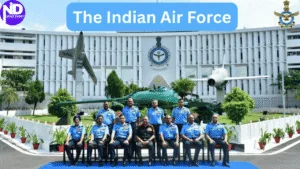
The Indian Air Force (IAF) is a key pillar of India’s defence system, responsible for securing the country’s airspace and supporting operations on land and sea. Established on 8 October 1932, the IAF has grown into one of the most powerful air forces in the world. Its core mission is to defend Indian skies, conduct aerial warfare, and provide rapid response during both military and humanitarian operations.
The primary role of the Indian Air Force is to ensure air superiority. This means controlling the skies during conflict to prevent enemy aircraft from operating freely. Fighter jets like the Sukhoi Su-30MKI, Rafale, and Tejas form the backbone of this capability. These aircraft are equipped with advanced radar systems, precision-guided weapons, and high-speed maneuverability, allowing the IAF to respond quickly to any threat.
The IAF also plays a critical role in supporting ground forces. During military operations, it provides close air support, reconnaissance, and logistics. This coordination between the Army and the Air Force is essential for effective combat operations. For example, during the Kargil conflict in 1999, the IAF carried out precision strikes on enemy positions in high-altitude terrain, which proved crucial in regaining control.
Transport and logistics are another major responsibility. The IAF operates a fleet of transport aircraft such as the C-17 Globemaster and C-130J Super Hercules, along with helicopters like the Chinook and Mi-17. These assets allow the Air Force to move troops, equipment, and supplies quickly across the country, including remote and high-altitude areas like Ladakh and the Northeast. This capability ensures that forces remain well-supported in difficult conditions.
Humanitarian assistance and disaster relief are also central to the IAF’s work. It is often the first to respond during natural disasters such as floods, earthquakes, and cyclones. The Air Force conducts rescue missions, delivers relief materials, and evacuates civilians from affected areas. For instance, during the 2018 Kerala floods, the IAF played a major role in rescuing stranded people and providing essential supplies.
Modernization remains a top priority for the Indian Air Force. With changing warfare technology, the IAF is upgrading its aircraft, weapons systems, and surveillance capabilities. The induction of Rafale fighter jets has enhanced its combat strength, while indigenous projects like the Tejas Light Combat Aircraft support self-reliance. Investments in air defense systems, drones, and cyber capabilities are also shaping the future of the force.
Training and discipline are central to the effectiveness of the IAF. Personnel undergo rigorous preparation at institutions like the Air Force Academy in Dundigal. Pilots, engineers, and ground staff are trained to operate advanced systems under high-pressure conditions. Precision, quick decision-making, and coordination are essential skills in air operations.
The Indian Air Force also engages in international exercises with other countries, improving interoperability and sharing best practices. Exercises with nations like the United States, France, and Australia strengthen strategic partnerships and enhance operational readiness.
As threats evolve, the role of the Indian Air Force continues to expand. It is not only a defensive force but also a key element of India’s strategic power. With its speed, reach, and technological edge, the IAF ensures that India remains prepared to protect its sovereignty and respond to any challenge in the air.