

Union Budget 2026 Education Reforms Aim to Power New India
Union Budget 2026 education reforms open doors for young India
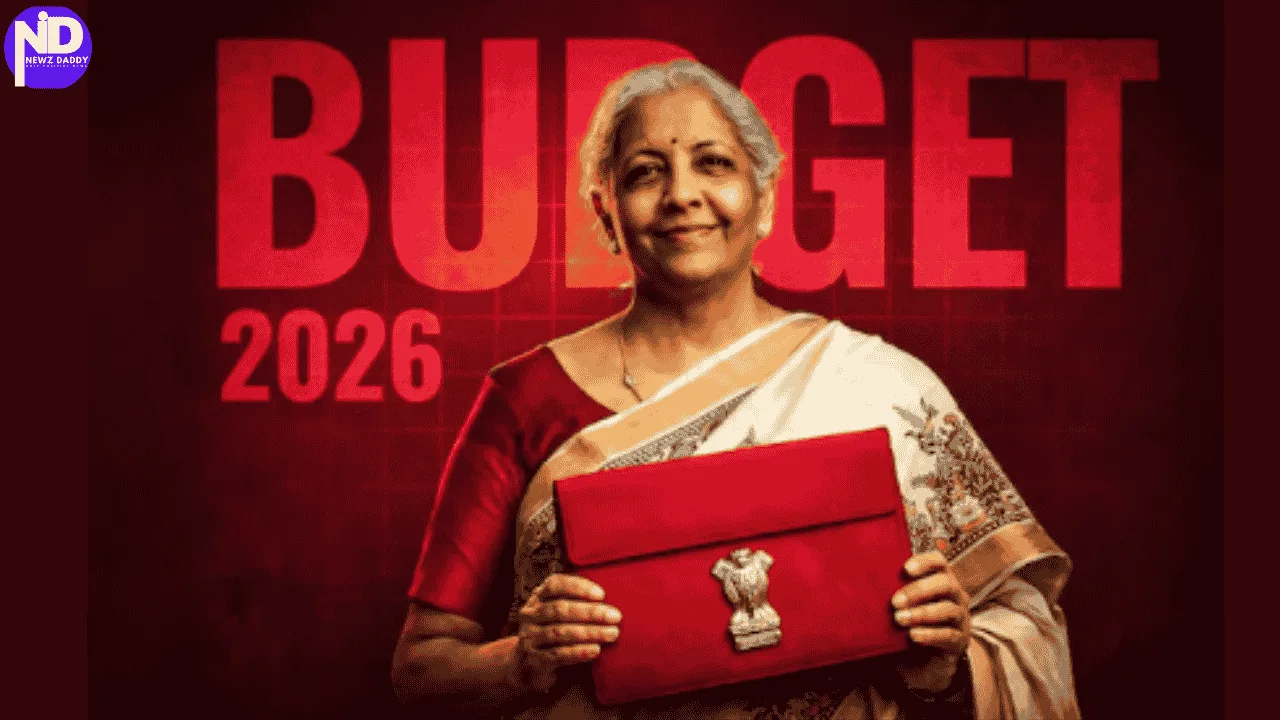
The Union Minister for Finance and Corporate Affairs, Smt. Nirmala Sitharaman presented the Union Budget 2026-27 in Parliament today. The Union Budget proposes to set up a High-Powered ‘Education to Employment and Enterprise’ Standing Committee to recommend measures that focus on the Services Sector as a core driver of Viksit Bharat. This will make India a global leader in services, with a 10% global share by 2047. The Committee will prioritise areas to optimise the potential for growth, employment and exports. They will also assess the impact of emerging technologies, including AI, on jobs and skill requirements and propose measures thereof.
The services sector already contributes more than half of India’s GDP and employs millions across IT, finance, tourism, healthcare, logistics and creative industries. Experts have long pointed out that education and job markets often move at different speeds, creating skill gaps. A standing committee with a long-term view can help bridge this gap by aligning college courses with real job needs. With artificial intelligence changing how work is done, many routine roles are expected to shrink, while new roles in data, design, cyber safety and digital services will grow. Global studies suggest that countries investing early in skills mapping and retraining tend to see better job stability. This committee can also help smaller service exporters, such as start-ups and MSMEs, by recommending policy support and training that match global demand.
The Indian design industry is expanding rapidly, and yet there is a shortage of Indian designers. The Union Budget proposes to establish, through a challenge route, a new National Institute of Design to boost design education and development in the eastern region of India.
India’s design sector supports manufacturing, digital products, fashion, crafts and urban planning. While demand is rising, many firms still depend on limited talent pools concentrated in a few cities. Eastern India has strong traditional crafts, textiles and art forms, but fewer national-level design institutions. A new institute can help local students access high-quality education closer to home. Research in education shows that design-led thinking improves innovation across industries, from small businesses to large factories. By using a challenge route, the government also encourages states and institutions to compete on quality, infrastructure and long-term vision rather than location alone.
The Government will support States, through a challenge route, in creating 5 University Townships in the vicinity of major industrial and logistic corridors. These planned academic zones will host multiple universities, colleges, research institutions, skill centres and residential complexes.
University townships near industrial corridors can shorten the distance between classrooms and workplaces. Countries with strong university–industry links often see faster research use and better student jobs. Such townships allow students to gain internships, apprenticeships and real project exposure while studying. They also attract teachers, researchers and companies into one shared space, improving collaboration. Over time, these zones can reduce migration pressure on big cities and create new education hubs in emerging regions. Planned housing and transport within townships also improve safety and daily life for students and staff.
In the Higher Education STEM institutions, prolonged hours of study and laboratory work pose some challenges for female students. The Union Budget proposes to establish 1 girls’ hostel in every district through VGF/capital support.
Access to safe and affordable accommodation is a major reason many girls drop out after school. Studies in India show that hostel availability directly improves enrolment and attendance for female students, especially in science and technical courses. District-level hostels can help students from rural and small-town backgrounds continue higher education without long daily travel. Capital support and viability gap funding reduce the cost burden on states, making faster construction possible. Over time, this step can improve gender balance in research labs, engineering colleges and technical professions.
To promote Astrophysics and Astronomy via immersive experiences, 4 Telescope Infrastructure facilities will be set up or upgraded – the National Large Solar Telescope, the National Large Optical infrared Telescope, the Himalayan Chandra Telescope and the COSMOS 2 Planetarium.
India has a strong history in space science and astronomy, with growing global respect. Modern telescope facilities help scientists study solar activity, distant galaxies and cosmic events with greater accuracy. They also support student training and international research partnerships. Planetariums and observatories play a key role in public science education by sparking curiosity among school children. Countries that invest in visible science infrastructure often see higher interest in STEM careers. These upgrades can place India among the leading nations in observational astronomy while inspiring the next generation of scientists.
Overall, the education-focused measures in the Union Budget 2026-27 show a clear effort to link learning with jobs, inclusion and future technologies. By combining skills planning, regional education growth, gender support and advanced science infrastructure, the proposals aim to build a stronger and more balanced knowledge economy for the years ahead.