


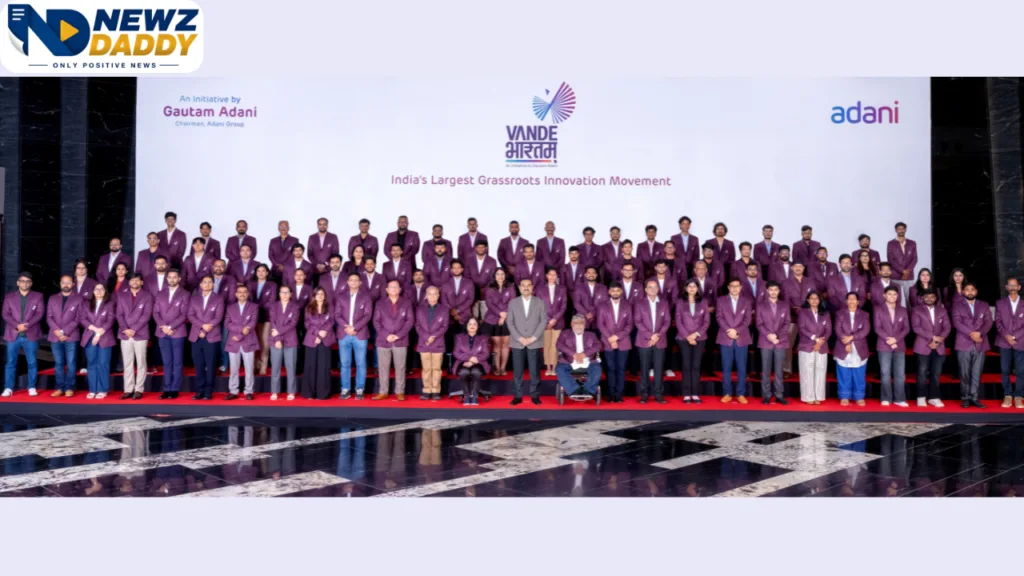
Vande Bharatam Selects First Cohort From 26,000+ Entries
Vande Bharatam draws more than 26,000 applications as first cohort heads to Ahmedabad
More than 26,000 applications from across India have led to the selection of the first cohort of Vande Bharatam, the nationwide innovation and entrepreneurship initiative launched by Adani Group Chairman Gautam Adani.
The programme has received entries from every State and Union Territory, with applicants putting forward ideas in areas such as mobility, sustainability, technology, agriculture, defence, healthcare, manufacturing and education. The selected group now moves into a programme of mentoring, business interaction and further evaluation in Ahmedabad.
Vande Bharatam was launched by Gautam Adani on 25 June 2026, on his 64th birthday. The initiative was presented as an attempt to find entrepreneurs and problem-solvers outside India’s better-known start-up centres. Its original plan covered all 36 States and Union Territories and more than 800 districts. It was open to people of different ages, professions and educational backgrounds, including those with an idea, prototype, early-stage venture or established business. A registered start-up was not required.
The scale of the response puts the current selection in the wider context of India’s fast-growing start-up sector. The country is now the world’s third-largest start-up ecosystem. Government figures released in June said India had more than 2.3 lakh Department for Promotion of Industry and Internal Trade-recognised start-ups. Nearly half of recognised start-ups were coming from Tier-II and Tier-III cities, showing that new businesses are increasingly being built outside the biggest metropolitan centres.
That shift is important to Vande Bharatam’s stated purpose. The initiative was created around the idea that a good business idea can come from a small town, village or community as easily as from a major city. Its organisers have said the programme is intended to give promising applicants access to people and institutions that may otherwise be difficult to reach.
The first cohort represents a wide mix of sectors and locations. The ideas cover practical problems in transport, farming, healthcare, defence, manufacturing and education, as well as technology and environmental concerns. Such a spread also reflects the changing nature of India’s start-up market, where technology is increasingly being applied to traditional sectors rather than being limited to software and consumer internet businesses.
At the launch of Vande Bharatam, the Adani Group said the programme would use a structured evaluation process based on innovation, entrepreneurial potential, impact and scalability. State and regional evaluations were to be followed by a national selection process. The original plan was to bring 75 finalists to Ahmedabad for an intensive programme involving mentors, investors, business leaders and industry experts.
The first cohort will now take part in Vande Bharatam Immersive Week. The programme includes mentoring sessions and meetings with business leaders, entrepreneurs and experts, followed by further rounds of evaluation. The process is due to end with a Grand Finale, where outstanding innovators will be recognised with the Vande Bharatam Trophy.
Gautam Adani said: “When I look at these innovators, I see the possibilities of tomorrow’s Bharat. Talent has no city limits, and opportunity should not have them either. Years from now, I hope we will look back at this first cohort and see among them the founders and innovators who went on to build enterprises that transformed Bharat. This is their initial chapter. And it is Vande Bharatam’s first chapter too.”
The initiative has also been designed to include groups that can face extra barriers when seeking business support. Its official programme lists special categories for women entrepreneurs, tribal innovators, rural changemakers, sustainable businesses and entrepreneurs from the Divyang community. The programme also allows institutions, incubators, colleges, mentors, judges, venture capitalists and other participants to take part in different roles.
The focus on people beyond established start-up centres comes at a time when India is trying to spread entrepreneurship across a much wider part of the country. Startup India, launched in 2016, helped create a national policy framework for new businesses. Over the past decade, the number of recognised start-ups has risen sharply, while cities outside the main technology hubs have taken a larger share of new ventures.
For the innovators selected by Vande Bharatam, the value of the programme may depend on what happens after the selection process. Mentoring can help founders test their business plans, while meetings with investors and industry leaders can provide access to capital, customers, suppliers and experienced advice. The real measure will be whether ideas that enter the programme can develop into viable businesses and create jobs or solve problems at scale.
The initiative’s longer-term plan is to continue connecting participants with mentors, investors, industry leaders and other entrepreneurs after the main event. Its stated purpose is therefore broader than the final award. The programme seeks to create a national route through which ideas from less recognised entrepreneurial centres can reach people who can help turn those ideas into businesses.
The first cohort is now in Ahmedabad, placing the city at the centre of the next stage of the programme. For the applicants who made the cut, the coming days will bring another round of testing and presentation. For Vande Bharatam, the larger question is whether a national search can find promising founders who may otherwise have remained outside India’s established start-up network.
Must Read:
Vande Bharatam Gujarat Brings National Focus to Ahmedabad
Vande Bharatam, An Initiative By Gautam Adani