

Viksit Bharat 2047 Lights a National Dream at Sanskar Dham
Sanskar Dham Celebrates Life and Services of India’s Hon’ble Prime Minister Shri Narendra Modi with Namotsav
The message of Viksit Bharat by 2047 has become a central idea in India’s public life over the past few years. When the Hon’ble Union Home Minister Shri Amit Shah said that Prime Minister Narendra Modi has ignited the confidence of 140 crore Indians, it reflected a wider national mood. Since 2014, India has seen large-scale programmes focused on roads, railways, housing, sanitation, digital services and direct benefit transfers. These efforts have helped many families feel more connected to government support and national growth, which has strengthened public confidence in the country’s direction.

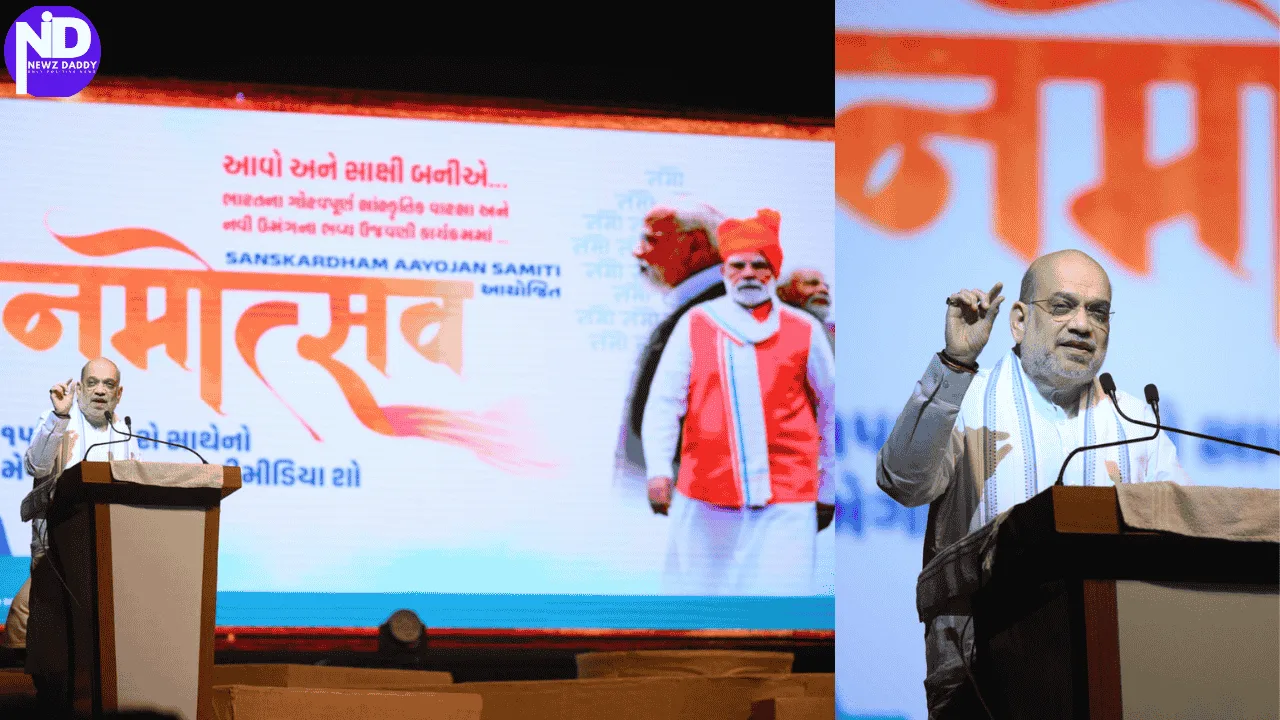
The Namotsav event at Sanskar Dham in Ahmedabad placed this idea of confidence and service in a cultural setting. India’s first musical multimedia show on the life of a serving Prime Minister is notable because public storytelling through art has long played a role in Indian society. From folk theatre to modern stage shows, cultural expression has often been used to explain leadership, values and national goals in a way that is easy for people of all ages to understand. Namotsav followed this tradition by blending music, visuals and live performance to present Prime Minister Narendra Modi’s journey.
The presence of senior leaders such as Shri Amit Shah, Gujarat Chief Minister Shri Bhupendrabhai Patel and Deputy Chief Minister Shri Harshbhai Sanghavi underlined Gujarat’s special connection with the Prime Minister. Gujarat has been closely linked to many of the governance models later adopted at the national level, including administrative reforms, infrastructure planning and ease of doing business. For many citizens, seeing national and state leaders together at a cultural event sends a message of unity and shared purpose.
The idea of Viksit Bharat 2047 is tied to the 100th year of India’s independence. Government discussions around this goal often focus on long-term planning in areas such as manufacturing, technology, education, energy and social welfare. Over the last decade, schemes aimed at women, farmers, youth and small entrepreneurs have expanded their reach. Programmes for bank accounts, cooking gas connections, toilets and affordable housing have been widely reported for improving daily life, especially in rural areas. These changes help explain why the vision of a developed India finds strong public support.
Namotsav’s focus on Prime Minister Modi referring to himself as Vakil Saheb’s karyakarta connects leadership with humility. Lakshmanrao Inamdar, known as Vakil Saheb, is remembered in Gujarat as a teacher who believed in discipline, values and public service. This link highlights a broader theme in Indian politics where mentors and moral grounding are seen as important in shaping leaders. For many attendees, this reminder reinforces the idea that leadership begins with service rather than power.
As a three-day cultural festival, Namotsav also showed how large public events are increasingly designed to educate as well as entertain. With more than 150 performers and the involvement of popular Gujarati artist Sairam Dave, the event reached people beyond formal political audiences. Such programmes help younger generations learn about national figures engagingly, especially at a time when attention spans are shaped by digital media.
Sanskar Dham’s role in hosting Namotsav is closely linked to its educational mission. The institution’s emphasis on sanskar, or values, reflects a long-standing Indian belief that education should shape character as well as skills. This thinking aligns with the National Education Policy 2020, which promotes holistic learning, ethical values and critical thinking. Schools that blend academics with moral education aim to prepare children not only for jobs, but also for responsible citizenship.
The work of institutions like Laxman Gyanpith School and Global Mission International School shows how values-based education is being practised on the ground. By focusing on awareness, discipline and social responsibility, such schools respond to growing concerns about stress, competition and lack of direction among students. Parents increasingly look for learning spaces that offer balance rather than only exam results.
In higher education, Anant National University’s focus on solving global problems reflects a shift in Indian education. Universities are now encouraged to link learning with real-world challenges such as climate change, urban planning and sustainable design. This approach helps students see education as a tool for impact, not just personal success. Skill-based institutions like the Sports Academy and Drone Academy also match India’s push towards specialised training and new-age careers.
The planned NAMTECH initiative fits into India’s wider effort to connect education with industry. Collaboration with international institutions and industry experts mirrors national policies that encourage global partnerships and innovation. Experiential learning models are increasingly seen as effective because they allow students to learn by doing, which is especially helpful in technology-driven fields.
In the end, Namotsav stood as a tribute to collective effort. By honouring karmayogis who contributed to Sanskar Dham’s journey, the event highlighted the often unseen work of teachers, volunteers and organisers. This focus on shared contribution echoes the larger message of Viksit Bharat 2047, where national progress is presented as a joint responsibility of leaders and citizens alike.
MustRead:
Empowering India’s Youth: Highlights from the Youth for Quality Bharat Festival