


Adani Airport City Project to Invest ₹20,000 Crore Across India
Adani Airports Plans ₹20,000 Crore Airport City Network Across Six Indian Airports
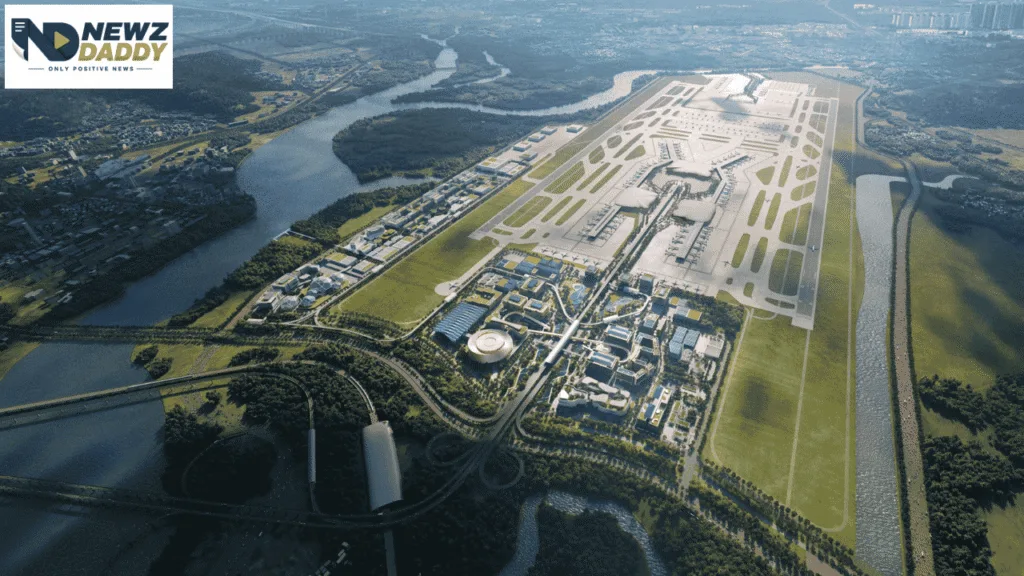
Adani Airport City Limited (AACL), a wholly owned subsidiary of Adani Airport Holdings Limited (AAHL), has announced plans to invest more than ₹20,000 crore in the first phase of a large airport city programme that will cover over 655 acres across six airports in five states. The company said the project will bring hotels, offices, shopping areas, convention centres, entertainment spaces and other commercial facilities closer to major airports.
The first phase will include around 22 million square feet of mixed-use development at airports in Mumbai, Navi Mumbai, Ahmedabad, Lucknow, Jaipur and Guwahati. Nearly 440 acres of the total land bank is located in Mumbai and Navi Mumbai. Around 70 per cent of the planned investment will be directed towards these two locations because of the Mumbai Metropolitan Region’s importance as India’s financial and business centre.
The announcement comes as India’s civil aviation sector continues to expand. According to official government data, India has become one of the world’s fastest-growing aviation markets, supported by rising domestic air travel, airport modernisation and increasing private investment. Passenger traffic has grown steadily over the past decade, encouraging airport operators to look beyond aviation services and develop business districts around airport land.
Instead of limiting airports to passenger terminals and aircraft operations, airport operators in many countries now develop nearby commercial districts that attract offices, hotels, conference venues, retail businesses and leisure facilities. Similar developments can be found around Singapore Changi Airport, Dubai International Airport, Amsterdam Airport Schiphol and Seoul Incheon International Airport. These projects have become important business locations while creating jobs and supporting tourism.
Adani’s proposed developments are expected to follow a similar approach. The company said each site will be planned as a connected district where travellers, residents and businesses can reach hotels, restaurants, offices, retail outlets and entertainment facilities through links with airports, Metro services and city transport systems.
Jeet Adani, Director of Adani Airport Holdings Limited, said, “Around the world, the most successful airport districts have become centres of commerce, tourism and urban growth. As India’s aviation market expands, airports have an opportunity to create value far beyond aviation. We are creating a network of integrated urban destinations where airports become catalysts for investment, employment, better passenger experiences and the long-term growth of the cities they serve.”
Airport city projects have become an important source of non-aeronautical revenue for airport operators worldwide. Income from hotels, retail leasing, office space, food outlets, parking and commercial property often provides financial stability while supporting future airport expansion. Industry experts have noted that these developments can reduce dependence on airline-related income and create long-term business opportunities.
The company said international design and engineering firms are involved in preparing the master plans. Architecture firms Kohn Pedersen Fox (KPF), Benoy and Znera Space are among the planning partners. Construction companies Larsen and Toubro, Tata Projects Limited and PSP Projects Limited will participate in various stages of development, while CBRE, JLL and Cushman & Wakefield are providing consulting and project management support.
Jeet Adani added, “These developments are being designed with leading global design and engineering partners and informed by emerging trends in hospitality, retail, workplaces and entertainment. Our objective is to create districts that combine connectivity with experience, generating economic activity, employment and long-term value for the communities around them.”
Hospitality will form a major part of the programme. Earlier this year, Adani Airport Holdings signed hotel management agreements with IHG Hotels and Resorts for five luxury and premium hotels across airport-linked developments. The agreement includes the first Indian property under IHG’s Kimpton brand, along with Holiday Inn and Holiday Inn Express hotels planned in several airport locations. The partnership is expected to add nearly 1,500 hotel rooms across key travel destinations. The company has also said it is holding discussions with other domestic and international businesses involved in hospitality, food services, retail and entertainment.
Environmental standards have also been included in the planning process. According to the company, every Airport City project has received Leadership in Energy and Environmental Design (LEED) Gold pre-certification from the U.S. Green Building Council. The certification process assesses factors such as energy efficiency, water management, sustainable construction, public spaces and pedestrian-friendly planning.
Adani Airport Holdings currently manages airports at Mumbai, Ahmedabad, Lucknow, Jaipur, Guwahati, Mangaluru, Thiruvananthapuram and the upcoming Navi Mumbai International Airport. The airport city programme represents another stage in the company’s wider investment in aviation infrastructure as competition grows among Indian airports to attract airlines, businesses and international travellers.
For cities hosting these projects, the developments could bring additional employment during construction and later through hotels, retail businesses, offices, maintenance services and event venues. For passengers, airport districts may provide easier access to accommodation, business facilities and shopping without travelling long distances into city centres.
The announcement reflects a wider change taking place in airport planning worldwide. Modern airports are increasingly being designed as business and transport centres that support regional economic activity alongside their traditional role of handling aircraft and passengers. India’s growing aviation market, expanding urban population and continued investment in transport infrastructure are expected to shape how such projects develop over the coming years.
Must Read:
Navi Mumbai International Airport Launch Signals New India Rise
Navi Mumbai International Airport Takes First Historic Flight