


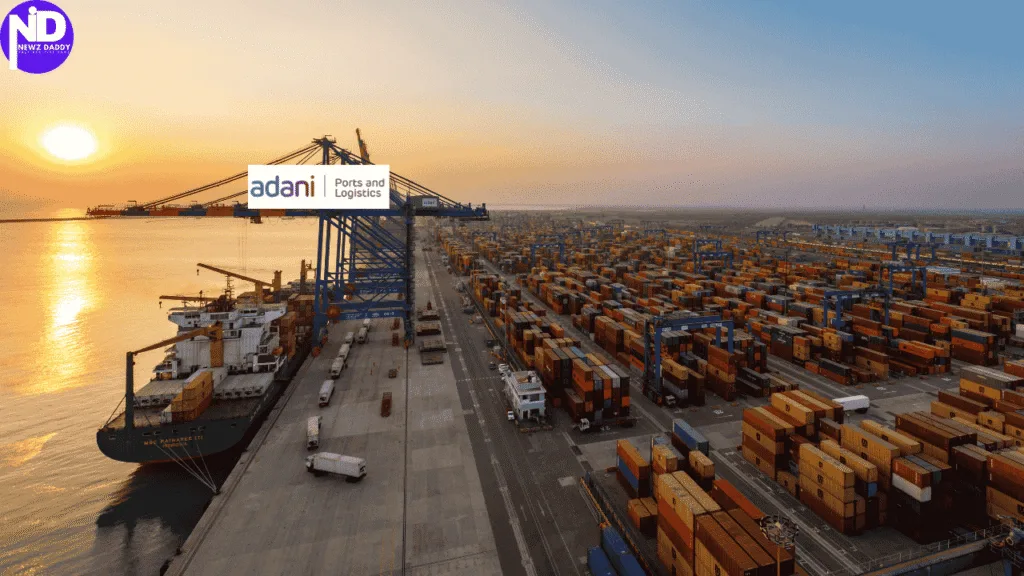
APSEZ 500 Million Tonnes Milestone Shocks Ahmedabad
APSEZ Crosses 500 Million Tonnes Cargo Milestone, Reinforcing Its Role in India’s Growth Story
• The nation’s leading port developer and operator marks a defining milestone in its journey and in India’s infrastructure boom.
• From a single port-led vision in 1998 to a network of 19 ports and terminals, APSEZ has built one of India’s most critical integrated transport and logistics platforms.
• The milestone reinforces APSEZ’s long-term ambition to power India’s trade, industrial expansion and global competitiveness with a clear line of sight to 1 billion tonnes by 2030.
Adani Ports and Special Economic Zone Ltd. (APSEZ), India’s largest integrated transport utility and the nation’s leading port developer and operator, today announced that it has surpassed the landmark milestone of 500 million tonnes of cargo handled.
This achievement marks a defining moment in APSEZ’s evolution and underscores the growing strength of India’s infrastructure-led transformation. In recent years, India has focused heavily on improving ports under national programmes like Sagarmala, which aims to reduce logistics costs and improve port efficiency. Experts say better ports can cut transport costs by up to 20 per cent, helping Indian goods compete globally. More than a scale milestone, it reflects the rise of a world-class logistics platform built on long-term conviction, operational discipline, and national purpose.
From a single port-led vision in 1998 to a network spanning 19 ports and terminals across India and beyond, APSEZ has grown into a critical enabler of India’s trade, industrial growth and global competitiveness. Today, private port operators like APSEZ handle a large share of India’s cargo, showing a shift from government-only systems to faster, more efficient private participation. Reports from industry bodies show that ports with private investment often move cargo more quickly, which reduces waiting time for ships and improves trade flow.
Speaking on the occasion, Mr Gautam Adani, Chairman, Adani Group, said, “Ports are not merely gateways for trade, they are gateways to national confidence, competitiveness and destiny. I am grateful to our customers, partners, and every member of the APSEZ family whose dedication and belief have made this milestone possible. I also extend my sincere appreciation to the Central and State Governments whose policy and commitment to infrastructure have helped create the foundation on which APSEZ has grown.
“APSEZ crossing 500 million tonnes is a signal of our decades-long confidence in the India growth story. Over the years, we have built not just ports, but an unparalleled interconnected transport and logistics platform spanning ports, rail, roads, trucking, warehouses, and cargo gateways. APSEZ’s best is ahead of us. And the best of India is ahead of her,” he added.
Industry analysts often point out that India’s trade growth depends on how smoothly goods move from factories to ports. A strong logistics network reduces delays and damage. APSEZ’s integrated model connects rail, road, and ports, which helps industries move goods faster. This is important for sectors like coal, crude oil, containers, and agriculture, where timing and cost matter.
The journey to 500 million tonnes is also a story of compounding scale and execution. While APSEZ took 16 years to reach its first 100 million tonnes, each subsequent 100 million tonnes has been added faster than the last, reflecting the increasing scale, efficiency, resilience and strategic depth of its platform. This pattern shows how infrastructure businesses grow slowly at first but pick up speed once systems are in place. Experts often call this “scale advantage”, where bigger networks operate at lower cost per unit.
With this milestone, APSEZ remains firmly on course toward its next major ambition of handling 1 billion tonnes of cargo by 2030. India’s total cargo demand is expected to rise sharply due to manufacturing growth and exports. Government reports suggest India aims to become a major global manufacturing hub, and ports will play a key role in that journey. As it enters this next phase, the company remains committed to building not only world-class infrastructure, but also a world-class institution defined by scale, service, operational excellence and national purpose.
APSEZ’s Integrated Network
Category Details
Ports
• 15 ports across 11,000 km of India’s coastline
• 4 international ports on the strategic East–West global corridor
India has one of the longest coastlines in the world, and experts say using this advantage can boost trade significantly. Ports located on global shipping routes help reduce travel time for cargo moving between Asia, Europe, and Africa.
Logistics Coverage of 95% of India’s hinterland with nationwide connectivity
• 12 multimodal logistics parks
• 132 trains, 20,000+ trucks
• 2.9 lakh sq. meters of warehousing space
• 25 agri silos
Logistics parks and warehouses are becoming vital as e-commerce and manufacturing grow. Faster storage and transport systems help businesses deliver goods on time. Many companies now prefer integrated logistics providers instead of handling transport separately.
Marine Connecting international waters with global ports
• 118 nearshore tugboats
• 53 offshore vessels
• 37 flotilla vessels
Marine support is key to safe port operations. Tugboats help large ships dock safely, while offshore vessels support cargo movement and maintenance work. Strong marine fleets reduce risks and improve turnaround time for ships.
Overall, this milestone reflects not just growth for one company, but a wider shift in how India is building its trade backbone with speed, scale, and long-term planning.