


Correctional Administration Conference Signals Major Prison Reform
Newz Daddy Educational Updates
Roundtable Conference of Inspector Generals on Correctional Administration hosted by Rashtriya Raksha University
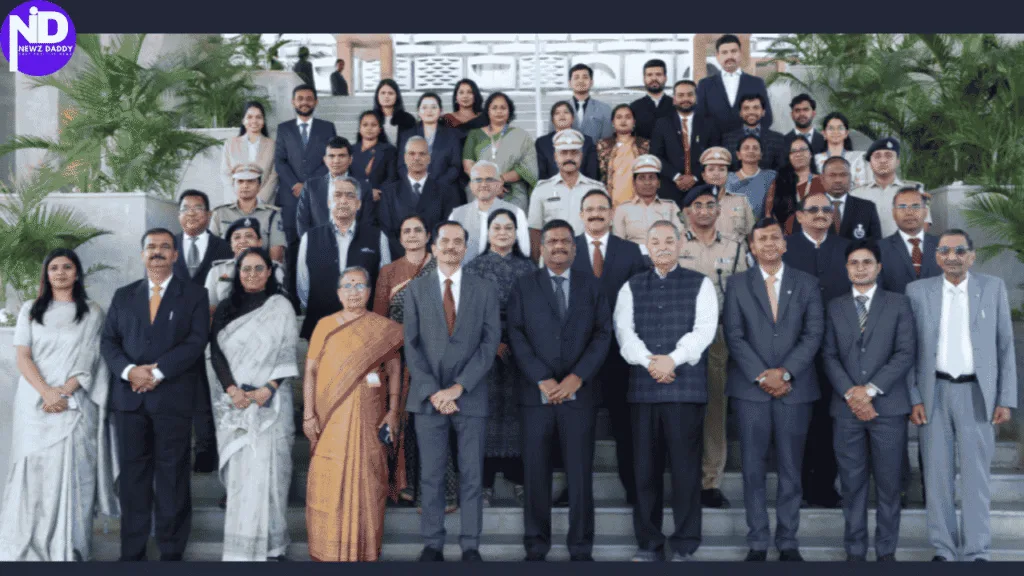
Rashtriya Raksha University (RRU), an Institution of National Importance and an emerging global leader in internal security, correctional administration and policing, hosted a Roundtable Conference of Inspector Generals (IGs) on Correctional Administration, marking India’s first formal integration into the global vanguard of evidence-based prison management. The conference was graced by senior officials from prisons and correctional administration, the Police and the CID from 16 states, along with more than 25 academicians and field experts from across the country, who participated and contributed to its success.

The conference, themed “Transforming Correctional Administration: Innovation, Wellbeing, and Collaborative Excellence,” served as the platform for sharing best practices in correctional administration and finalisation of the Diploma and Master’s Programme in Correctional Administration.
Experts have long pointed out that training in correctional administration has remained limited in India. Dedicated academic programmes help officers understand psychology, law, technology and human rights together. This structured learning is expected to create a new generation of prison leaders who can balance discipline with reform.
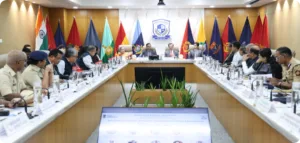
The inaugural session began with the felicitation of the dignitaries, followed by a welcome address by Shri Geetesh Kumar Singh, Project Director (GCAS), highlighting RRU’s role in building a platform that connects practice, research, extension and leadership with learning.
Such integration is vital in fields like corrections, where policies made in offices directly affect lives on the ground. By connecting classroom learning with real prison experience, institutions like RRU aim to ensure that reforms are practical and sensitive to ground realities.
Hon’ble Vice-Chancellor of the Rashtriya Raksha University, Prof. (Dr.) Bimal N. Patel delivered the inaugural address, highlighting a unique mandate where the Prime Minister identified correctional administration as a critical gap area, noting India lacks an academic institution combining research and fieldwork. He further emphasised the need for modern approaches, officer wellbeing and inter-institutional collaboration to strengthen correctional systems.
Officer wellbeing is gaining attention globally, as prison staff often face stress, violence and emotional fatigue. Studies show that healthy staff are better equipped to manage inmates humanely and effectively. Collaboration between institutions also helps share resources, ideas and technology.
Dr K.L.N. Rao, IPS, DGP, CID (Crime & Railways and Correctional Administration) delivered a special address on how Gujarat prisons have been taking initiatives to work towards the mental health of the stakeholders of correctional administration. He advocated for a shift where psychological profiling and counselling begin on day one. He asserted, “Society expects an inmate to emerge ‘normal’ from a traumatic environment; we must bridge this psychological dichotomy.” He announced that Gujarat is doubling its capacity with 4,000 new facilities and introduced the vision of “Har Haath Ko Kaam” (Work for Every Hand), ensuring that undertrials who form the majority of the population are integrated into livelihood programmes to prevent the learning of more crime during incarceration.
Mental health support in prisons has shown positive results in reducing violence and self-harm. Work programmes are also known to build discipline, skills and self-worth among inmates. For undertrials, meaningful engagement helps reduce frustration and prevents deeper criminal influence.
The conference proceeded in two sessions. The session on Best Practices in Offenders Rehabilitation, Re-integration and Reformation discussed assimilation of institutional mindset, holistic wellness and social safety nets, economic resurgence and post-release continuity, technological sovereignty and infrastructure, perception management and legal reform, establishment of de-addiction clinics in prison and an increase in salary of prison staff.
These discussions reflected a growing understanding that successful reform does not end at release. Support systems, skills training and addiction treatment reduce the chances of reoffending. Better pay and training for staff also help attract skilled professionals and reduce corruption.
The conference included a dedicated exhibition that provided delegates with a comprehensive overview of specialised psychological frameworks and correctional technologies. Centred on the pillars of reformation, rehabilitation and reintegration, the display showcased the extensive mental health services currently operational across the four major Central Prisons of Gujarat – Ahmedabad, Surat, Rajkot and Vadodara, and forensic mental health services at Sabarmati Central Prison.
Technology and psychology now play a major role in modern prisons. From digital records to mental health screening tools, such systems improve transparency and early intervention. Gujarat’s initiatives were widely noted as practical examples that other states could adapt.
The other session focused on the professionalisation of the correctional workforce through the development of a specialised cadre in correctional administration, marked by the landmark signing of the affiliation and accreditation document. The session was headed by Dr Jasbir Thandani, Dean-in-Charge, RRU. The syllabus of the Master Programme on Correctional Administration received valuable comments from senior delegates. Furthermore, significant light was shed on the human capital of the system, addressing prison staff welfare and specialised techniques for handling the unique stresses of prison work.
Professional cadres help define clear career paths and standards. This not only improves performance but also gives officers dignity and recognition for their specialised role in society.
The event concluded with the Vice-Chancellor’s point vouching for a strong mandate for modernisation, advocating for the use of technology to ensure transparency and security, effectively positioning correctional management as a high-stakes, specialised professional field.
The programme concluded with a formal vote of thanks from the University Dean.
Overall, the conference reflected a growing national resolve to rethink prisons not as places of mere confinement, but as institutions of correction, care and change, with Rashtriya Raksha University emerging as a key driver of this shift.