


Dussehra 2026 at ISKCON Bhadaj Blends Worship and Ramayana
Hare Krishna Mandir in Bhadaj Marks Dussehra with 60-Foot Effigy Burning
Thousands of devotees gathered at ISKCON Hare Krishna Mandir in Bhadaj, Ahmedabad, on Tuesday for the annual Dussehra Mahotsav, marking Vijayadashami with prayers, a Ramayana-based drama, a religious procession and the burning of 60-foot-high effigies of Ravana, Kumbhakarana and Meghnath.
The celebrations centred on the Hindu belief that Lord Rama’s victory over Ravana represents the triumph of truth over evil. The programme brought together religious rituals, traditional performance and community participation, following customs observed at Dussehra celebrations across many parts of India.

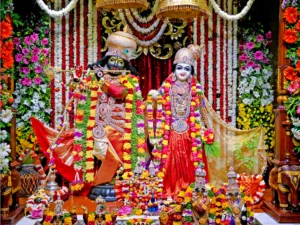
The Dussehra festival began with devotional activities centred on the temple’s deities, Sri Sri Radha Madhav. Dressed in Sri Sita Rama Alankar, the deities were taken on a procession aboard the Swarna Vahana, accompanied by devotees singing and performing Sankirtana, the collective chanting of holy names associated with Lord Ramachandra.
A special presentation of Rama Lila formed another part of the programme. The performance depicted episodes from the story of Lord Rama and Sita, bringing scenes from the Ramayana before the gathering.
The Ramayana has shaped religious storytelling, theatre and public festivals in India for generations. During Dussehra, performances of the epic allow audiences, including children, to follow the story through dialogue, music and dramatic scenes. Such programmes also allow families to take part in religious traditions together.
At Hare Krishna Mandir, the combination of a procession, chanting and theatre placed the story of Lord Rama at the centre of the day’s observances.
Addressing the gathering on the theme “Dussehra Mahotsav: Respiritualisation through Culture”, Swami Sri Jaganmohan Krishna Das, President of ISKCON Hare Krishna Mandir, Bhadaj, spoke about the religious and cultural interest surrounding the festival.
“The Dasara season whips up strong religious and cultural fervour. ISKCON Hare Krishna Mandir, Bhadaj took the opportunity to blend the unique cultural and spiritual elements of God consciousness into the festivities and thereby organised its annual ‘Dussehra Mahotsav’ at its premises.”
His address placed the temple’s annual celebration within a wider discussion about the role of cultural activities in religious life. Public festivals often bring people together through shared stories, music, worship and performances. In the case of Dussehra, the story of Lord Rama provides a familiar theme for these activities.
The temple’s programme used several forms of worship and performance to present the story to those attending the event.
The burning of the effigies of Ravana, Kumbhakarana and Meghnath was the main public spectacle of the evening. Standing 60 feet high, the figures represented the forces defeated by Lord Rama in the traditional account of the Ramayana.
The crowd watched as the effigies caught fire and burned amid the sound of firecrackers. Loud cheers followed the burning, marking the conclusion of the ceremony’s central public event.
The ritual, commonly known as Ravan Dahan, is a familiar feature of Dussehra celebrations in many parts of northern and western India. It recalls the final battle in the Ramayana and carries a message about the defeat of wrongdoing.
The practice is not the same everywhere in India. Different regions mark Vijayadashami through their own religious customs, including celebrations linked to Goddess Durga. The festival therefore carries several traditions, shaped by local beliefs and histories.
In Bhadaj, the burning of the three effigies followed the tradition associated with Lord Rama’s victory. The event also gave families and other visitors a shared public gathering around a story that remains part of India’s religious and cultural life.
Following the effigy burning, devotees took part in a grand Maha Arati, offered to Sri Sri Radha Madhav and Sri Sri Sita Ramachandra. A special Ram Darbar had been arranged for the occasion, providing a dedicated setting for the final prayers.
The closing ritual returned the focus to worship after the evening’s dramatic presentation. For devotees, the prayers marked the end of the day’s programme and completed the sequence of religious activities.
The annual Dassehra Mahotsav at ISKCON Hare Krishna Mandir, Bhadaj, brought together familiar elements of Vijayadashami: the telling of Lord Rama’s story, collective chanting, the burning of Ravana’s effigy and prayers to the deities.
The 20 October celebration continued the temple’s annual observance of the festival. Its organisers hope the event will draw more people in future years, giving devotees and visitors another opportunity to take part in the religious and cultural traditions associated with Dussehra.
Must Read:
Dussehra Ahmedabad: ISKCON Bhadaj Plans 60-Foot Ravan Burning