


EAS 2026: Modi Calls for Safer Shipping Routes and Peace
PM Narendra Modi Proposes New Cooperation Measures at 21st East Asia Summit in Manila
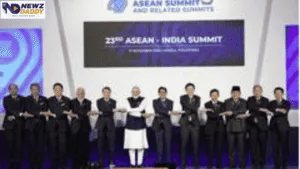
Prime Minister Narendra Modi has called for stronger regional cooperation to protect international shipping routes, tackle terrorism and improve responses to cybercrime during his address to the 21st East Asia Summit (EAS) in Manila, Philippines, on 17 November 2026.
Speaking at the meeting, Modi said the East Asia Summit should play a greater role in supporting peace at a time when several parts of the world are facing conflicts and political tensions. He stressed the need for a free and open regional order and urged member countries to work together to reduce threats to international security.
The Prime Minister also raised concerns about the safety of commercial ships and sailors using international waterways. Attacks and security threats along important shipping routes can affect the movement of goods, energy supplies and other essential products. Any prolonged disruption can increase transport costs and create difficulties for countries that depend on international trade.

India’s position on maritime security reflects its wider interest in keeping sea routes safe and open. The country depends on maritime transport for a large share of its overseas trade, including crude oil, natural gas and manufactured goods. Security in the Indian Ocean and the wider Indo-Pacific region therefore remains an important part of India’s foreign policy.
Modi also spoke about the continuing conflicts in Ukraine and West Asia. He said India supports all efforts towards a peaceful solution to these conflicts. His remarks reflected India’s stated preference for dialogue and diplomatic efforts to resolve international disputes.
The Prime Minister warned that conflicts can affect supplies of food, fuel and fertilisers across the world. These problems can reach countries far from the areas where fighting takes place. Higher shipping costs, delayed deliveries and interruptions to energy supplies can affect businesses and ordinary households.
According to the United Nations Conference on Trade and Development (UNCTAD), more than 80 per cent of world trade by volume is carried by sea. Its Review of Maritime Transport 2025 also reported that global seaborne trade grew by 2.2 per cent in 2024. Longer shipping journeys caused by disruptions in the Red Sea added to transport costs and delays.
The Strait of Malacca, which connects the Indian Ocean with the South China Sea, is another important route for international trade. It carried 23.7 per cent of global seaborne trade by volume in 2023. Security problems along such routes can affect many countries, making cooperation between governments and maritime authorities necessary.
Modi put forward four proposals at the Manila meeting. They cover maritime safety, cybercrime, shared history and higher education. Each proposal involves cooperation between East Asia Summit countries.
The first is the Seafarers’ Safety Initiative, which will promote joint training and emergency response arrangements. Seafarers often work far from their home countries and may face dangerous situations during maritime emergencies. Better coordination between countries can help ships and their crews receive assistance when incidents occur at sea.
The proposal comes at a time when shipping companies and governments are dealing with security threats along important international routes. Training programmes and common emergency procedures could help countries respond more effectively when ships or their crews face danger.
The second proposal is an East Asia Summit Cyber Crime Conference at the National Forensic Sciences University (NFSU) in India.
Online fraud and cybercrime have become major concerns for governments, banks, businesses and individual internet users. Criminal groups can operate from one country, contact victims in another and move stolen money through accounts in several other countries. This makes investigations difficult for national police forces working alone.
The proposed conference would give participating countries a platform to discuss these crimes and improve cooperation. NFSU is based in Gandhinagar, Gujarat, and was established as a national university in 2020 under an Act of Parliament. It has specialised departments covering forensic science, cyber security and digital forensics.
The university also provides training to police officers, investigators and other professionals. Its experience in digital evidence and forensic investigations could support discussions on how countries identify online criminals, examine electronic records and share information during investigations.
Cybercrime also featured in the wider discussions at the Manila summit. East Asia Summit leaders adopted a joint statement on strengthening cooperation against online scams and related offences. This gives the issue a place in the group’s wider regional discussions on security.
Modi’s third proposal was the East Asia Summit Maritime Heritage Festival at Lothal in Gujarat. The site has a history stretching back more than 4,000 years and is closely linked to the Indus Valley Civilisation.
Archaeological remains at Lothal include a large basin believed to have served as a dockyard, along with structures linked to trade and storage. Evidence found at the site includes stone anchors, marine shells and seals connected with overseas trade. The UNESCO World Heritage Centre lists Lothal on India’s Tentative List for World Heritage status.
The proposed festival would bring representatives from East Asia Summit countries to Gujarat to discuss and present their maritime traditions and historical links. It also connects with the National Maritime Heritage Complex being developed at Lothal. The project aims to present India’s maritime history and its links with other parts of the world.
The fourth proposal concerns education. India plans to host the East Asia Summit University Heads Conclave at Nalanda in 2027. The meeting is intended to encourage universities and academic institutions from participating countries to develop closer links in education and research.
Nalanda has a long history as a centre of learning. The ancient university, which flourished from around the fifth century to the 12th century, attracted students and scholars from several parts of Asia, including China, Korea, Japan, Tibet and Sri Lanka.
The modern Nalanda University was established under the Nalanda University Act, 2010, in Bihar. Its academic programmes began in 2014, and its new campus at Rajgir was inaugurated in June 2024. The institution has an international focus, with links to countries that supported the revival of the historic centre of learning.
The proposed conclave could allow universities to discuss student exchanges, research partnerships and academic programmes. Its success will depend on the participation of universities and the practical arrangements agreed by them.
The East Asia Summit was established in 2005, with its first meeting held in Kuala Lumpur, Malaysia. It began with 16 participating countries. The United States and Russia joined in 2011, while Timor-Leste became a member in October 2025, taking the total membership to 19 countries.
The group includes the 11 ASEAN member countries, along with India, China, Japan, South Korea, Australia, New Zealand, Russia and the United States. It provides a forum for national leaders to discuss political, economic and security matters affecting the Indo-Pacific region.
ASEAN, the Association of Southeast Asian Nations, plays a central role in the summit. India has also placed its relations with ASEAN at the heart of its Act East Policy, which seeks closer political, economic and cultural ties with Southeast Asian countries.
The 2026 meeting also marks 50 years of the Treaty of Amity and Cooperation in Southeast Asia. Signed in 1976, the treaty set out principles such as respect for national sovereignty, peaceful settlement of disputes and cooperation between countries.
At the end of his address, Modi congratulated Philippine President Ferdinand R. Marcos Jr. for successfully hosting the Prime Ministers’ Summit. The Philippines held the ASEAN chairmanship in 2026 under the theme ‘Navigating Our Future, Together’.
The four Indian proposals will now require discussions with other participating countries and further planning. Their progress will depend on the level of support from member governments, the institutions involved and the arrangements made to carry them forward.
For India, the Manila meeting provided an opportunity to bring maritime safety, cybercrime, cultural links and education into the same regional discussion. The next stage will be to turn these proposals into activities involving the countries that attended the summit.