


Homepreneur At Kalorex Brings Parents and Pupils Together
Homepreneur at Kalorex Future School Gives Students a Taste of Business
Students at Kalorex Future School, Ghatlodia, got an opportunity to experience the world of buying and selling when the school organised its Homepreneur event on November 3. The programme brought parents and students together, with parents setting up stalls and children visiting them as customers.
The stalls featured stationery, handmade crochet products, artificial jewellery, fashion accessories, cosmetics and other goods. Parents displayed products for sale, giving students an opportunity to observe how a small business operates and how sellers deal with customers.

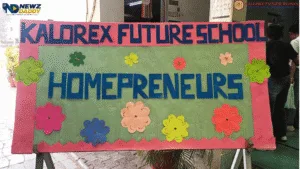
For the children, the activity offered a chance to handle everyday situations that are usually discussed in classrooms. They could speak to sellers, look at different products, consider their choices and make purchasing decisions. The event also gave parents an opportunity to present products connected with their skills and business interests.
Kalorex Future School is a Central Board of Secondary Education (CBSE)-affiliated senior secondary school in Ghatlodia, Ahmedabad.
The school was first opened on June 13, 2007, and is listed under CBSE affiliation number 430202. Its location and school details are recorded in the CBSE’s official school directory.
Homepreneur also connects with a wider change in the way schools are expected to prepare children for adult life. The National Education Policy (NEP) 2020 calls for more practical learning, with students getting opportunities to understand skills and work beyond textbooks.
Under the policy, vocational education begins at an early stage. Students in Classes 6 to 8 are expected to receive practical exposure through activities such as craft work, visits to workplaces and interaction with skilled professionals. The aim is to help children understand different occupations and learn through direct experience.
In August 2024, the Ministry of Education announced guidelines for 10 bagless days for students in Classes 6 to 8. These days are intended to give children opportunities to take part in practical activities and learn from people working in different fields. The guidelines include visits to local workplaces and meetings with artists, craftspeople and other skilled workers.
Homepreneur follows a similar classroom-to-real-life approach by placing students in a setting where they can observe basic commercial activity. A customer visiting a stall has to look at the available products, compare choices and decide what to buy. Such decisions offer a simple introduction to how buyers and sellers interact.
Learning About Money Through Everyday Decisions
The children were placed in the role of customers, allowing them to see how a marketplace works from the buyer’s side. A visit to a stall can involve several small decisions. A customer may have to decide what is needed, check the available choices, ask questions about a product and consider whether a purchase is worth making.
These activities relate to financial awareness, which is an important part of growing up. Children encounter money-related decisions at home and in shops from an early age. They may accompany their parents while shopping, but taking part in a buying activity at school gives them a chance to think about their own choices.
The school said the event helped students develop communication skills, decision-making abilities, financial awareness and an understanding of customer interaction. Responsible purchasing was another area covered through the activity.
For young learners, speaking directly with a seller can also help them become more comfortable when asking questions. They can learn that a product has a price, that buyers have different needs and that a purchase involves making a choice. Such lessons become easier to understand when children see them in practice.
Parents Take Centre Stage
The event also gave parents an opportunity to bring their interests and business skills into the school. The range of products on display included handmade crochet items, artificial jewellery, fashion accessories, cosmetics and stationery.
Handmade goods, in particular, offer an opportunity to introduce children to the work involved in making products. Crochet items, for instance, require time and skill to produce. Fashion accessories and jewellery also involve choices about materials, design and presentation.
Parents who sell products or run small businesses can share their experiences with children through such activities. Their participation can help students understand that business ideas may begin with an individual skill or an interest that can be turned into a product.
The presence of parents also gave the school community an opportunity to interact outside the usual parent-teacher meetings and academic discussions. Parents could meet one another, display their products and take part in a school activity with their children.
The relationship between families and schools plays an important part in a child’s education. Parents understand their children’s interests and habits, while teachers guide their learning at school. Activities that bring both groups together can create more opportunities for children to learn from adults around them.
Practical Learning and the NEP 2020 Approach
India’s education system has been placing greater attention on learning through practical activities. The National Education Policy 2020 recommends that children receive exposure to vocational skills during their school years.
The policy proposes a 10-day bagless period for students in Classes 6 to 8. During this period, children are expected to take part in activities that introduce them to different occupations and practical skills. They may spend time with local professionals such as carpenters, gardeners, potters and artists.
The Ministry of Education issued guidelines for these activities in August 2024. The programme allows schools to arrange visits to workplaces, local institutions and places of cultural interest. Students can also meet people who work in different trades.
The Central Board of Secondary Education (CBSE) has shared these guidelines with affiliated schools. Its September 2024 circular asked schools to follow the NCERT guidelines for 10 bagless days. The purpose is to give children opportunities to learn through direct participation rather than depending entirely on classroom lessons.
Homepreneur at Kalorex Future School fits into this wider approach to practical education. Its focus was on buying and selling, with parents taking the role of sellers and students visiting the stalls as customers.
However, a school event of this kind is an introduction to commercial activity. A deeper understanding of business requires children to learn about pricing, costs, profit, stock management and customer service over time. Repeated activities and classroom discussions can help them understand these subjects as they grow older.
For parents, such events also offer a chance to share knowledge that may not always find space in regular classroom teaching. A parent who makes handmade products, for instance, can explain the effort involved in producing and selling them.
A School Activity With Lessons Beyond the Classroom
Homepreneur was held at Kalorex Future School in Ghatlodia, Ahmedabad, on November 3, 2026. The event brought together the school’s parent community and students through a marketplace-style activity.
Its approach gave children an opportunity to see how buying and selling work in everyday life. Parents, in turn, had a place to present their products and interact with the school community.
For schools, the challenge is to make such activities part of regular learning rather than treating them as occasional events. Children can gain a clearer understanding of money, work and business when practical activities are followed by discussions about what they observed and learned.
The Homepreneur event offered a starting point for those conversations. It also showed how parents can take an active part in school activities while sharing their skills with the next generation.
Also Read:
Kalorex Future School East Students Take Part in Fire Safety