


How Organ Transplants Save Water and Protect the Environment?
Union Minister Shri CR Patil Calls For Nationwide Community Action To Secure Water And Promote Organ Transplants.
On a warm afternoon in Sola, Ahmedabad, a unique gathering took place that beautifully linked human health with the care of our planet. Marengo CIMS Hospital joined hands with the Angadan Charitable Trust at the R.K. Royal Hall to celebrate World Environment Day 2026. Their message was wonderfully simple yet deeply moving: “Save Water – Save Kidney – Save Environment.” This lovely initiative invited everyone to look at healthcare through a friendly, green lens, showing how small human choices can ripple out to heal both our bodies and the earth.

For thousands of people facing chronic kidney issues, dialysis is a true gift of life. It is an essential, life-saving therapy that helps people keep going every single day. Yet, as the medical experts at the event gently explained, there is another path that can offer a brighter tomorrow for those who are medically eligible. A kidney transplant can give a person a much better quality of life and a wonderful sense of independence. It reduces those long, tiring hours spent in hospital chairs and allows families to smile together with fewer worries.
But the story does not end with patient comfort. When a suitable patient receives a successful kidney transplant, something beautiful happens for nature, too. Ongoing dialysis care requires a vast amount of resources over time. By choosing transplantation, we drastically reduce the long-term environmental impact. Research from global health journals shows that regular medical treatments create huge amounts of biomedical waste and use millions of litres of pure water. A single transplant helps cut down on repeated water usage and lowers the generation of plastic medical waste. This means that increasing awareness about organ donation is not just a medical duty; it is a profound act of environmental responsibility.
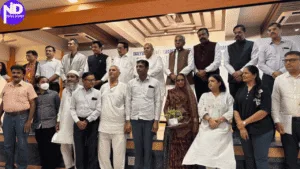
The event was graced by the presence of Chief Guest Shri C. R. Patil, the Union Minister of Jal Shakti, alongside Guest of Honour Shri Dilip Deshmukh, the kind-hearted founder of the Angadan Charitable Trust. They both shared lovely insights on how closely public health is tied to community participation and sustainability. When a community comes together to support organ donation, they are doing more than saving a neighbour; they are actively protecting our shared home.
In his speech, Shri C.R. Patil said, “When Dilipbhai first began this organ donation campaign, he started alone, but it has grown into a massive movement across Ahmedabad, Surat, and beyond. After receiving a liver transplant himself in 2020, he successfully dedicated his entire life to this noble cause. Kidney donation saves human lives, time, and money, while drastically reducing water consumption and plastic medical waste.
Our country faces a severe water crisis; we receive 4,000 BCM of rainwater but can only store 750 BCM, forcing us to pump massive amounts of groundwater. This underground water belongs to future generations, and emptying it is like unsustainably breaking a bank Fixed Deposit. While the government is implementing massive schemes like river-linking, ‘Catch the Rain’, and piped irrigation projects, civic action is vital. Dilipbhai is a living example of how individual commitment to organ donation directly saves millions of litres of water and protects the environment. We must all contribute, spread awareness, and actively support this movement.”
Mr Dilip Deshmukh (DADA), in his speech, said, “A single kidney patient on dialysis has to visit the hospital at least 100 to 110 times a year. Each session takes about five hours, including travel time, and completely wastes the day for both the patient and the family member who supports them. Currently, more than 800 children in Gujarat are undergoing dialysis. While patients often expect ready kidneys to be stored at hospitals, families are rarely willing to donate organs to their loved ones.
Financially, dialysis costs at least 3 lakh rupees a year, meaning a patient spends enough money in two years to easily afford a kidney transplant instead. Environmentally, the impact is severe. One patient uses 600 litres of water per session, leading to 60,000 litres of water wasted every year. Across India, where 2.5 to 3 lakh patients are on dialysis, this creates massive water waste. Furthermore, each session generates non-biodegradable plastic and rubber medical waste that can take up to 200 years to degrade, heavily taxing our natural resources.”
A truly moving highlight of the afternoon was the felicitation of dialysis warriors, transplant recipients, and cadaver donor families. There were tears of gratitude and warm rounds of applause in recognition of their incredible courage and resilience. These brave families, by choosing to give the gift of life during their darkest hours, have made life-saving contributions towards society that will never be forgotten.
Medical experts like Dr Mayur Patil and Dr Siddharth Mavani shared how successful transplants transform lives while easing the burden on our planet. Medical journals frequently note that traditional treatments place a heavy strain on local utilities and waste management systems. Every plastic tube, fluid bag, and filter pad takes hundreds of years to break down in a landfill. By encouraging organ donation, we are helping to create a cleaner, greener future. Mayur Dave, the Facility Director, beautifully summed it up by stating that the hospital’s true commitment lies in connecting healthcare awareness with environmental care. Through community participation and sustainable healthcare practices, we can work towards a healthier tomorrow for both people and the planet.
Of course, the best way to care for our kidneys and the earth is to prevent illness in the first place. The initiative placed a strong focus on preventive nephrology. Doctors shared easy, friendly tips that anyone can follow at home. Staying beautifully hydrated with clean water, keeping diabetes under steady control, and managing blood pressure are wonderful starting points. Simple habits, like enjoying regular, healthy lifestyle practices and going for early kidney screenings, can make a world of difference.
By taking good care of ourselves, we use fewer medical supplies and protect our precious natural resources. The lessons from this special day remind us that our health and nature’s health are deeply woven together. When we choose to save water and support organ donation, we are truly saving our environment for the generations to come.