


ICGS Shaurya Porbandar Boosts Coastal Security Pride
ICGS Shaurya Porbandar Boosts Strong Coastal Security and Safety Cover
The arrival of Indian Coast Guard Ship (ICGS) Shaurya at Porbandar on 02 April 2026 marks a key step in strengthening India’s coastal defence along Gujarat. The Indian Coast Guard has been steadily increasing its presence in sensitive sea zones, especially along the North Arabian Sea. This region sees heavy fishing activity and busy shipping routes, which makes regular patrols very important. In recent years, security agencies have also raised concerns about illegal fishing, smuggling, and infiltration through sea routes. By placing a capable vessel like Shaurya at Porbandar, authorities aim to respond faster and cover a wider stretch of coastline.

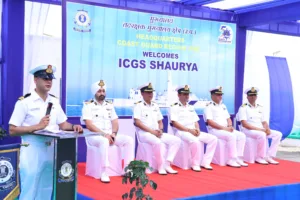
ICGS Shaurya is part of India’s push towards self-reliance in defence production. Built by Goa Shipyard Limited, the vessel reflects the country’s growing strength in indigenous shipbuilding. Over the past decade, India has invested heavily in designing and constructing its own patrol ships, reducing dependence on foreign suppliers. Shipyards like Goa Shipyard have delivered several vessels to the Coast Guard and Navy, helping create jobs and develop technical skills within the country. This also ensures that maintenance and upgrades can be handled locally, which improves long-term efficiency.
The ship’s size and design make it well-suited for long sea missions. With a length of about 105 metres and a displacement of 2,300 tonnes, Shaurya falls into the category of Offshore Patrol Vessels. These ships are known for their ability to stay at sea for extended periods without needing to return to port. In practical terms, this means the crew can patrol remote areas, monitor suspicious activities, and assist vessels in distress without interruption. Its speed of up to 23 knots allows it to quickly reach areas where help is needed, which is crucial during emergencies such as fishing boat accidents or sudden weather changes.
Modern ships like Shaurya rely heavily on advanced technology. Its navigation and surveillance systems help track vessels across large distances, even in poor visibility. Maritime experts often point out that real-time tracking and communication play a major role in preventing illegal activities at sea. Systems onboard such vessels can identify ships that switch off tracking devices, a tactic often used in smuggling. The integrated platform management system also reduces manual workload, allowing the crew to focus more on operations rather than routine technical tasks.
The CRN-91 main gun onboard gives Shaurya a strong enforcement capability. While the Coast Guard is not a combat force like the Navy, it still needs to deal with threats such as piracy and armed smuggling. The presence of such weapons acts as a deterrent. In many past operations, Coast Guard ships have intercepted suspicious boats and prevented illegal cargo from entering Indian waters. Having a well-equipped vessel increases confidence among personnel and improves mission success rates.
Another key strength of ICGS Shaurya is its ability to operate helicopters and interceptor boats. The use of HAL Dhruv or similar Advanced Light Helicopters allows for quick aerial surveillance. Helicopters can cover large areas in a short time and guide ships towards targets or rescue spots. High-speed interceptor boats, on the other hand, are used for close-range action. These boats can chase fast-moving vessels, which is often needed during anti-smuggling or anti-poaching operations. This combination of air and sea capability makes Shaurya a flexible platform.
The role of the ship goes beyond security. It will also take part in search and rescue missions, which are a major responsibility of the Coast Guard. Every year, several fishermen face trouble due to engine failure, rough seas, or navigation errors. Quick rescue operations can save lives, and having a vessel stationed nearby reduces response time. The ship will also help protect the marine environment. Oil spills, illegal dumping, and damage to marine life are growing concerns, and patrol vessels often monitor and report such issues.
The fishing community along the Gujarat stands to gain from this deployment. Thousands of fishermen depend on the Arabian Sea for their livelihood. With a stronger Coast Guard presence, they can operate with greater confidence. In the past, fishermen have also faced issues such as drifting into foreign waters or encountering hostile situations at sea. Regular patrols and guidance from Coast Guard ships help reduce such risks and improve safety.
The Government’s focus on strengthening coastal security has intensified following past incidents that highlighted gaps in surveillance. Investments in new ships, aircraft, and coastal radar systems have improved overall coverage. The deployment of Shaurya at Porbandar fits into this larger plan to create a strong and responsive maritime security network. It also sends a clear message that India is serious about protecting its waters and ensuring safe maritime operations.
With its advanced features, strong endurance, and multi-role capability, ICGS Shaurya is set to play an important role in securing Gujarat’s coastline and supporting both national interests and local communities.
Must Read:
ICGS Apoorva Okha boosts coastal security in Gujarat
Defence Forces Vision 2047 Sets Bold Future for India’s Military