


INDIA Alliance Meeting Exposes Differences Among Allies
INDIA Alliance Meeting Reveals Growing Tensions Within Opposition: Unity Test Ahead of 2029
The INDIA alliance, India’s largest opposition coalition, held an important meeting in New Delhi on 8 June 2026. The gathering brought together leaders from several opposition parties, including Congress, Trinamool Congress (TMC), Samajwadi Party (SP), Rashtriya Janata Dal (RJD), Shiv Sena (UBT), Nationalist Congress Party (Sharad Pawar faction), Left parties, and others.
While the alliance publicly presented a picture of unity, discussions behind closed doors revealed concerns about coordination, leadership, state-level rivalries, and the future direction of the opposition coalition. The meeting highlighted both the importance of the alliance and the challenges it faces as parties prepare for future state elections and the 2029 Lok Sabha election.
What Happened at the Meeting?
The meeting was the first major gathering of the INDIA alliance leaders since the 2024 Lok Sabha election and several recent Assembly elections.

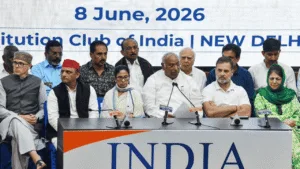
According to reports, many regional parties asked Congress to take a more accommodating approach towards its allies. Leaders from parties such as the Samajwadi Party and others stressed that regional parties play a critical role in challenging the BJP and should receive greater respect in alliance decisions.
One of the key messages delivered to Congress was to be “large-hearted” and avoid actions that create tensions with alliance partners.
Rahul Gandhi reportedly assured allies that Congress would work to keep the coalition united and strengthen cooperation.
The alliance also decided to hold meetings more frequently every two months, with another gathering planned in Hyderabad later this year.
Why Did the Meeting Become So Important?
The meeting took place at a sensitive time for the opposition.
Several alliance partners have faced electoral setbacks in recent state elections. At the same time, questions have emerged about the future of opposition unity after disagreements between parties in different states.
Many leaders believe that if opposition parties remain divided, the BJP-led National Democratic Alliance (NDA) will continue to enjoy a significant advantage in future elections. As a result, the meeting became an opportunity to rebuild trust and discuss a common strategy.
The DMK Issue and Growing Friction
One of the biggest talking points was the absence of the Dravida Munnetra Kazhagam (DMK), a party that had previously been one of the most influential members of the INDIA Alliance.
Recent political developments in Tamil Nadu reportedly strained relations between Congress and the DMK. Reports suggest that disagreements over electoral strategies and alliances contributed to tensions between the two parties. The DMK chose not to attend the meeting, and several INDIA Alliance members raised concerns about its absence.
Some leaders reportedly argued that Congress should make greater efforts to maintain strong relationships with key regional partners. The DMK issue became a symbol of wider concerns about coordination within the INDIA Alliance.
DMK says that Congress have betrayed them and has formed allies with TVK, and hence they do not trust Congress. DMK has even requested the Sansad administration to set the seats of their MPs away from Congress MPs.
DMK stayed away from this India Alliance meeting. This was one of the major talking points in the media.
Congress Under Pressure from Allies
Although Congress remains the largest opposition party at the national level, several allies expressed concerns about its approach.
Regional parties argued that political realities differ from state to state. They believe national leadership must consider regional interests when making decisions.
Leaders reportedly told Congress that local rivalries should not damage broader opposition unity. Some participants pointed to recent election campaigns where alliance partners criticised each other publicly, creating confusion among voters.
At the same time, many leaders acknowledged that Congress remains central to the alliance and acts as the main link connecting various regional parties.
AAP also said they will not be a part of the India Alliance anymore and have also stayed away from this meeting.
Mamata Banerjee’s Changing Approach
West Bengal Chief Minister Mamata Banerjee’s participation attracted significant attention.
In previous years, Banerjee often maintained a degree of distance from Congress leadership and sometimes questioned Congress’s ability to lead the opposition nationally. Since she has now lost the assembly election and has also lost her own seat, she thinks of the INDIA Alliance as she now needs help from everyone.
However, reports from the meeting suggest she adopted a more cooperative tone. She reportedly urged INDIA Alliance partners to avoid public criticism of one another and focus on strengthening opposition unity.
Political observers view this as an important development because Banerjee remains one of the most influential opposition leaders in India. However, she herself is losing control of TMC and in danger of losing the party name, symbol, and flag. The same situation may happen as it happened in Shiv Sena, where Uddhav Thankrey lost everything to rebels.
It is reported that out of 28 MPs of TMC, 20 have given the letter to the speaker and may support NDA going forward. However, Mamtan Banerjee has filed a petition in the high court against these rebels.
The Kerala Disagreement
The meeting also revisited tensions between Congress and Left parties. Left leaders reportedly raised concerns about comments made during the Kerala election campaign. They argued that attacks on alliance partners in one state can weaken trust at the national level.
Rahul Gandhi reportedly clarified Congress’s position during discussions. The issue demonstrated one of the alliance’s biggest challenges: parties that are allies nationally often compete directly against each other in state elections.
Understanding the Historical Background
The INDIA alliance was formed in 2023 as a broad coalition of opposition parties seeking to challenge the BJP in the 2024 Lok Sabha election.
The INDIA Alliance brought together parties with different political ideologies, regional interests, and leadership styles. Despite those differences, members agreed to cooperate on issues related to democracy, federalism, governance, and electoral politics.
The INDIA Alliance achieved some successes in the 2024 election by presenting a united opposition front in several states. However, differences never completely disappeared. State-level political rivalries continued to create tensions among partners.
The latest meeting showed that these underlying challenges remain unresolved.
Why Does This Matter for Citizens?
Many voters may wonder why internal opposition meetings are important. The answer is simple. Strong democracies depend on both effective governments and effective opposition parties.
When opposition parties coordinate well, they can raise public concerns more effectively, question government policies, and present alternative solutions.
If opposition alliances weaken, voters may have fewer competitive political choices in future elections.
For supporters of the BJP, opposition divisions may be seen as evidence that the alliance lacks a common vision. For supporters of opposition parties, maintaining unity may be essential for presenting a credible challenge in future elections.
Supporters’ View
Supporters of the INDIA Alliance argue that:
- Opposition unity remains necessary in a large and diverse democracy.
- Regional parties bring valuable local perspectives.
- Cooperation can strengthen democratic debate.
- The alliance can better challenge government policies when parties work together.
They point to the meeting itself as proof that parties remain committed to dialogue despite disagreements.
Critics’ View
Critics argue that:
- The alliance lacks a clear long-term structure.
- Many member parties compete against each other in state elections.
- Leadership questions remain unresolved.
- Ideological differences make coordination difficult.
- There is no clear agenda for the INDIA Alliance.
- The issues they have come up with after the meeting were useless.
BJP leaders have repeatedly claimed that the INDIA Alliance exists primarily as an anti-BJP platform rather than a coalition built around a common policy agenda.
These criticisms continue to shape public debate around the future of the alliance.
What Happens Next?
The most important question is whether the alliance can convert dialogue into action.
Leaders have agreed to improve coordination and hold regular meetings. Future discussions are expected to focus on organisational structure, electoral strategy, and common political messaging.
The alliance will also need to address unresolved issues involving regional partners, especially concerns surrounding the DMK and state-level political conflicts.
The next few months could be crucial. Upcoming state elections and parliamentary sessions will test whether opposition leaders can move beyond disagreements and present a united front.
The latest INDIA alliance meeting demonstrated both the strengths and weaknesses of India’s opposition coalition.
On one hand, major opposition leaders came together and reaffirmed their commitment to cooperation. On the other hand, discussions exposed concerns over leadership, coordination, and relationships among alliance partners.
The meeting did not signal the collapse of the alliance. However, it showed that maintaining unity will require continuous effort, compromise, and trust among parties with different political interests.
As India moves towards future state elections and eventually the 2029 Lok Sabha election, the ability of the INDIA alliance to manage these internal tensions could play an important role in shaping the country’s political landscape.
Also Read:
West Bengal Cabinet Expansion: Suvendu’s Power Play!