


India Aviation Security Testing Centre: A Big Step in New Delhi
India Aviation Security Testing Centre Brings Powerful Change to Airport Safety
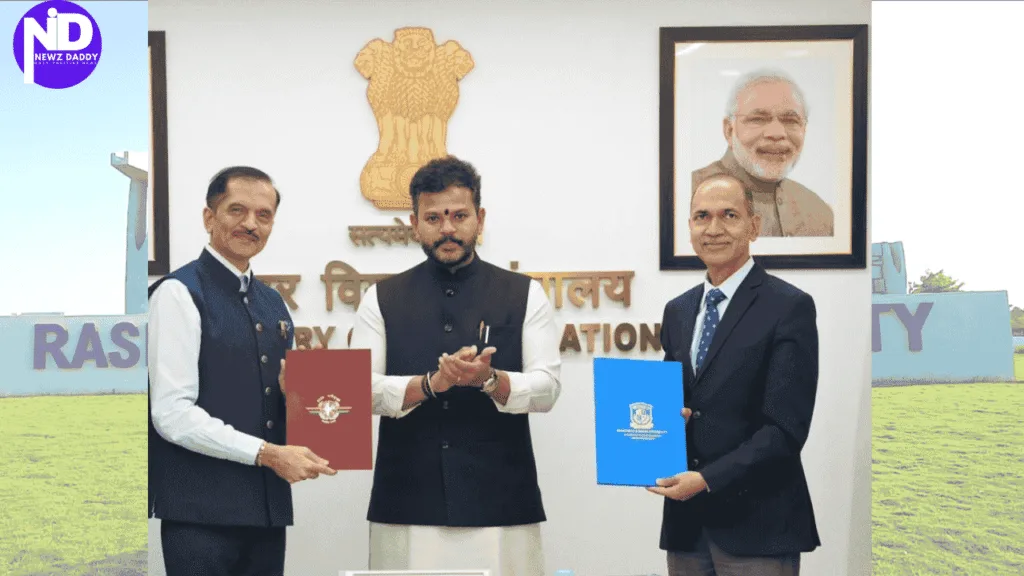
Rashtriya Raksha University (RRU) and the Bureau of Civil Aviation Security (BCAS) have taken a strong step to build India’s own aviation security system. On 6 April 2026, in New Delhi, both sides signed a Memorandum of Understanding (MoU) to set up a testing centre for airport security equipment, including Full Body Scanners (FBS).
This move comes at a time when airport security is under growing pressure worldwide. Reports from global aviation bodies show that airports now handle higher passenger numbers than before the pandemic. With this growth, there is a clear need for faster and safer screening systems. Countries like the US and UK already use advanced body scanners that can detect hidden threats without physical checks. India has been using many imported systems so far. This new step shows a shift towards building and testing such systems within the country.
The MoU was signed by Prof. Bimal N. Patel, Vice Chancellor of Rashtriya Raksha University, and Ms Pratibha Ambedkar, Joint Director General of BCAS. The signing took place in the presence of Union Civil Aviation Minister Rammohan Naidu Kinjarapu, along with senior officials from the Ministry of Civil Aviation.
Experts say that strong testing systems are the backbone of aviation safety. In many countries, every security machine must pass strict tests before it is used at airports. These tests check if the machine can detect weapons, explosives, and other threats under real conditions. India has so far depended on foreign certifications. With this new centre, the country aims to build its own trusted system for testing and approval.
Under this agreement, RRU will work closely with BCAS to build and run a dedicated testing centre. This centre will test Full Body Scanners and other equipment used at airports. It will also check if the machines meet safety and performance standards before they are approved. This is important because even small errors in such machines can lead to serious risks. Studies in aviation safety journals have shown that regular testing and calibration of scanners can improve detection rates by over 20 percent.
The centre will also evaluate equipment from Original Equipment Manufacturers (OEMs). This means companies that make these machines will need to meet Indian standards before selling them in the country. This step can push companies to improve their technology. It also helps Indian firms compete with global players. In recent years, Indian start-ups have started working on security technology, including AI-based scanning systems. A local testing system can support these companies and reduce costs linked to foreign approvals.
The MoU also includes plans to build advanced laboratories at RRU. These labs will follow global standards and carry out detailed checks on safety and performance. Around the world, such labs play a key role in setting benchmarks. For example, European aviation agencies run similar centres where machines are tested in different scenarios, such as crowded airports or high-risk zones. India’s new facility is expected to follow similar methods.
Another important part of this partnership is training and skill-building. Aviation security is not just about machines. It also depends on trained people who can use the equipment well. The agreement includes workshops, training sessions, and knowledge-sharing programmes. This can help create a skilled workforce in India. According to industry reports, there is a shortage of trained aviation security professionals globally, and India can fill this gap in the coming years.
The MoU also supports research and innovation. As threats change, security systems must also improve. New risks, such as cyber-attacks on airport systems and advanced concealed weapons, require modern solutions. Research teams at RRU will work on improving testing methods and setting new standards. This can help India stay ready for future challenges.
The partnership also opens doors for global collaboration. Many countries work together to share best practices in aviation safety. By building a robust testing system, India can participate more actively in these global efforts. It can also help Indian standards gain recognition worldwide.
Speaking at the event, Prof. Bimal N. Patel said that this testing centre reflects the vision of self-reliance. The idea of “Atmanirbhar Bharat” focuses on building strong systems within the country. In aviation security, this means reducing dependence on foreign technology and building local expertise.
This step is seen as a long-term investment in national security. With growing air travel and rising risks, a strong and reliable security system is no longer optional. It is essential. Through this partnership, India is taking a clear step towards building a safer and more independent aviation future.
Must Read:
Rashtriya Raksha University Tripura Police MoU boosts Northeast security