


International Olympic Research Conference Signals New Sports Era
International Olympic Research Conference strengthens India’s Olympic ambitions
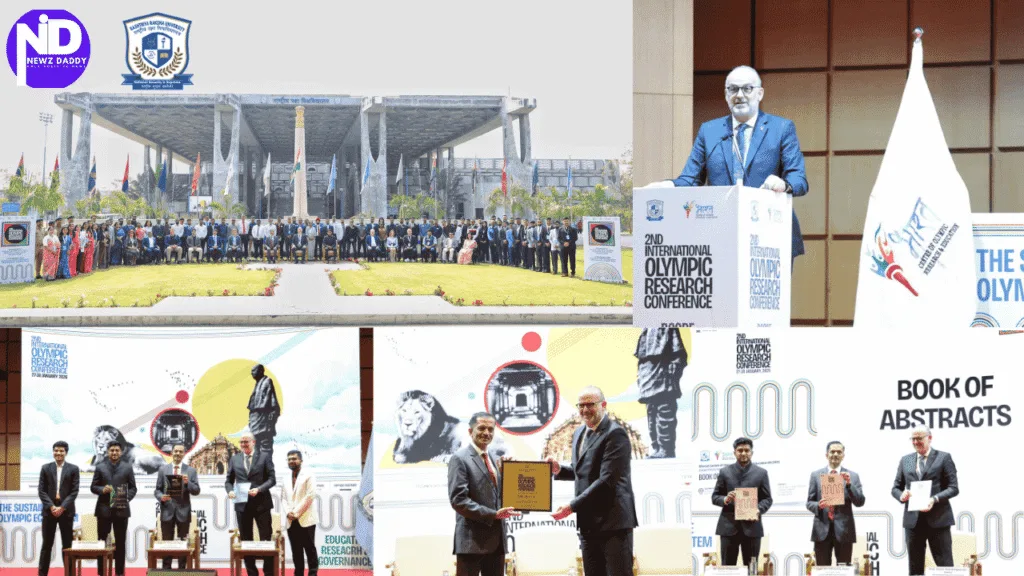
Gandhinagar witnessed an important moment for Indian sport and academic research with the inauguration of the 2nd Edition of the International Olympic Research Conference by the Bharat Centre of Olympic Research & Education (BCORE) at Rashtriya Raksha University. The four-day conference, running from 27th to 30th January 2026, brings together scholars, sport administrators, educators and policymakers from India and abroad. The theme, “Education, Research and Governance: The Sustainable Olympic Ecosystem”, reflects a growing global view that sport development must be backed by strong knowledge systems and ethical leadership.
The presence of Professor Makis Asimakopoulos, Director of the International Olympic Academy, as Chief Guest gave the opening ceremony international weight. His role is significant as the Academy is the world’s leading institution for Olympic education and research, guiding National Olympic Academies across continents. Alongside him, Vice Chancellor Prof. Dr Bimal N. Patel and Dr Utsav Chaware welcomed participants, highlighting India’s increasing engagement with global Olympic scholarship.
In his address, Mr Yash Sharma underlined why conferences focused on Olympic research matter today. Around the world, countries that invest in sport science, athlete welfare, governance and education consistently perform better at elite events. His reference to the message from Honourable Chief Minister of Gujarat, Bhupendra Patel, placed sport in a wider social context. Describing sport as a “laboratory of live experiments in life” echoes modern education thinking, where teamwork, discipline and resilience learned through sport shape young citizens. The mention of the Khelo India initiative aligns with national efforts to build a strong grassroots-to-elite pathway for Indian athletes.
Dr Utsav Chaware’s briefing helped explain how BCORE has evolved in a short period. In just over a year and a half, the centre has focused on producing knowledge rather than only organising events. Publications such as Dristi (Vision Olympics) and Bharat Beyond Compliance reflect current concerns in global sport, including values education and anti-doping awareness. Internationally, research-based anti-doping education is now seen as more effective than punishment alone, a view also promoted by global bodies like WADA. By releasing multiple abstract books and conference brochures, BCORE has created platforms for young researchers to present early work, an essential step in academic growth.
Dr Chaware’s emphasis on identifying real problems before proposing solutions reflects standard research practice followed by leading sports universities worldwide. Issues such as athlete burnout, governance failures and unequal access to sport require evidence-based responses. His reference to the 2029 World Police & Fire Games shows how sports events can also become sites of academic engagement, encouraging studies on security forces, fitness standards and international cooperation. The announcement of an academic-industry partnership with Team GB Sports, a venture of Gobananas, follows a global trend where industry-backed research grants help convert academic findings into practical outcomes.
Vice Chancellor Prof. Dr Bimal N. Patel placed sport within the idea of multilateralism. International sporting events often succeed where politics fails, creating spaces for dialogue and cooperation. His remarks on initiatives like Fit India, TOPS and the National Sports Policy 2025 point to India’s structured approach to sport development. India’s improved medal tally at the recent Asian Games and Paralympics supports the argument that sustained investment brings results. His reference to clean sport and the National Anti-Doping Act reflects India’s effort to align with global standards of integrity and athlete protection. By describing BCORE as Asia’s first dedicated Olympic research facility, he positioned India as a contributor of knowledge, not just a participant in global sport.
Chief Guest Professor Makis Asimakopoulos reinforced the educational roots of the Olympic Movement. His reminder that Olympism is a philosophy of life dates back to the 1896 revival of the Games, which linked sport with moral and cultural values. Today, Olympic education programmes worldwide aim to teach respect, excellence and friendship alongside physical activity. His comments on artificial intelligence, e-sports, sustainability and human rights reflect current debates within international sport governance. Many global institutions now recognise sport participation as a human right, especially for children and women. His call for stronger safeguards against abuse mirrors international reforms focused on athlete safety and dignity.
By highlighting India’s civilisational depth and Gujarat’s potential as a hub for Olympic education, Professor Asimakopoulos acknowledged the country’s growing role in global sport discourse. His closing remarks on the mission of the International Olympic Academy underline a shared responsibility to turn knowledge into education that reaches communities beyond elite sport.
Overall, the conference stands as more than a ceremonial gathering. It represents India’s intent to build sport on research, ethics and education, ensuring that future success is sustainable, inclusive and rooted in strong values.
Must Read:
Rashtriya Raksha University Draws Praise from Uttar Pradesh Leaders