


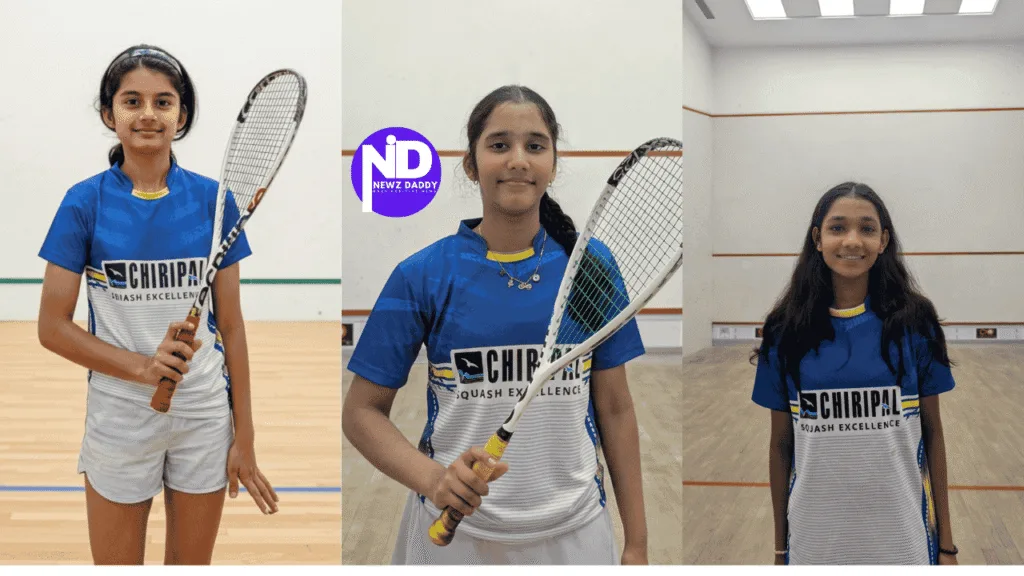
Junior Asian Squash Championship India Pride in Ahmedabad
Junior Asian Squash Championship: India’s Young Girls Show Powerful Rise
Three young Indian squash players are set to take a big step in their careers, and their journey reflects a larger shift happening in Indian sport. The selection of Aadya Budhia, Diva Parasampuriya, and Riya Dalal for the Junior Asian Squash Championship is not just a personal milestone. It also shows how structured support programmes are helping young athletes rise faster.
In recent years, India has seen a steady rise in squash at the junior level. According to reports from the World Squash Federation, Asian countries dominate junior squash rankings, with nations like Malaysia, Egypt (though outside Asia), and India producing strong young players. This makes the Asian championship highly competitive. Many players who perform well here often move on to global success.
The three girls selected have already shown strong promise in national circuits. Junior squash tournaments in India, often organised under the Squash Rackets Federation of India, act as a key testing ground. Players who consistently perform here earn ranking points and exposure. Aadya, Diva, and Riya have all been part of this system, which has helped sharpen their match skills and mental strength.
Coaching has played a major role in their growth. Across India, squash coaching has become more professional over the past decade. Coaches now focus not only on technique but also on fitness, nutrition, and match strategy. Studies in sports science journals show that early coaching with structured training plans can improve a young athlete’s performance by over 30% in competitive settings. The involvement of experienced coaches in these players’ journeys reflects this trend.
The role of private support programmes like the one run by the Chiripal Group is also becoming more important. In India, many sports outside cricket still struggle for funding. Reports from sports development organisations show that nearly 70% of young athletes depend on private sponsorships or academy support to continue training. Programmes like the Chiripal Squash Excellence Programme help bridge this gap by covering coaching, travel, and exposure opportunities.
Such programmes also focus on long-term athlete development. This means helping players grow step by step, from the grassroots level to international competition. Experts often say that athletes need at least 8 to 10 years of guided training to reach elite levels. By supporting players early, these programmes increase the chances of success on bigger stages.
The importance of international exposure cannot be ignored. Competing in events like the Asian championship allows players to face different playing styles. Asian players, for example, are known for speed and sharp reflexes, while others may focus more on endurance and control. Facing such a variety helps young athletes adapt quickly. Sports psychologists note that early exposure to international competition improves confidence and decision-making under pressure.
There is also a growing focus on women in sport. Over the last decade, India has seen more girls taking up competitive sports. Government data and independent reports show a steady rise in female participation in national championships. Success stories from athletes in badminton, boxing, and wrestling have inspired many young girls to follow similar paths. The selection of these three young squash players adds to this positive trend.
Parents also play a key role in this journey. Behind most young athletes is a strong support system at home. Many parents invest time, money, and effort to help their children train and compete. Research in youth sports shows that emotional support from family can significantly improve an athlete’s consistency and motivation.
The infrastructure for squash in India has improved as well. Cities like Chennai and Mumbai have produced several top players due to better facilities and coaching centres. Ranchi, the hometown of Aadya, has also started gaining attention for nurturing talent in different sports. This spread of facilities across cities is helping more young players enter the sport.
Looking ahead, the participation of these athletes in the championship could open more doors. Strong performances often lead to better rankings, sponsorship deals, and chances to train abroad. Many top Indian squash players today have followed a similar path, starting with junior tournaments and gradually moving to the professional circuit.
This moment is not just about three players. It reflects a larger effort to build a strong future for squash in India. With the right mix of coaching, support, and exposure, the country is slowly creating a solid base of young talent ready to compete at the highest level.