


Microfinance in Gujarat Helping Women Build Small Businesses
Small Loans, Big Changes: How Microfinance Is Supporting Women-Led Businesses in Gujarat
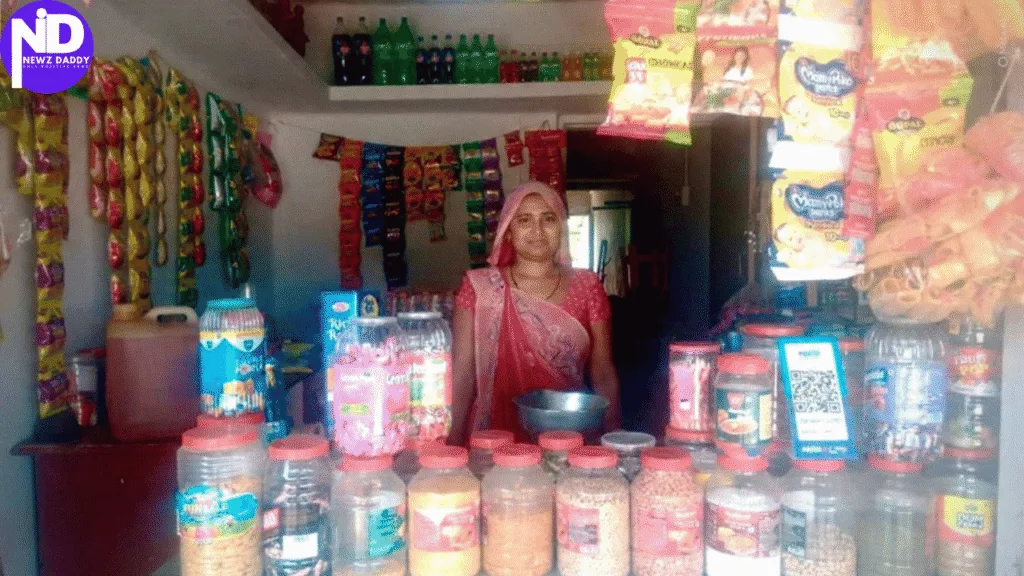
A small grocery shop in Ahmedabad may appear ordinary to passers-by, but for Bariya Vandanaben and her family, it represents a steady source of income, greater financial security and a chance to invest in the future of her children.
Vandanaben is among thousands of women in Gujarat who have turned to microfinance to start or strengthen small businesses. With a loan of ₹40,000 from Midland Microfin Ltd., she opened a grocery shop and began building an independent source of earnings for her household.
The shop has provided regular income and helped her meet day-to-day expenses. According to information shared by the company, the additional earnings have also supported spending on education and healthcare. Part of the income has been used to contribute towards the education of her two sons.
Sharing her experience, Vandanaben said, “The support from Midland Microfin Ltd. helped me establish my business. Today, I am able to earn steadily and feel more confident managing my work and supporting my family.”
Her story reflects a wider trend taking shape across India, where access to small loans is helping many women enter business activities that were previously beyond their financial reach.
Microfinance institutions provide relatively small loans to borrowers who often have limited access to traditional banking services. These loans are commonly used for grocery shops, tailoring units, dairy activities, food businesses, handicrafts, agriculture-related work and other income-generating ventures.
Over the past two decades, microfinance has become an important part of India’s financial inclusion efforts. The sector expanded rapidly after policymakers recognised that many low-income households, particularly women, struggled to obtain credit from mainstream financial institutions because they lacked collateral or formal credit histories.
Today, the industry reaches millions of borrowers across the country. Recent sector data shows that microfinance serves around 5.5 crore unique borrowers through more than 7.6 crore active loan accounts across India. The total outstanding portfolio of the sector stood at approximately ₹2.77 lakh crore as of March 2026. These figures underline the scale at which small loans continue to support household enterprises and self-employment activities.
Women remain at the centre of the sector’s operations. Most microfinance borrowers in India are women who take loans either individually or through group-based lending models. The approach has often been linked with improved household income, greater financial participation and stronger decision-making roles within families.
In Gujarat, the demand for microfinance has grown steadily over the years. The state’s microfinance sector now includes about 20.91 lakh borrowers with a gross loan portfolio of roughly ₹8,661 crore. The average loan outstanding is estimated at around ₹41,430. These figures indicate the growing use of small-ticket credit among low-income households and small business operators across urban and rural areas.
The spread of micro-enterprises has also become increasingly important as families seek multiple sources of income. Rising living costs, education expenses and healthcare needs have encouraged many households to supplement traditional earnings through self-employment.
For women such as Vandanaben, a grocery shop offers a practical way to earn income while remaining closely connected to family responsibilities. Small retail businesses often require limited infrastructure and can be managed from neighbourhood locations, making them accessible to first-time entrepreneurs.
Researchers studying financial inclusion have frequently noted that the value of microfinance extends beyond the money itself. Access to credit can help borrowers build financial discipline, develop business skills and gain confidence in handling economic decisions. In many cases, women who begin with a small enterprise later expand their activities as income becomes more stable.
That pattern appears in Vandanaben’s experience. After establishing her shop, she was able to contribute more regularly to household finances. The business also provided a degree of financial predictability that helped the family plan for future needs rather than focusing only on immediate expenses.
Industry observers point out that the success of microfinance depends heavily on responsible lending and careful assessment of borrowers’ repayment capacity. The sector has faced challenges at different times, including economic slowdowns, disruptions caused by the Covid-19 pandemic and concerns over borrower indebtedness in some regions. As a result, regulators and lenders have increasingly focused on borrower protection, credit discipline and sustainable lending practices.
Midland Microfin Ltd., the institution involved in Vandanaben’s case, operates as a non-banking financial company focused on microfinance lending. The company began its microfinance operations in 2011 and has expanded its presence across several Indian states, including Gujarat. Over the years, it has built a network serving hundreds of thousands of borrowers, most of them women engaged in small-scale economic activities.
The company’s broader objective aligns with a larger national effort to improve financial access for underserved communities. Financial inclusion has been a major policy goal in India, supported by initiatives such as Jan Dhan accounts, digital payment systems and wider banking outreach. Microfinance institutions operate alongside banks and other financial organisations to reach customers who may still find it difficult to secure conventional loans.
Experts say that small businesses created through microfinance often play a significant role in local economies. Grocery stores, tailoring units, food stalls and service businesses generate income not only for business owners but also for suppliers, customers and surrounding communities. While each enterprise may be modest in size, its combined contribution can be substantial.
For families, the impact is often measured in practical terms: school fees paid on time, improved nutrition, medical treatment when required and greater resilience during financial difficulties.
Vandanaben’s grocery shop is one example of how that process works at the household level. A loan that might appear modest in value has helped create a continuing source of earnings and supported educational opportunities for her children.
As Gujarat’s microfinance sector continues to serve millions of borrowers, stories such as hers offer a glimpse into the role small-scale entrepreneurship plays in family finances. While challenges remain, the growth of women-led enterprises demonstrates how access to credit can support income generation and encourage greater participation in economic activity.
For many borrowers, the journey begins with a small loan. What follows depends on hard work, local demand and the ability to manage a business over time. In Vandanaben’s case, that journey has taken the form of a neighbourhood grocery shop that now helps support her family and contribute to her children’s education.