


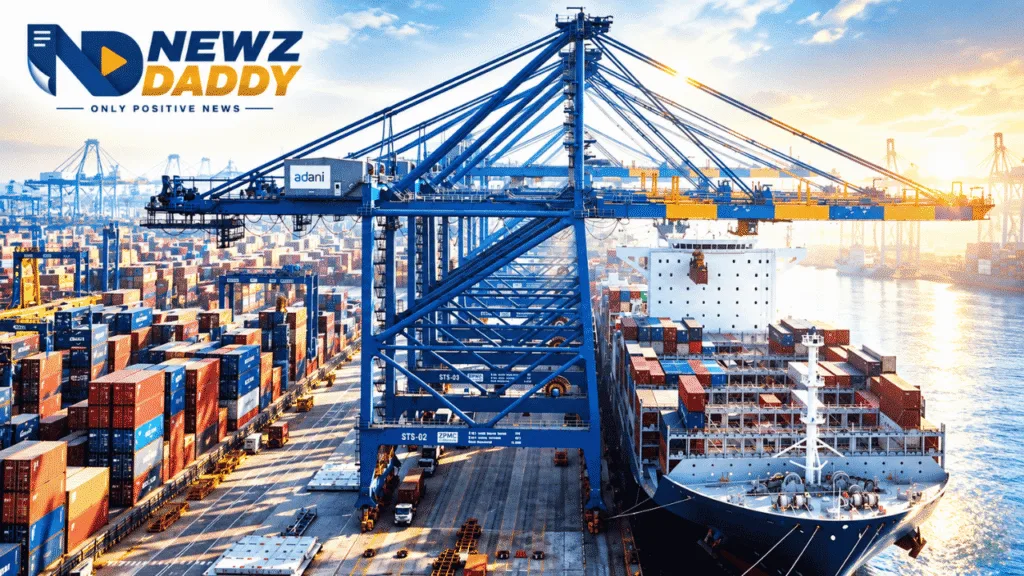
Mundra Port in Gujarat Sets New Benchmark for Container Traffic
Mundra Port Handles 105 Million Tonnes of Cargo in First Half of FY27, Sets Container Record
Adani Ports’ Mundra facility reports 105 MMT of cargo in six months, while Container Terminal 3 handles 309,955 TEUs in September 2026, surpassing its previous monthly record.
Mundra Port in Gujarat has handled 105 million metric tonnes (MMT) of cargo during the first half of the 2026-27 financial year, covering April to September 2026. The port, operated by Adani Ports and Special Economic Zone (APSEZ), has also reported a new monthly record for container handling at its Container Terminal 3 (CT3).
CT3 handled 309,955 twenty-foot equivalent units (TEUs) in September 2026, setting a new national record for monthly container throughput in India, according to the announcement. The terminal had set the previous record just a month earlier, handling 307,329 TEUs in August 2026.
The latest figures show that CT3 increased its monthly container volume by 2,626 TEUs over the previous record. The back-to-back records point to a rise in container activity at the port, although the figures alone do not establish how much of the increase came from higher trade demand, operational changes or other factors.
The cargo figure of 105 MMT covers the first and second quarters of FY 2026-27. It reflects the volume of goods handled at the port during the six months. However, the announcement does not provide a year-on-year comparison or a detailed breakdown by cargo category, making it difficult to measure the rate of growth against the same period last year.
The port’s role extends beyond Gujarat. Businesses in Rajasthan, Haryana, Punjab, Delhi NCR, Uttar Pradesh, Madhya Pradesh and Jammu and Kashmir use Mundra to move goods through international markets. The port’s links with inland transport networks help move imported raw materials to factories and send finished products to overseas buyers.
According to APSEZ’s published operational information, Mundra has 29 berths, including two single-point moorings, and an installed cargo capacity of 274 MMT. Its facilities handle containers, coal, crude oil, liquefied natural gas (LNG), fertilisers, agricultural goods, automobiles, steel and project cargo. These different cargo types serve several parts of India’s economy, including energy, manufacturing, farming and consumer trade.
The September figure of 309,955 TEUs gives an indication of the scale of activity at CT3. However, monthly throughput figures do not show how many individual shipments were delivered to final customers or how much cargo was produced in India.
A port’s work does not end when a ship reaches the coast. Cargo must move between ships, storage areas, trains, lorries and factories. Delays at any stage can affect delivery schedules and transport costs.
Mundra has a 64-kilometre electrified railway line connecting the port with the national railway network at Adipur. It also has road links through State Highway 48 and State Highway 6, connecting it to the wider road network. Its container operations use rail-mounted cranes and double-stack trains to move containers inland.
The port also has storage areas, cargo-handling equipment, conveyor systems and liquid cargo facilities. Its ability to handle different types of goods allows companies in several industries to use the same port infrastructure.
APSEZ’s 2024-25 annual report stated that its network of 15 domestic ports and terminals handled 27% of India’s total cargo and 45.5% of the country’s container cargo during that financial year. These figures cover the company’s entire Indian port network, not Mundra alone. The report also identified Mundra as the company’s flagship port and India’s largest commercial port.
For exporters, reliable cargo handling can help businesses meet shipping schedules and manage delivery commitments. Importers also depend on the timely arrival of goods, especially when factories need regular supplies of raw materials and equipment.
At the same time, higher cargo volumes bring questions about capacity, congestion, transport costs and environmental effects. More cargo moving through a port can increase the need for efficient road and rail services. The effect on nearby communities and the surrounding environment also remains relevant as port operations expand.
The latest announcement does not provide figures on vessel waiting times, cargo delivery costs, employment growth or environmental performance during the six months. These details would help build a fuller picture of how the increase in cargo volumes affects businesses and the region.
With 105 MMT of cargo handled between April and September and a new monthly container record at CT3, Mundra has reported a busy first half of FY 2026-27. The next set of operating results will help show whether the higher activity continues through the second half of the financial year.
Must Read:
APSEZ to launch Empty Container Yard at Mundra Port in Gujarat