


Rafale Deal Gives India Powerful Sky Advantage
Newz Daddy Defence Updates
Rafale Deal Delivers Powerful Defence Growth and Strategic Edge
In the ever-evolving landscape of global defence procurement, few deals have sparked as much debate as India’s proposed acquisition of additional Rafale fighter jets, the Rafale Deal. Critics have raised alarms over costs, indigenous content, source code access, and the generational leap to fifth-generation aircraft. Yet, a closer examination reveals that these concerns often stem from misconceptions or incomplete information. Far from being an extravagant splurge, the Rafale deal represents a prudent investment in national security, technological advancement, and economic growth. It’s time to demystify the narrative and appreciate the strategic value it brings to the Indian Air Force (IAF).
The Rafale is built by Dassault Aviation and is already in service with the Indian Air Force. The first batch of 36 aircraft has been deployed at Ambala and Hasimara. These bases are close to India’s northern borders, which shows how important the aircraft is for quick response. Defence experts note that the Rafale can carry advanced missiles like Meteor for long-range air combat and SCALP for deep strike missions. This gives the IAF the ability to hit targets far beyond visual range. In simple terms, it allows Indian pilots to see and strike first.

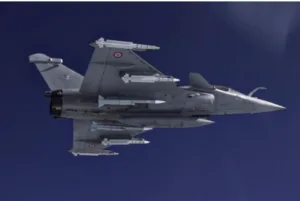
Let’s start with the elephant in the room: cost. Detractors argue that the deal is prohibitively expensive, but international benchmarks tell a different story. The latest Rafale variant India seeks is a significant upgrade over the 2016 batch, incorporating advanced avionics, enhanced stealth features, and superior weapon integration. Compare this to recent deals in Europe. Turkey’s agreement for 20 Eurofighter jets, including equipment and weapons, is projected to cost around €7 billion—translating to over €350 million per unit when fully equipped. Germany’s procurement of 20 latest Eurofighters, aircraft-only, comes in at €3.75 billion, or about €187.5 million each. Italy’s deal for 24 upgraded Eurofighters rings up to €7.5 billion, pushing the per-unit cost to €312.5 million. Stripped down to just the aircraft, these deals hover between €120-150 million per unit; add weapons and support, and you’re looking at €200 million or more.
India’s Rafale deal negotiations, however, aim lower. They include not just the jets but also the establishment of local production and maintenance facilities—elements absent in the European deals. This means technology transfer, supply chain integration, and long-term cost savings through domestic sustainment. In essence, India is securing a better bargain for a more comprehensive package, ensuring the IAF gets cutting-edge capability without the premium price tag often associated with such advancements.
It is also important to understand that defence deals are never just about buying aircraft. They include training for pilots and engineers, spare parts for many years, simulators, and support systems. The earlier Rafale deal included a weapons package and performance-based logistics. This ensures high aircraft availability. In past years, the IAF has faced low squadron strength. It is authorised for 42 squadrons but currently operates around 30 to 32. Extra Rafales can help fill this gap until India’s own projects mature.
Beyond costs, the conversation around indigenous content (IC) has been equally muddled. Media reports frequently cite a 30% IC figure as evidence of limited localisation, but this metric fails to capture the deal’s broader indigenisation thrust. The Indian government is pushing for manufacturing and maintenance hubs in India, involving technology transfer to domestic firms. This isn’t just about assembling kits; it’s about building an ecosystem. Indian companies will join the global supply chain for Rafale components, generating thousands of jobs and fostering expertise in high-tech aviation. Over time, this will reduce lifecycle costs, as maintenance shifts from foreign vendors to local entities.
India already has examples of such cooperation. Hindustan Aeronautics Limited has long built and maintained aircraft under licence. Private firms are also entering defence manufacturing. When parts are made in India, small and medium industries benefit too. This helps create skilled jobs and strengthens the wider economy. It also supports the government’s push for self-reliance in defence production.
Another flashpoint is the demand for access to source code. Often portrayed as a non-negotiable for sovereignty, “source code” is a term ripe for misunderstanding in defence circles. It refers to the proprietary software core that runs an aircraft’s systems. But integrating new weapons or upgrades doesn’t require a full source-code handover; what matters is the provision of integration interfaces. The IAF seeks the ability to incorporate indigenous weapons unilaterally, a capability that can be granted without exposing the original equipment manufacturer’s intellectual property.
Defence analysts point out that most countries do not receive full source codes from foreign suppliers. Instead, they get assured access for upgrades through agreed channels. India has already integrated its own weapons on other imported aircraft in the past. The focus is on operational freedom rather than ownership of every line of software. This approach protects sensitive technology while allowing flexibility.
Why invest in 4.5-generation Rafales when fifth-generation stealth fighters beckon? The reality is that only a select few nations, primarily the US, China, and Russia, field fifth-gen aircraft, and even they rely on 4.5-gen platforms for the bulk of operations. Fifth-gen jets excel in niche roles like deep penetration strikes or contested airspace denial, but everyday missions—air superiority, ground support, reconnaissance- fall to versatile, cost-effective 4.5-gen fighters.
India is also working on its own fifth-generation fighter, the Advanced Medium Combat Aircraft, led by the Defence Research and Development Organisation. However, such projects take time. Even the United States took decades to perfect its stealth fleet. Until then, a strong 4.5-generation force ensures readiness. A balanced mix gives depth and strength.
The Rafale deal isn’t a relic of outdated thinking; it’s a forward-looking strategy that bolsters India’s defence posture while seeding economic dividends. By addressing costs, indigenisation, technological access, and fleet balance head-on, India can transform potential pitfalls into pillars of strength. After all, in an era of geopolitical flux, air superiority isn’t just about jets. It is about wise planning and steady investment to keep the nation secure.
Must Read:
Defence Secretary Bhuj Visit Highlights India’s Border Power