


RBI Repo Rate Hike: Shekhar Patel Warns on Housing Costs Sector
RBI Raises Repo Rate to 5.50%; Real Estate Sector Watches Borrowing Costs
The Reserve Bank of India has raised its repo rate by 25 basis points to 5.50 per cent, ending a period of falling interest rates that had supported borrowers and businesses through much of 2025. The decision was announced on October 7 after the Monetary Policy Committee reviewed inflation, growth and wider financial conditions.
The increase is the first repo rate hike since February 2023. The RBI had cut the rate by a total of 125 basis points during 2025 before keeping it at 5.25 per cent through the first four policy reviews of 2026. The latest decision therefore marks a clear change in the direction of monetary policy. The MPC also moved its policy stance from neutral to calibrated tightening.
For homebuyers, the immediate concern will be the cost of loans. The impact will depend on how banks and housing finance companies pass the higher policy rate to borrowers. Home loans linked to external benchmarks are generally more sensitive to changes in the RBI’s policy rate, which means some borrowers could see higher EMIs or a longer repayment period if lending rates rise.
The RBI’s move comes as price pressures have returned. Retail inflation had risen to 4.82 per cent in August, above the central bank’s 4 per cent medium-term target. Higher crude oil prices, a weaker rupee and concerns about food prices following a weak monsoon have added to the pressure. The RBI has also raised its inflation forecast for 2026-27 to 5.2 per cent from its earlier estimate of 5 per cent.
At the same time, the central bank remains confident about India’s growth prospects. It has raised its forecast for real GDP growth in 2026-27 to 7.1 per cent from 6.7 per cent. This creates a difficult balance for policymakers: inflation needs closer attention while economic activity remains strong.
The property market is particularly sensitive to this balance because interest rates affect both buyers and developers. Higher finance costs can make home purchases more expensive, while developers may face higher costs for project finance and working capital. The effect is unlikely to be uniform across all segments. Buyers with high incomes and larger down payments may be better placed to absorb higher borrowing costs, while price-sensitive buyers may delay decisions.
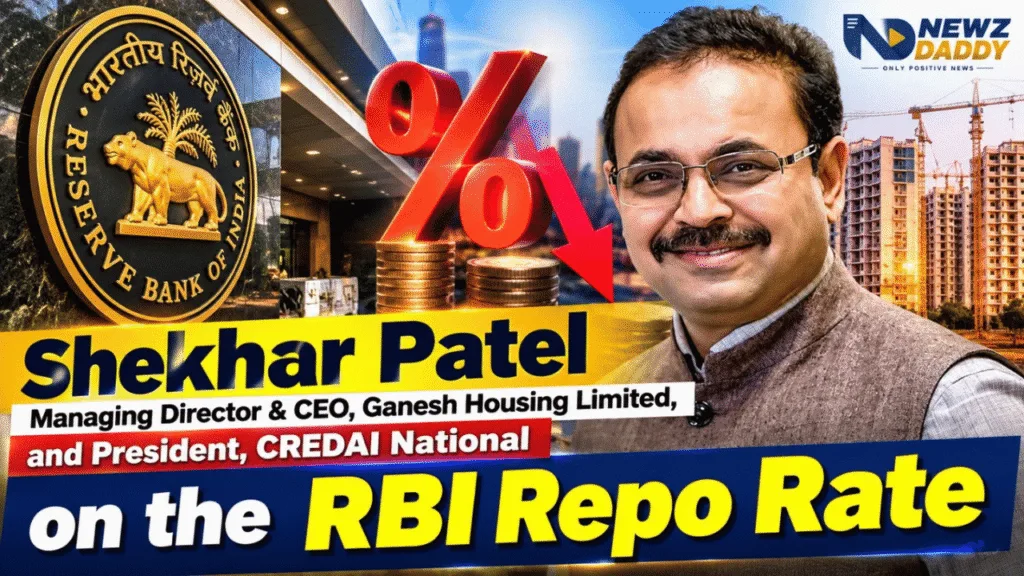
Shekhar Patel, Managing Director and CEO of Ganesh Housing Limited and President of CREDAI National, said:
“The RBI’s decision to raise the repo rate by 25 basis points to 5.50% reflects its assessment of the evolving inflation and growth outlook. A stable macroeconomic environment remains essential to sustaining investment confidence and supporting India’s long-term development aspirations.
Real estate has an important role in this journey—creating homes, enabling businesses, and generating employment across the economy. While the implications for borrowing costs will depend on lending conditions and transmission, housing affordability and access to finance remain important considerations for the sector’s sustained growth.
In commercial real estate, India’s position as a destination for global capability centres and enterprise expansion continues to create opportunities. Long-term occupier strategies, talent availability and quality infrastructure are likely to remain important drivers of demand alongside financing costs.
Cities such as Ahmedabad are well positioned to participate in this expanding opportunity. Gujarat’s emphasis on infrastructure and its policy focus on GCCs and industry provide a supportive context for investment, subject to implementation and broader market conditions.
Looking ahead, continued coordination across policy, infrastructure and urban development can help translate India’s economic potential into lasting opportunities. As an industry, our commitment remains to responsible development and to creating the homes, workplaces and urban environments that support the vision of Viksit Bharat”
Patel’s comments come as Ahmedabad’s commercial property market gains greater attention. Data from CBRE shows that Ahmedabad was among the leading cities for new office supply in the first half of 2026. India’s office market recorded 45.5 million square feet of absorption during the first half of the year, while global capability centres accounted for about 19.6 million square feet, or 43 per cent of total leasing.
Gujarat is also pursuing a formal policy to attract global capability centres. Its GCC Policy 2025-30 seeks to attract global companies, create high-skilled jobs and improve digital and physical infrastructure. Government documents identify Ahmedabad as the state’s largest GCC location, accounting for 17 per cent of Gujarat’s GCC footprint.
The state issued operational guidelines for the GCC policy in September 2026, giving companies and investors a clearer framework for implementation.
For Ahmedabad’s real estate sector, the rate decision therefore comes at a time when two forces are moving in opposite directions. Higher interest rates can put pressure on housing demand and financing costs, while office demand, GCC expansion and infrastructure spending continue to support commercial property activity.
The next few months will show how banks adjust lending rates and how buyers respond. For the property market, the repo rate is now one more factor that homebuyers, developers and investors will need to watch closely.
Must Read:
A Landmark Collaboration for Arbitration Advancement