


SCS 2026 Debates AI and Robotic Heart Surgery Future
Ahmedabad Hosts National Conference on Coronary Bypass Surgery as Heart Disease Cases Rise in India
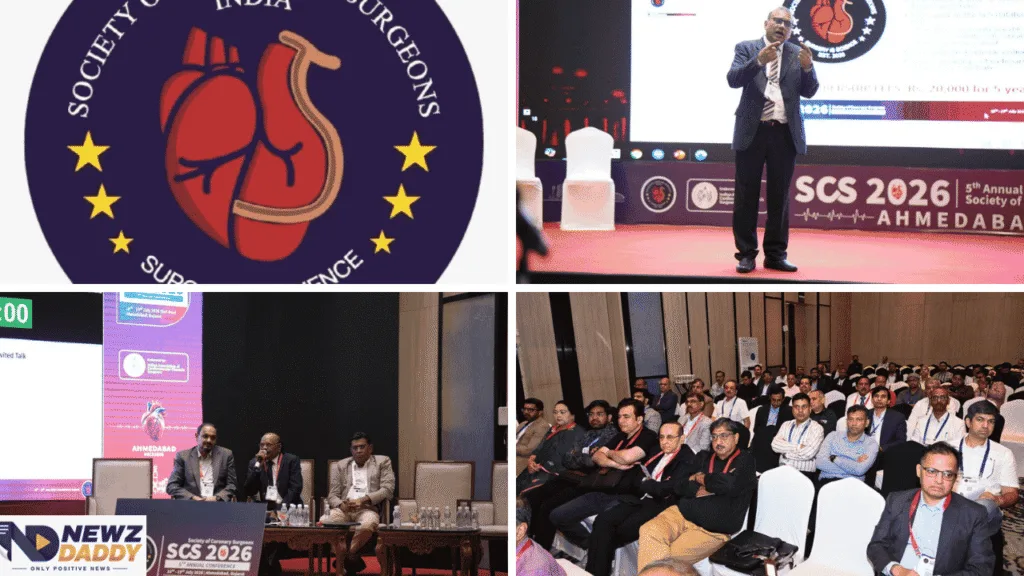
Ahmedabad became the meeting point for heart surgeons from across the country after hosting the fifth Annual Conference of the Society of Coronary Surgeons (SCS 2026) on 18 and 19 July at Club Babylon and Sheraton Convention Centre. More than 500 cardiac surgeons attended the event, which was endorsed by the Indian Association of Cardiovascular Thoracic Surgeons (IACTS). Specialists from India and overseas discussed new surgical methods, research findings and emerging technology for treating coronary artery disease.
The conference took place under the theme “Gifted Hands, Future Minds”. It focused on coronary artery bypass grafting (CABG), one of the most common operations used to restore blood flow to the heart when arteries become blocked. Sessions covered minimally invasive procedures, robotic surgery, artificial intelligence in surgical planning, patient specific treatment decisions and evidence-based practices designed to improve long-term recovery.
Heart disease remains one of the biggest health challenges in India. Coronary artery disease, which develops when blood vessels supplying the heart become narrowed or blocked, is responsible for a large share of deaths linked to cardiovascular illness. According to health experts, changing lifestyles, diabetes, high blood pressure, obesity, tobacco use and rising stress levels have contributed to more people developing heart problems at younger ages than in previous decades.
Speaking at the conference, Dr Sanjeeth Peter, Organising Chairman, SCS 2026 and Secretary, Society of Coronary Surgeons, said, “Ahmedabad had the privilege of hosting some of the finest minds in coronary surgery. The conference provided an exceptional academic platform for sharing knowledge, discussing challenging clinical cases and exploring cutting-edge surgical innovations that will shape the future of coronary artery bypass surgery. Our collective goal remained to improve patient outcomes through scientific excellence and collaborative learning.”
Doctors attending the meeting reviewed difficult surgical cases, watched operative videos, debated treatment strategies and examined findings from major clinical studies. Unlike many medical conferences that rely mainly on lectures, SCS 2026 placed strong emphasis on practical learning through expert discussions and case-based teaching.
Dr Dhiren Shah, Organising Secretary, SCS 2026 and Joint Secretary, Society of Coronary Surgeons, outlined the growing demand for bypass surgery in India.
He said, “Coronary artery bypass surgery has become one of the most important treatment options for patients with advanced coronary artery disease in India. Over the last five years, the annual number of bypass surgeries performed in the country has increased to approximately 2.75-3 lakh procedures, making India one of the highest-volume countries for CABG in the world. Nearly 15–20% of these patients are below the age of 45 years, demonstrating that bypass surgery is increasingly becoming an effective treatment option even for younger patients with complex coronary artery disease. Another significant trend is that around 20% of patients undergoing bypass surgery are women, with many of them below 40 years of age, reflecting the changing pattern of heart disease among younger women and highlighting the growing burden of premature cardiovascular disease. More than an academic gathering, the conference aimed to strengthen surgical expertise across the country by enabling participants to exchange experiences, understand emerging technologies and adopt globally accepted best practices. Ultimately, the knowledge shared during SCS 2026 is expected to translate into safer surgeries, faster recovery, improved long-term outcomes and better quality of life for thousands of heart patients across India.”
The figures presented at the conference point to an important shift in India’s heart disease profile. Cardiologists have reported a steady rise in coronary artery disease among younger adults. Factors such as sedentary lifestyles, unhealthy diets, smoking, uncontrolled diabetes and family history have all been linked to this trend. Doctors have repeatedly urged people to undergo regular health checks, especially if they have risk factors or a family history of heart disease.
Bypass surgery has changed considerably during the past decade. Surgeons now consider several factors before choosing the best treatment, including a patient’s age, overall health, heart function, the number of blocked arteries and other medical conditions. New surgical techniques aim to reduce complications, shorten hospital stays and help patients return to normal activities sooner. Robotic and minimally invasive approaches are also becoming more common at selected centres, although conventional bypass surgery continues to play a major role in treating complex heart disease.
Artificial intelligence was another subject of discussion during the conference. Medical experts explored how AI-based tools could assist surgeons in analysing patient data, planning operations and improving decision making. Doctors stressed that such technology is intended to support clinical judgement rather than replace the expertise of trained surgeons.
The scientific programme included sessions on multi-arterial grafting, minimally invasive CABG, robotic bypass surgery, hybrid coronary revascularisation, repeat bypass operations, perioperative care and future developments in coronary surgery. National and international faculty members shared their experience and reviewed recent advances that may influence clinical practice in the coming years.
The event was organised under the guidance of Patron Dr Sukumar H. Mehta. Dr Sanjeeth Peter served as Organising Chairman, while Dr Dhiren Shah was Organising Secretary. Dr Bhupesh D. Shah and Dr Gaurav Goel worked as Organising Joint Secretaries, and Dr Nikunj Vyas served as Organising Treasurer. The programme also featured contributions from leading specialists from India and abroad.
Medical conferences such as SCS 2026 play an important role in continuing professional education. As surgical techniques, medical devices, and research continue to advance, opportunities for doctors to exchange knowledge help improve standards of care. For patients, these discussions can lead to better treatment planning, safer operations and improved recovery after surgery.
The successful completion of SCS 2026 also reflected Ahmedabad’s growing role as a centre for advanced cardiac care, medical education and specialised healthcare. With major hospitals, experienced specialists and regular scientific meetings, the city continues to strengthen its position in India’s cardiovascular healthcare network while supporting the development of modern coronary surgery.