


Swarrnim Powers Net-Zero Campus Vision with AI ESG Move
Swarrnim Builds Smarter Green Future with ESG Technology
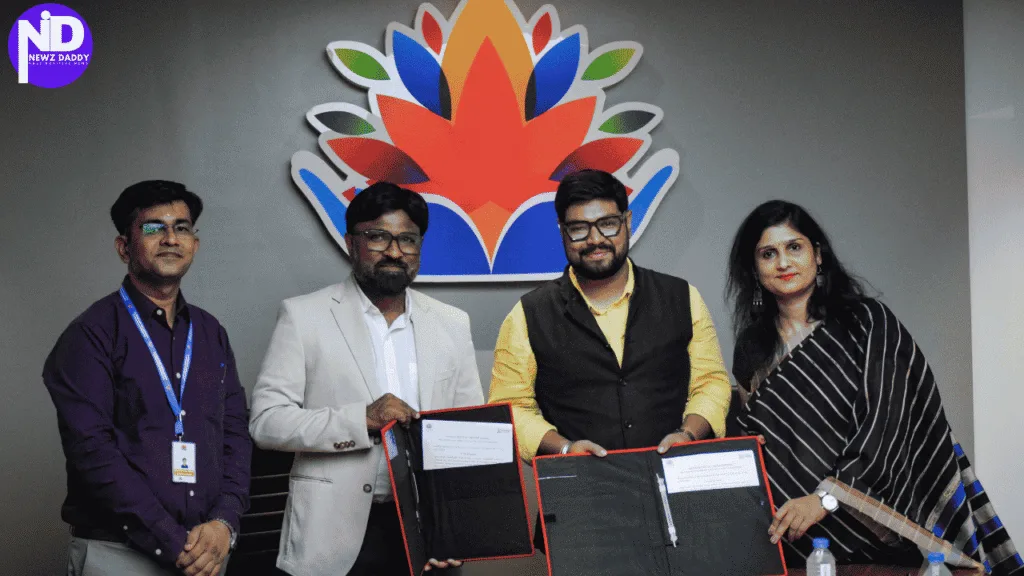
On the occasion of World Environment Day, Swarrnim Startup & Innovation University has launched a significant initiative aimed at promoting environmental responsibility, sustainable development, and future-focused climate action. The university has an MOU with United Carbon Technologies, a company specialising in environmental and climate technologies, to implement an AI-powered ESG (Environmental, Social & Governance) Framework across its campus ecosystem.
The move comes at a time when universities around the world are facing growing pressure to reduce their environmental impact. According to several global sustainability studies, higher education institutions are increasingly adopting carbon accounting tools, renewable energy solutions and digital monitoring systems to support climate goals. Many universities have already committed themselves to net-zero targets, recognising that educational institutions have a major role to play in shaping a sustainable future.
Under this initiative, the university will undertake comprehensive assessments of its carbon footprint, energy consumption, water management, waste management systems, resource efficiency, and overall environmental impact. Leveraging advanced ESG Analytics and Sustainability Intelligence Systems, the framework will generate data-driven insights and recommendations to support informed decision-making, energy optimisation and carbon emission reduction.
Experts in environmental management believe that accurate data is one of the most powerful tools in climate action. Traditional sustainability efforts often rely on periodic reports and manual observations. AI-powered systems, however, can analyse large amounts of information in real time, helping organisations identify areas where resources are being wasted and where improvements can be made more quickly. Such systems are becoming increasingly common in industries seeking to lower operational costs while reducing emissions.
The primary objective of this initiative is to strengthen the university’s long-term Net-Zero Campus Vision while integrating sustainability into its institutional operations and academic ecosystem. By adopting technology-driven environmental management practices, the university aims to create a more sustainable, efficient and environmentally responsible campus.
The concept of a net-zero campus has gained attention worldwide over the past decade. Net-zero does not simply mean planting trees or reducing electricity use. It involves balancing the amount of greenhouse gases produced with the amount removed from the atmosphere. Universities pursuing this goal often focus on renewable energy, energy-efficient buildings, waste reduction, sustainable transport and responsible water use. Such efforts can significantly reduce a campus’s environmental footprint while creating long-term financial savings.
A key role in facilitating this collaboration has been played by the Swarrnim Incubation Centre, which continuously connects industry leaders, technology experts, innovators and institutions to foster meaningful partnerships and future-oriented initiatives. This collaboration reflects the university’s commitment to creating an innovation-driven ecosystem that addresses real-world challenges through technology and research.
Industry-academia partnerships have become increasingly important in recent years. Research shows that collaborations between educational institutions and technology companies often accelerate innovation by combining academic knowledge with practical industry expertise. These partnerships also help students gain exposure to emerging technologies and real-world applications that may not be available through classroom learning alone.
The initiative will also create valuable opportunities for students, researchers and faculty members by providing practical exposure to emerging fields such as Climate-Tech, ESG Analytics, Green Innovation, Carbon Management and Sustainable Development. It is expected to encourage interdisciplinary research, industry-academia collaboration, startup innovation and sustainability-focused projects within the university community.
Demand for professionals with sustainability skills is growing rapidly across the world. Reports from international employment and consulting organisations indicate that businesses are increasingly seeking experts who understand ESG reporting, carbon accounting, renewable energy systems and sustainable business practices. As governments and companies introduce stricter environmental standards, graduates with experience in these fields are likely to find new career opportunities in both the public and private sectors.
Climate technology, often referred to as Climate-Tech, has emerged as one of the fastest-growing areas of innovation. Startups in this sector are developing solutions ranging from carbon capture and clean energy systems to waste-reduction technologies and environmental monitoring platforms. Universities that expose students to these areas early can help prepare the next generation of entrepreneurs and researchers to tackle environmental challenges.
Swarrnim Startup & Innovation University believes that universities of the future must evolve beyond traditional education to become centres of innovation that deliver meaningful solutions to societal and environmental challenges. This philosophy aligns with a growing global trend in higher education, where institutions are expected not only to educate students but also to create measurable social and environmental impact through research, innovation and community engagement.
Launched on World Environment Day, this initiative represents an important step towards building a smarter, greener and more sustainable campus through the integration of technology, innovation and environmental stewardship. As climate concerns continue to shape global priorities, initiatives such as this demonstrate how educational institutions can play an active role in supporting sustainability while preparing students for the challenges and opportunities of a rapidly changing world.