


Tarang Shakti Brings US and French Air Forces to Jodhpur
Tarang Shakti 2026: Jodhpur Brings Indian, US and French Air Forces Together
JODHPUR: The skies over Jodhpur have become a meeting point for air forces from several countries as the Indian Air Force begins the operational phase of Exercise Tarang Shakti 2026, bringing together aircraft, aircrew and senior military leaders from India and abroad.
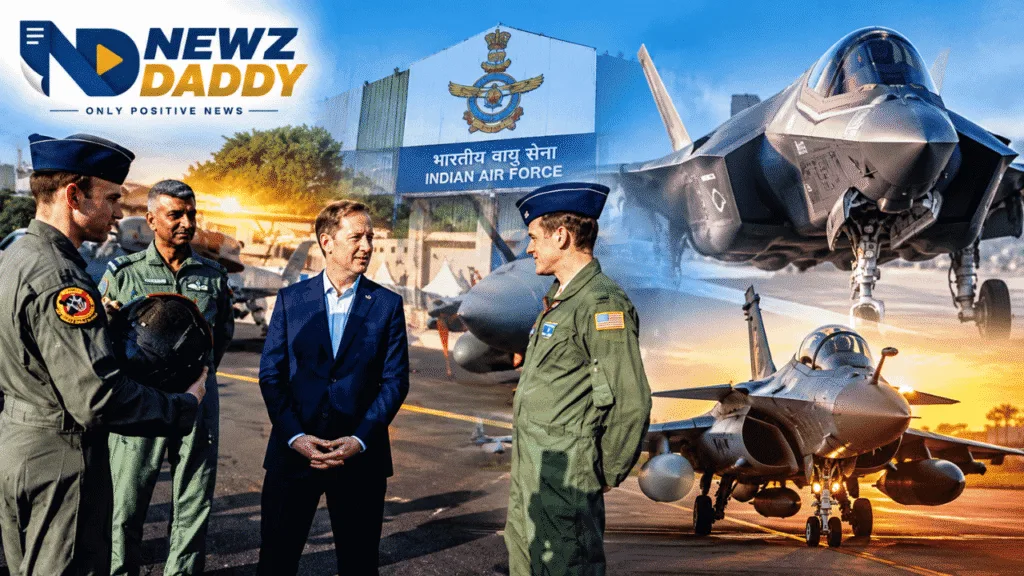
US Ambassador to India Sergio Gor visited Jodhpur during the exercise and witnessed flying activity involving participating air forces. His visit came as six US F-35 Lightning II fighter aircraft and more than 200 American airmen arrived at Air Force Station Jodhpur for their first participation in Tarang Shakti. The F-35 has previously appeared at Indian air shows, but this is its first participation in a military exercise in India.
The second edition of Tarang Shakti is being held from September 26 to October 12, with the main operational flying phase beginning on September 28. The exercise is hosted by the Indian Air Force at Air Force Station Jodhpur and adjoining air bases. Around 40 countries are taking part, with eight friendly foreign countries sending air assets and 32 nations attending as observers.
The participating countries with aircraft include Australia, Bangladesh, France, Germany, Greece, Sri Lanka, the United Arab Emirates and the United States. The foreign aircraft taking part include the US F-35 Lightning II, French Rafale fighters, UAE F-16s, French A400M and MRTT aircraft, Australian and Bangladeshi C-130 variants, Germany’s A400M and the UAE’s Global 6000.
For India, the exercise provides a setting where different air forces can train under common scenarios and work through the practical problems that arise when aircraft, crews and support teams from different countries operate together.
That is one reason the presence of the F-35 has drawn attention. The aircraft is a fifth-generation fighter designed around stealth, advanced sensors and networked operations. Its first exercise deployment in India allows Indian personnel to operate alongside a platform that is different from the aircraft normally flown by the IAF. The Indian Air Force also operates French-made Rafale fighters, giving the exercise another opportunity to place different aircraft types in the same training environment.
France has brought a substantial contingent of its own. The French Air and Space Force has deployed Rafale fighters, A330 MRTT tanker aircraft and A400M Atlas transport aircraft to Jodhpur as part of Mission Pégase 26. France also took part in the first edition of Tarang Shakti in 2024.
The French delegation includes Lieutenant General Dominique Tardif, Vice Chief of the French Air and Space Force. During his visit, Tardif met Exercise Director Air Vice Marshal Ashok Raj Thakur, with discussions reflecting the long-running defence relationship between India and France. The two countries regularly conduct the bilateral Garuda air exercise, along with Varuna naval exercises and Shakti exercises involving their armies.
Tardif’s role also comes at a time when France is examining how air power will change as aircraft, sensors, unmanned systems and other platforms become more closely connected. Speaking at the NDTV Defence Summit 2026, he described France’s future sixth-generation concept as a combat system built around collaborative operations rather than simply a new fighter aircraft.
The French deployment is part of a wider effort by Paris to maintain long-range air operations and work with partner countries. Mission Pégase has taken French aircraft across large distances and included stops and exercises with partner nations. Its participation in Tarang Shakti gives French crews another opportunity to train with the IAF in a multinational setting.
For the Indian Air Force, Tarang Shakti follows the first edition held in 2024. That exercise was the IAF’s first large multinational air exercise of its kind and involved several foreign air forces operating from Indian bases. The 2026 edition expands the number of countries involved and introduces a wider mix of combat, transport, surveillance and refuelling aircraft.
Air Marshal Ashutosh Dixit, Vice Chief of the Air Staff, said before the exercise that the aim was to learn from one another, operate together and prepare for future air warfare. The planned activities cover counter-air operations, air defence, combat missions, reconnaissance, airlift and air-to-air refuelling.
The exercise is also taking place close to India’s western border, giving the participating forces a desert environment in which to practise flying and mission procedures. For pilots and support teams, such training involves much more than flying aircraft in formation. It requires planning missions, exchanging information, following common procedures and coordinating aircraft and ground personnel.
At Jodhpur, the visits by Sergio Gor and Dominique Tardif have added a senior diplomatic and military dimension to the exercise. Gor’s presence came as American F-35s arrived for their first Tarang Shakti participation, while Tardif’s engagement with the Indian exercise leadership underlined the continuing defence relationship between India and France.
With the exercise continuing until October 12, the focus will remain on flying operations and professional interaction between the participating air forces. For India, Jodhpur is serving as the main operating base for an exercise that brings together aircraft and crews from different military systems under a common training programme.
The immediate test will be practical: how well the participating forces can communicate, plan and conduct missions together. Those lessons are among the main reasons multinational air exercises such as Tarang Shakti are held.