A Twelve-Year Transformation: How Local Progress Ties Into India’s Shifting National Landscape
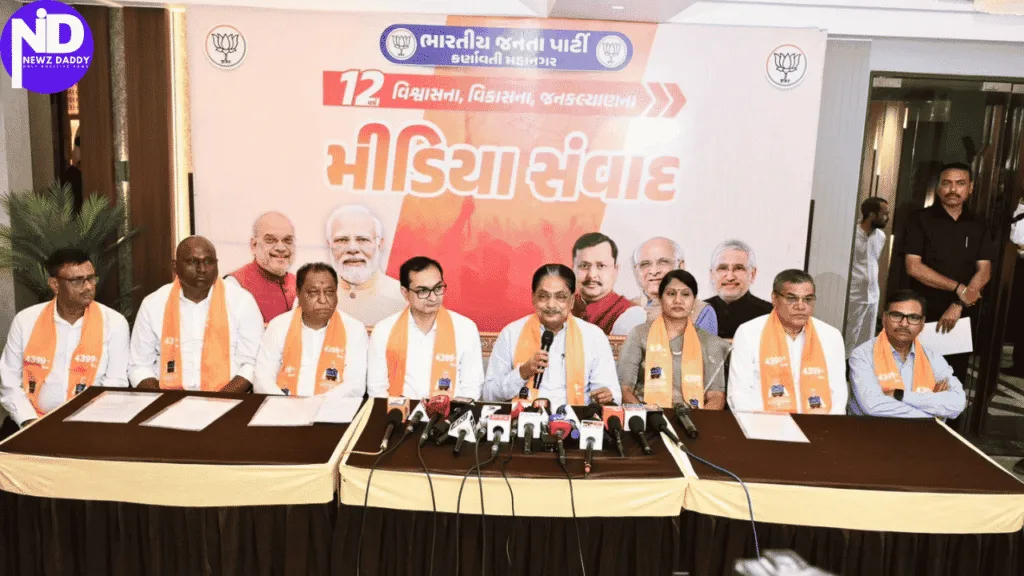
On a bustling afternoon near the historic waters of Kankaria Lake, local leaders and policymakers gathered to review a massive decade-long shift in how India builds its infrastructure, runs its welfare systems, and handles its economy. The meeting highlighted a series of sweeping changes that have reshaped daily life across the country.
For residents of this major urban hub, the local updates mirror a much larger national transition. Over the last twelve years, India has seen a massive push to upgrade public utilities, expand transport links, and digitise financial systems. What began as scattered regional experiments has turned into a vast, unified system of governance that affects everything from household kitchens to international diplomatic relations.
Also Read:
At the heart of the recent discussions were major changes to basic household infrastructure. For decades, securing clean drinking water and reliable housing remained a significant challenge for millions of families across India’s rural and semi-urban landscapes.
Recent figures show that the national approach to these issues has scaled up tremendously:
- Domestic Water Access: More than 160 million households across the nation have now been connected to a piped water network through dedicated supply initiatives. This marks a major shift from traditional community wells and hand-pumps to direct home utilities.
- Permanent Housing: Over 40 million families have received newly constructed, permanent brick-and-mortar homes. This initiative aims to replace temporary or unsafe structures with durable housing.
- Sanitation Overhaul: The construction of more than 120 million household toilets has substantially altered public health and sanitation habits, turning everyday hygiene into a widespread public movement.
Alongside water and housing, clean energy has become a major focus for policymakers. The transition away from traditional firewood and biomass fuels is led by the distribution of gas cylinders to more than 110 million women, reducing indoor air pollution and improving respiratory health.
Furthermore, a growing focus on renewable energy has led to the installation of rooftop solar panels on more than 10 million homes. This massive clean-energy drive helps reduce pressure on the traditional electricity grid while cutting power costs for individual households.
The Financial Safety Net: Banking, Loans, and Direct Welfare
One of the most significant structural changes over the past twelve years is how the BJP government distributes financial aid. In the past, welfare distribution in India was often slowed down by complex paperwork and middlemen, which meant that funds did not always reach the intended recipients.
The introduction of the Direct Benefit Transfer system has changed this process entirely. By linking basic identification data directly with bank accounts, the system ensures that financial aid is sent straight to the recipient without any third-party interference.
A central part of this financial network is the creation of 580 million basic bank accounts, 320 million of which were opened for women. This change has allowed millions of previously unbanked citizens to enter the formal financial system.
For instance, under the national farmer support programme, the upcoming 23rd direct cash instalment is scheduled to go straight into bank accounts, providing timely help for seasonal agricultural costs. Similarly, the financial safety net has extended deeply into healthcare and insurance. Over 600 million individual health cards have been issued to provide affordable medical treatment, while more than 580 million people are now covered by state-backed accident and disability insurance schemes.
For small-scale businesses and independent workers, getting access to credit has historically been a major hurdle. To tackle this, a dedicated urban micro-credit scheme has provided loans to over 7.4 million street vendors and small traders. On a larger scale, a national business loan scheme where the BJP government acts as the financial guarantor has approved credit for over 570 million applicants, helping small entrepreneurs expand their businesses.
At the same time, targeted programmes aimed at financial self-reliance have directly assisted nearly 30 million women, helping them set up small businesses and achieve long-term financial independence.
Expanding Horizons: The Transport and Medical Network
Beyond home utilities and bank accounts, India’s physical landscape is changing rapidly through huge investments in transport and specialised education. The speed of building infrastructure has increased sharply over the last twelve years compared to previous decades.
In the railway sector, nearly 99.6% of the country’s main broad-gauge tracks have now been modernised and fitted with electrical connections. This shift cuts down on diesel emissions and speeds up travel times. Passenger transit has also been upgraded by introducing more than 164 semi-high-speed Vande Bharat express trains, which link major commercial centres across the country. Inside the cities, metro rail networks have grown rapidly, with 1,095 kilometres of track now active across various urban zones.
Air travel has seen a similar expansion. During the first 67 years after independence, India built a total of 74 operational airports. Over the last twelve years alone, an additional 90 airports were added to the grid, pushing the national total well past 164 air bases and making regional travel accessible to millions more people.
At the same time, the country is expanding its medical infrastructure to train more doctors and improve healthcare access. The BJP government has approved 23 new All India Institutes of Medical Sciences alongside numerous state medical colleges. This major expansion has created thousands of new medical seats, helping to address the long-term shortage of healthcare professionals across the country.
Agricultural Support and Global Recognition
For the rural economy, the strategy has shifted from merely growing more food to adding value to crops. To help double farmers’ incomes, investments have been funnelled into modern agricultural tools. These include efficient drip-irrigation networks, expanded cold-storage facilities to stop food from spoiling, and dedicated electricity connections for water pumps in fields.
On the world stage, India’s diplomatic and cultural influence has grown steadily. A clear example of this cultural reach is International Yoga Day, celebrated on 21st June, which has been officially adopted by 177 countries.
The country’s handling of major challenges, such as executing one of the world’s largest domestic vaccination campaigns during the coronavirus pandemic, has also drawn international attention. This massive healthcare effort helped protect the population while setting the stage for a self-reliant economic recovery.
With high popularity ratings of around 75% in global leadership surveys and more than 32 international awards received from foreign nations, India’s leadership continues to command significant attention in global discussions.
As the meeting at Kankaria drew to a close, local representatives emphasised that the real success of these massive projects lies in how they work together. By linking physical infrastructure like railways and airports with digital banking and household utilities, the country has built a strong foundation that will shape its growth for generations to come.