


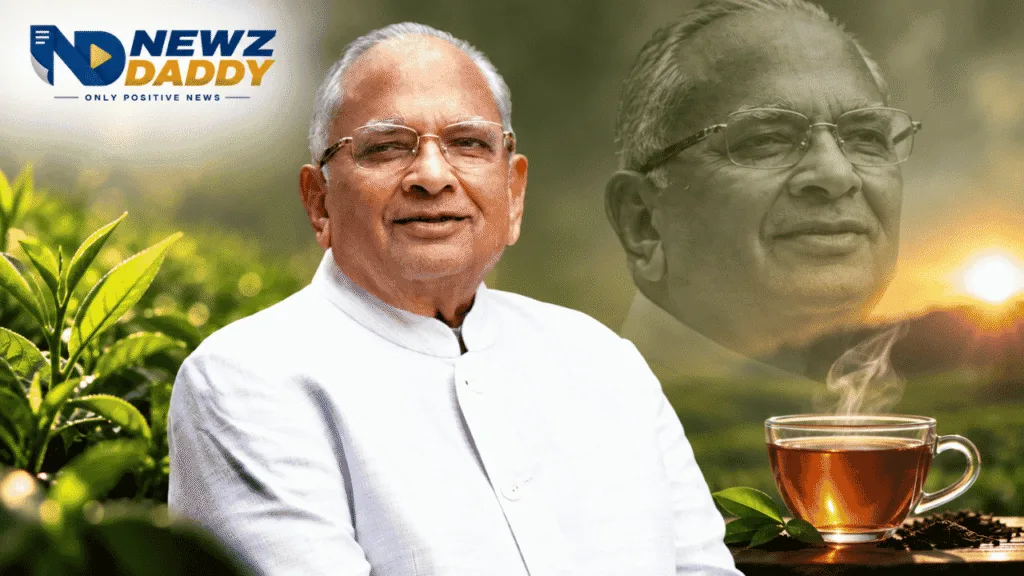
Wagh Bakri Chairman Piyush Desai Dies in Ahmedabad, Gujarat
Piyushbhai Desai, Wagh Bakri chairman and veteran tea trader, dies on 15 September
Piyushbhai Desai, chairman of the Wagh Bakri Tea Group and a veteran of India’s tea trade, died on 15 September 2026. He had spent more than six decades in the tea business and was closely involved with Wagh Bakri and several tea trade bodies.
Desai was known in the industry for his knowledge of tea tasting and evaluation. Over the years, he was involved in the expansion of Wagh Bakri from its Gujarat base into markets across India and overseas. The company now has a presence in more than 66 countries, according to recent company and industry information.
His career also placed him at the centre of debates affecting India’s tea trade. He served as president of the Western India Tea Dealers Association (WITDA) and had been associated with the Federation of All India Tea Traders Association (FAITTA), the national body representing tea packers and traders. In 2016, The Economic Times identified him as chairman of Wagh Bakri and president of WITDA.
Desai’s involvement with WITDA was not limited to organisational work. He spoke publicly about tea quality, prices, imports, production and the difficulties faced by growers and traders. In 2014, for example, he argued that shortages and rising consumption could put pressure on tea prices. Earlier, he had called for greater attention to the quality of tea entering the market.
His role was also tied to the close commercial relationship between Gujarat and Assam. Gujarat has long been one of India’s major tea-consuming markets, while Assam is the country’s leading tea-producing region. In 2013, Desai said Gujarat’s annual per-person tea consumption was about 1.4 kg, compared with a national average of about 700 grams.
The recognition of Desai’s work came shortly before his death. In January 2026, the North Eastern Tea Association (NETA) gave him its Lifetime Achievement Award. NETA officials described him as a senior figure in India’s tea industry and pointed to his more than 60 years of experience in tea tasting, evaluation and trade.
NETA, founded in 1981, represents tea producers in Assam, Nagaland and Arunachal Pradesh. Its members account for about 165 million kg of made tea each year, according to information reported when the award was announced. The award also reflected the long business connection between tea producers in the north-east and large consuming markets such as Gujarat.
Desai’s connection with Wagh Bakri went back to a business that had begun generations earlier. The company traces its tea roots to 1892, when Narandas Desai acquired tea estates in South Africa. After returning to India, Narandas established The Gujarat Tea Depot Co. in Ahmedabad in 1919. The Wagh Bakri name was registered in 1934.
The business entered packaged tea in a new form in 1980 with the establishment of Gujarat Tea Processors & Packers Ltd. That move helped the family business shift from its earlier wholesale and retail operations towards packaged tea. By the early 2000s, Piyush Desai was serving as chairman and was also active in national tea trade organisations.
A 2002 interview recorded another side of Desai’s public life. He spoke about the family’s charitable activities and said that the VN Desai Charitable Trust had been directing part of its income towards social causes since 1985. He also described his interest in bringing members of the trading community together after the violence in Gujarat that year.
Social work remained part of his activities in later years. Desai worked with Gujarat Vidyapith and was associated with its activities during the period when Naranbhai Desai, son of Mahadevbhai Desai, served as its Chancellor. Mahadevbhai Desai had been a close associate and personal assistant of Mahatma Gandhi. Desai also served as president of the Blind People’s Association (India) for about two years and was a trustee of Sadvichar Parivar.
His association with Gujarat Vidyapith reflected his interest in Gandhian thought. The Desai family’s history with Gandhi also goes back to Narandas Desai’s return from South Africa. Wagh Bakri’s own historical account says Narandas returned to India with a letter from Gandhi praising his honesty and ability in the tea business.
Desai remained closely involved with Wagh Bakri for several decades and continued to be associated with its affairs until 2020. He then took on more of a guiding role for the next generation, according to accounts released after his death.
That transition had taken shape over many years. Earlier reporting showed Desai gradually handing more day-to-day responsibilities to younger members of the family while continuing to take an active interest in tea quality, industry matters and the company’s direction.
The business he helped develop has since grown well beyond Gujarat. Wagh Bakri’s current operations include packaged teas and several other tea brands, while the company says its products are sold in international markets. Its own history records expansion into Rajasthan in the late 1990s, Maharashtra in 2007 and further domestic and international markets in later years.
Desai’s death therefore closes a long chapter in the history of Gujarat’s tea trade. His working life covered a period in which tea moved from traditional wholesale and retail businesses into large packaged consumer brands, while Indian tea companies also began building overseas markets.
For the Wagh Bakri group, his influence is reflected in the business structure handed to the next generation. For the wider tea trade, his record includes years spent representing traders, discussing industry problems and working on issues linked to tea quality and supply. His work with educational and community organisations added another part to a career that extended beyond the company’s offices.
Piyushbhai Desai was associated with the tea trade for more than 60 years. His death on 15 September 2026 marks the passing of one of the long-serving figures who helped shape the modern tea business in Gujarat and took part in the wider development of India’s organised tea trade.