


What Is One Nation One Election?
Why Congress Is Against One Nation One Election Plan Of The Modi Government?
“One Nation, One Election” is a plan to sync central, state, and possibly local elections so that people vote once every five years for most of their representatives, instead of facing elections almost every year.

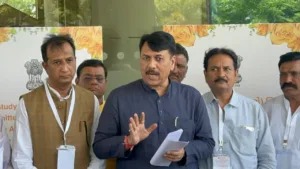
The Congress party has strongly opposed the “One Nation One Election” proposal, with Gujarat Pradesh Congress Committee President Amit Chavda calling it a threat to democracy and the Constitution. Speaking in Gandhinagar after a Joint Parliamentary Committee (JPC) meeting, Chavda said the bill is aimed at centralising power and weakening the federal structure of India.
He addressed the media along with party MLAs and raised several concerns about the proposal, including its impact on state governments, election costs, and voter understanding.
Concerns Over Federal Structure
Chavda said the One Nation One Election bill goes against the basic spirit of the Indian Constitution. According to him, the proposal reduces the powers of state governments and limits their autonomy.
India follows a federal system where both the Centre and states have defined powers. Chavda argued that holding all elections together could shift too much control to the central government. This, he said, would weaken the balance between national and state authorities.
He also pointed out a key provision in the bill. If a state government falls before completing its term, elections will only be held for the remaining period. Chavda said this goes against the principle shared by Dr Babasaheb Ambedkar in 1949, where voters were meant to elect a full five-year government.
Cost Argument Questioned
One of the main arguments in favour of the proposal is that it will reduce election costs. However, Chavda rejected this claim.
He said that election expenses make up less than 1% of the total budget of the Centre and states combined. In contrast, conducting elections across the country at the same time would require massive security arrangements.
He also raised concerns about the cost of new Electronic Voting Machines (EVMs) and Voter Verifiable Paper Audit Trail (VVPAT) machines. According to him, spending billions of rupees on new equipment is neither practical nor economically sensible.
Impact on Voters and Local Issues
Chavda warned that holding Lok Sabha and Assembly elections together could confuse voters. He said national issues may dominate the narrative, pushing state and local concerns into the background.
In such a scenario, voters may find it difficult to decide which government to hold accountable for specific issues. This could reduce the importance of local governance and weaken democratic participation at the grassroots level.
Model Code of Conduct Debate
The Centre has argued that frequent elections slow down development work due to the Model Code of Conduct. Chavda dismissed this claim.
He clarified that projects and decisions approved before the code comes into force are not stopped. Therefore, he said, linking the code to delays in development is misleading.
Why This Matters
The One Nation One Election proposal has sparked a nationwide debate. Supporters say it can bring efficiency and reduce repeated election cycles. Critics, including the Congress, believe it risks weakening democratic systems.
The issue is important because it touches on the structure of governance in India. It raises questions about how power is shared, how elections are conducted, and how voters engage with democracy.
What Happens Next
The proposal is currently under discussion at various levels, including parliamentary committees. Any major change to the election system would require constitutional amendments.
This means the bill will need broad political support, which may be difficult given the strong opposition from several parties.
The debate is expected to continue, with more discussions on legal, political, and practical aspects.
Conclusion
The One Nation One Election proposal remains a key political issue in India. Amit Chavda and the Congress party have made it clear that they see it as a risk to federalism, voter clarity, and economic practicality.
As discussions move forward, the focus will remain on whether the proposal strengthens governance or challenges the core principles of the Constitution.