


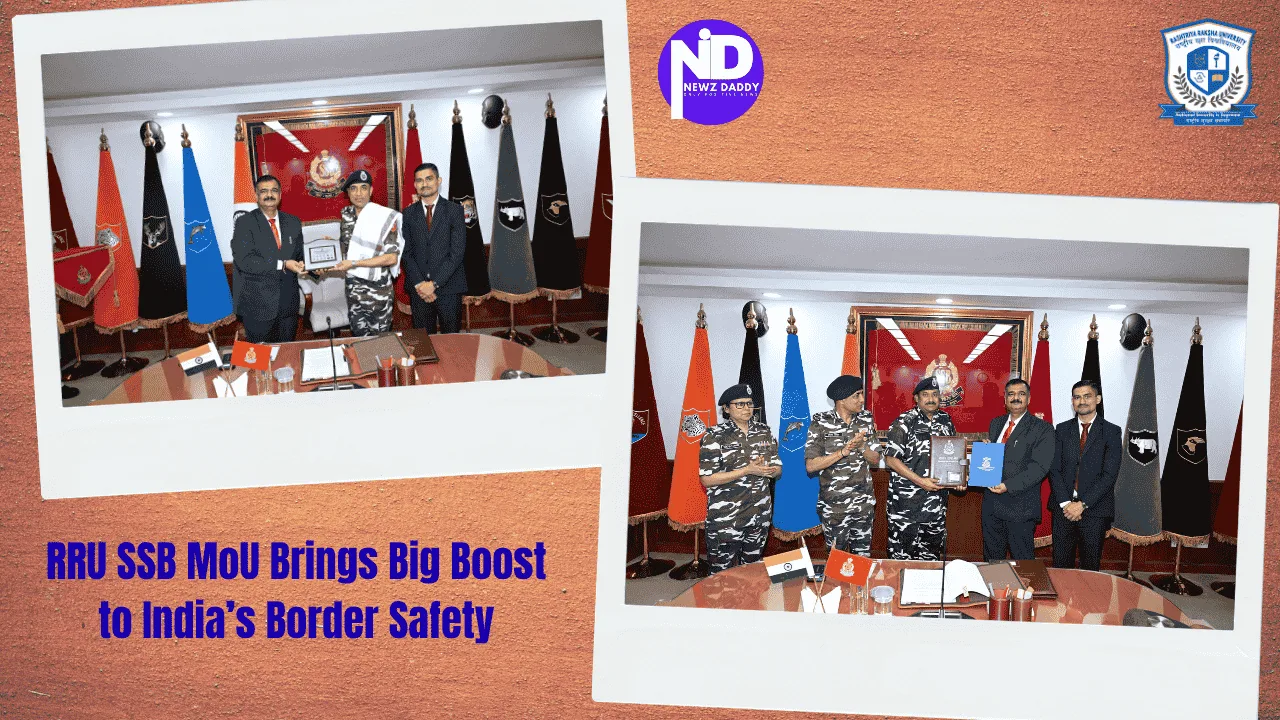
RRU SSB MoU Brings Big Boost to India’s Border Safety
RRU SSB MoU Strengthens Border Forces with Smart Learning Systems
India has taken another strong step to improve its internal security system. A new agreement between Rashtriya Raksha University and the Sashastra Seema Bal Academy shows how the country is trying to connect education with real field training. This move is not just about paperwork. It is about building a smarter and better-trained force for the future.
Rashtriya Raksha University, known as RRU, is one of India’s few universities fully focused on national security and policing. It was set up as an Institution of National Importance, which means it plays a key role in shaping the country’s security knowledge. Over the years, RRU has worked with police forces, intelligence units, and defence groups to bring modern learning into security training. This gives it the right base to support forces like the SSB.
The Sashastra Seema Bal is a central armed police force under the Ministry of Home Affairs. It guards India’s borders with Nepal and Bhutan. These borders are open, which means people can move across them easily. This makes the job of the SSB more complex. Officers need to watch for illegal activities while also helping local people. Because of this, better training and updated knowledge are very important for the force.
The MoU between RRU and the SSB Academy focuses on giving official academic value to the training that SSB officers already go through. In India, many security forces have strong training systems, but they often do not get formal academic recognition. This new step will change that. Officers may now earn certificates, diplomas, or even degrees based on their training. This can help them grow in their careers and also open more opportunities in the future.
One key part of the agreement is the sharing of knowledge and resources. RRU has modern labs and research tools. These include cyber security labs, forensic science setups, and simulation centres. Such facilities help officers learn about new threats like cybercrime, drone attacks, and digital surveillance. On the other hand, the SSB brings real field experience. Their ground-level knowledge helps make training more practical and realistic.
The mention of the “Smart Border Management” course is important. Around the world, border security is changing fast. Countries are using cameras, sensors, drones, and artificial intelligence to monitor borders. India is also moving in this direction. Programmes like the Comprehensive Integrated Border Management System (CIBMS) are already in use in some areas. Training SSB officers in such systems will help them handle modern challenges better.
Another important part of the agreement is upskilling and reskilling. Security threats do not stay the same. New risks like cyber attacks, fake identity networks, and cross-border smuggling keep growing. Officers who were trained years ago need to update their skills regularly. This MoU supports lifelong learning, which is now a key idea in India’s National Education Policy.
The structured plan mentioned in the agreement shows that this is a serious and long-term effort. Course assessment will make sure that training hours match academic credits. This is similar to how universities count study hours for degrees. Curriculum enhancement will help add missing topics so that courses meet full academic standards. Standardised evaluation will ensure fairness and quality, just like in regular universities.
The idea of setting up an RRU Desk at the SSB Academy is also very practical. Many partnerships fail because of poor coordination. A dedicated desk will help manage data, track progress, and solve issues quickly. It will act as a bridge between the university and the force.
This move also fits into the larger vision of integrated training under the Ministry of Home Affairs. In recent years, the government has been trying to bring all security forces onto a common platform for training and learning. This helps improve teamwork between different forces like the police, paramilitary, and intelligence agencies.
The use of the National Credit Framework is another big step. This system allows people to earn and transfer credits across different types of learning, including formal education and skill training. By linking SSB training to this framework, the government is making sure that the hard work of officers gets proper recognition.
In simple terms, this MoU is about respect and growth. It recognises that the training of SSB officers is valuable and deserves academic credit. At the same time, it gives them a chance to learn more and move ahead in their careers.
This partnership shows a clear shift in India’s approach to security. It is no longer just about physical strength or field drills. It is about knowledge, technology, and continuous learning. By bringing together a top security university and a frontline force, India is building a system that is smarter, stronger, and ready for the future.
Must Read:
Rashtriya Raksha University Hosts Global Defence Summit
Rashtriya Raksha University Defence Attachés Conference Shines