


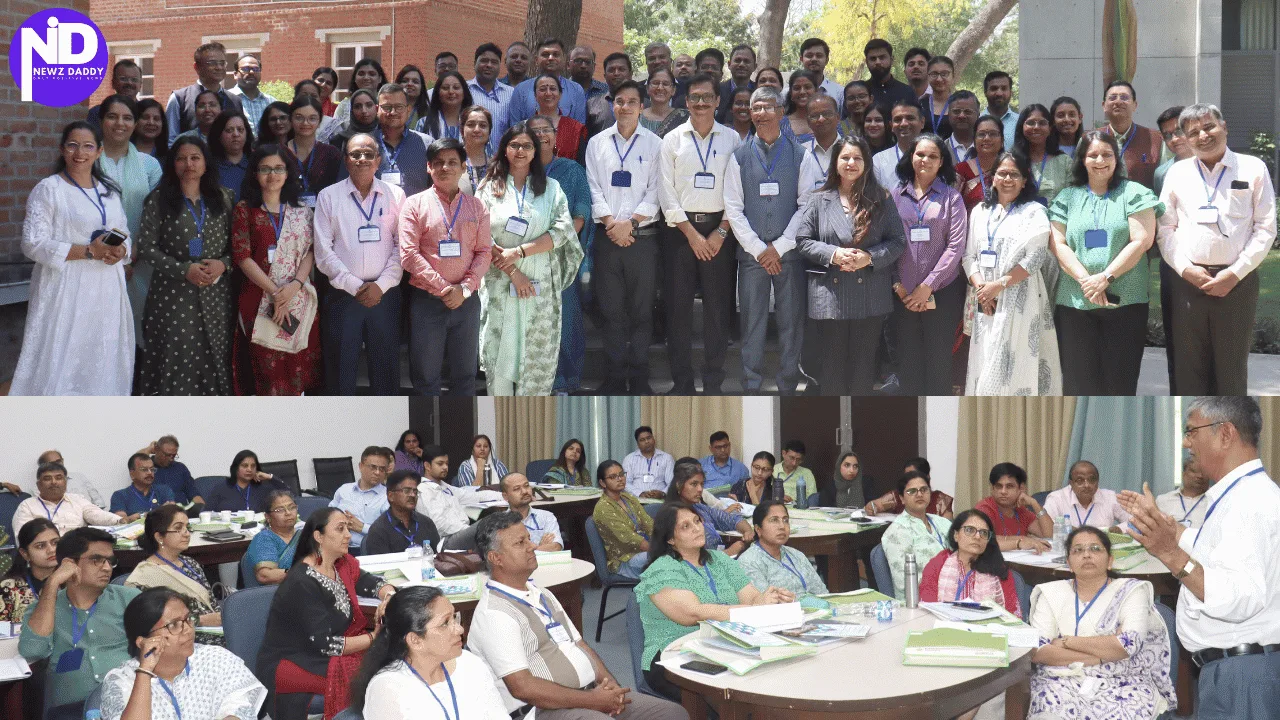
Case Writing Workshop 2026 Ahmedabad Sparks Big Change
EDII Hosts Case Writing Workshop Under 2nd Case Connect on Entrepreneurship 2026
The Entrepreneurship Development Institute of India (EDII), Ahmedabad, under the aegis of Centre for Research in Entrepreneurship Education and Development (CREED), housed at EDII to promote research-based initiatives, is organising ‘Case Writing Workshop 2026’ from April 29 – May 1, 2026, as part of the 2nd Case Connect on Entrepreneurship 2026.
A total of 69 case leads were received, out of which 55 were accepted. The 55 scholars and researchers represent 40 universities.
The workshop aims to impart insights into the fundamentals of case writing, effective structuring, analysis of a model case through group discussions, systematic review of their drafts, one-on-one mentoring for refining their work and guidance on preparing impactful teaching notes. The pedagogy involves interactive discussions, peer learning and extensive mentoring.
The submitted cases are being reviewed by Dr Satyajit Majumdar, Distinguished Adjunct Professor, EDII; Dr Amitabh Deo Kodwani, Professor, IIM Indore and Dr Gordhan Kumar Saini, Professor, TISS Mumbai. The event also features panel discussions and expert sessions, offering researchers valuable inputs into case writing and research. Mr Ganapathi Batthini, Coordinator, Centre for Research in Entrepreneurship Education and Development (CREED), is the Coordinator of the workshop.
This workshop comes at a time when case-based learning is gaining strong importance in business and entrepreneurship education across the world. Top institutes such as Harvard Business School and IIMs have long used real-life cases to help students understand complex business problems. In India, this method is now being widely adopted, especially in entrepreneurship courses, where real stories of start-ups and founders give practical lessons that textbooks often miss.
EDII has played a key role in building entrepreneurship education in India for many years. It works closely with government bodies, international agencies and universities. Its focus is not just on teaching theory but also on creating real-world impact. Workshops like this help teachers and researchers build strong case studies based on Indian businesses, which are often under-represented in global case libraries.
The response to this workshop shows a growing interest in research-based teaching. Receiving 69 case leads from across the country shows that many scholars are now working on documenting real business journeys. Selecting 55 of them also reflects the quality and seriousness of submissions. Representation from 40 universities means that the learning from this workshop will spread widely across different regions and institutions.
Case writing is not easy. It requires strong research, clear thinking and the ability to present facts in a simple but engaging way. Many educators struggle with structuring a case or writing teaching notes that guide classroom discussion. This workshop directly addresses these gaps. By including group discussions and model case analysis, participants get to see how a good case is built step by step.
One-on-one mentoring is another strong part of the programme. In many academic workshops, participants do not get enough personal feedback. Here, experts review each draft closely and guide improvements. This helps participants refine their work and make it suitable for classroom use or publication in journals.
The involvement of experienced faculty like Dr Satyajit Majumdar, Dr Amitabh Deo Kodwani and Dr Gordhan Kumar Saini adds strong academic depth. These experts have years of experience in teaching, research and case development. Their feedback is expected to help participants improve both content quality and research rigour.
Peer learning is also a key feature. When participants from different universities share ideas, they learn from each other’s experiences. For example, one researcher may present a case on a rural enterprise, while another may focus on a tech start-up. Such diversity helps everyone see different perspectives and improve their approach.
Panel discussions and expert sessions give broader insights into trends in entrepreneurship research. Today, topics like social entrepreneurship, sustainability and digital start-ups are becoming important. Workshops like this help researchers align their work with these emerging areas.
CREED’s role in organising this workshop is important. The centre focuses on building research capacity in entrepreneurship education. By hosting such events, it encourages more scholars to write cases, publish research and contribute to knowledge creation in India.
In recent years, there has been a clear push in India to strengthen entrepreneurship education. Government initiatives like Startup India and Atal Innovation Mission have created a strong base. However, education needs to match this growth. Real, India-focused case studies can help students understand local challenges such as funding gaps, market access and regulatory issues.
Workshops like the Case Writing Workshop 2026 help bridge this gap. They equip educators with the skills needed to create meaningful learning material. Over time, this can improve the quality of teaching and produce better entrepreneurs.
Overall, this initiative by EDII reflects a clear effort to strengthen research, teaching and practical learning in entrepreneurship. By bringing together scholars, experts and institutions, it creates a space where ideas can grow, and knowledge can be shared in a simple and useful way.