


Hanuman Jayanti Ahmedabad Brings Divine Energy Surge
Hanuman Jayanti Ahmedabad Celebration Shows a Strong Spirit of Devotion
Temple of Sankatmochan Mahavir
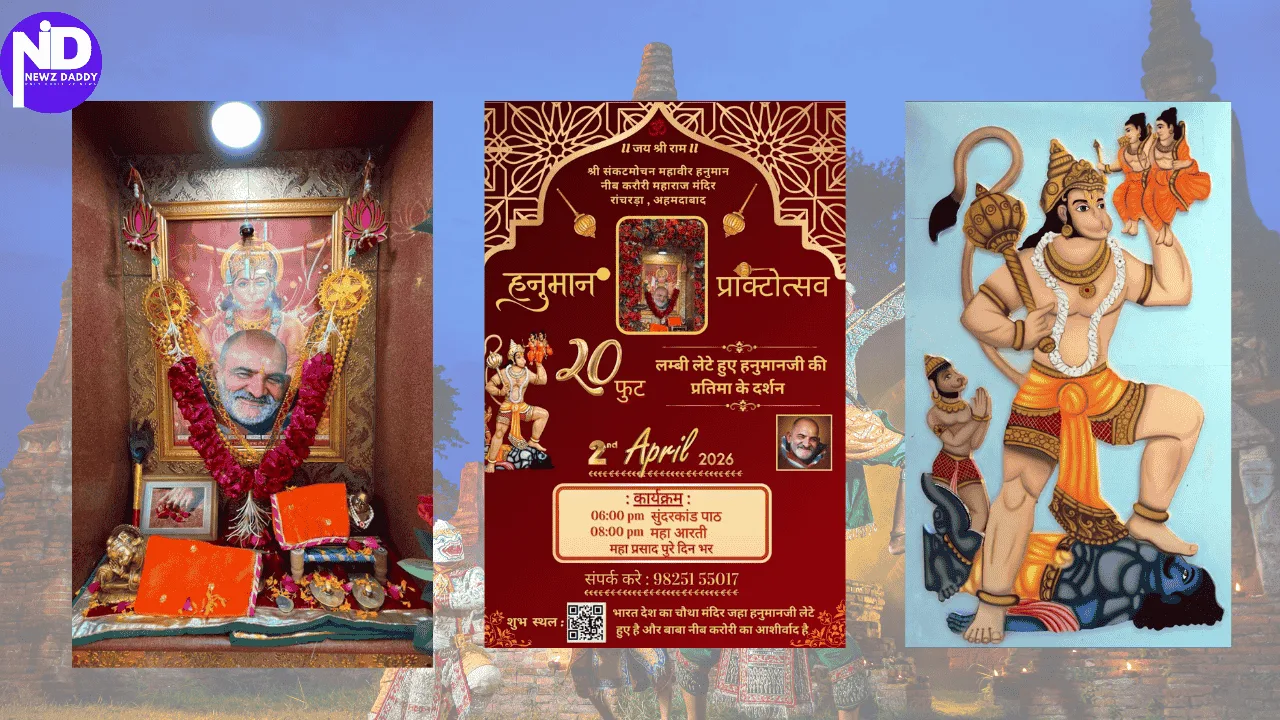
On Thursday, April 2, 2026, the temple will celebrate Hanuman Jayanti, also known as Hanuman Prakototsav.
The darshan of a large 20-foot-long and 8-foot-wide reclining idol of Hanumanji, which attracts devotees from all around, will be a special feature. Large Hanuman idols are known to draw thousands of worshipers throughout India, as witnessed at locations like Salasar and Hampi, where many think that just looking at the idol will make them feel stronger and less afraid. Maha Prasad is distributed throughout the day, followed by Sunderkand recital at 6 p.m. and Maha Aarti at 8 p.m. Many families attend public recitations of the Sunderkand together and chant in groups, which is well known to foster a strong sense of solidarity.
Day-Long Festivities
The temple, which was founded by Neem Karoli Baba’s unending mercy, has hosted several social and religious events. Respected worldwide, Neem Karoli Baba has adherents even outside of India, including prominent international personalities who have discussed his teachings on love and service. His temples frequently emphasise uncomplicated devotion and a commitment to aiding those in need. All devotees are welcome to attend this event. Such open temple events are believed to strengthen ties within the local community, particularly in places like Ahmedabad, where festivals frequently unite individuals from various backgrounds.
Message from the Founder
“On this occasion, we are not just celebrating a religious festival but also spreading the message of service,” said Dr Pravinbhai Garg, the founder of the temple. Devotees can experience the boundless grace of Baba Neeb Karori at this temple, which is the fourth in India with a reclining (resting) image of Hanumanji. These unique reclining idols are uncommon and frequently turn into important places of worship. The idol is composed of a unique stone that was purchased from Rajasthan and weighs 2000 kg. Because Rajasthan stone is strong and can withstand damage for decades, it is frequently utilised in temple construction.
The idol’s distinctive feature is that it features Patallok with Ravan’s brother Ahiravan beneath Hanumanji’s feet, while Hanumanji is accompanied by Ram-Laxman and his son Makardhwaj. These components are from lesser-known passages in the Ramayana, particularly those in which Hanuman saves Lakshman and Lord Ram from Ahiravan. Such intricate idols, according to many believers, aid in their comprehension of these tales.
On this holy day, he extends an invitation to everyone to come and get more benefits.
Temple Highlights
On November 23, 2025, the temple was finished after 15 months. Early on, new temples frequently witness an increase in visitors, particularly when they host frequent events and seva activities.
Devotional bhajans and poojas are performed during holidays such as Hanuman Jayanti, Guru Purnima, Navratri, Rakshabandhan, Ganesh installation and immersion, Kali Chaudas Havan, and Dussehra with fafda-jalebi distribution. Combining foods like fafda-jalebi with celebrations is a long-standing custom in Gujarat that makes the society feel joyous.
By the grace of Baba, three Ram Roti Seva Raths are in operation, providing 500 meals twice a day at different places. These kinds of food drives are widespread in Indian temples and are regarded as one of the finest forms of service.
Children who are blind, elderly, or crippled are invited to recite the Hanuman Chalisa and the Sunderkand together. To ensure that everyone can participate equally, such inclusive events are increasingly being promoted in religious settings.
Elderly people receive special food prasad and respect services. Recognising the need for assistance in old age, many temples now include elder care as a component of their seva.
Havan is open to worshipers on the first Tuesday of each month. Tuesdays have always been associated with Hanuman worship, which explains why many temples receive more visitors on this day.
Every Sunday, everyone is welcome to attend Sunderkand, Kirtan, and Aarti. These kinds of weekly get-togethers support people in maintaining their religious ties despite hectic job schedules.
Every Wednesday and Sunday, free medical examinations and medications are also offered, along with lodging options for sadhus-saints and cold water for road travellers. In recent years, free health camps at temples have grown in popularity, particularly in urban areas where many people still struggle to find cheap healthcare.
Devoted Sevaks
With many devotees coming every day to receive blessings from Hanumanji and Baba Neemb Karori Maharaj, the temple is becoming more and more famous. These temples frequently develop quickly into spiritual hubs as news gets out via social media and nearby communities. Kiritbhai Patel is a special devotee who serves others without expecting anything in return; his commitment motivates everyone. These kinds of selfless deeds are the foundation of the majority of prosperous temple operations. At this sacred location, regular devotees like Bharatbhai Joshi, Rahul Barot, Niravbhai Patel, and Rushabhbhai Shah offer their devotion, faith, and serenity. Their participation demonstrates how neighbourhood-based initiatives support the continued vitality and friendliness of such locations.