


PM Modi Somnath Speech Sparks Debate
PM Modi’s Somnath Speech Brings Emotional Political Shift In India. Strong Reactions Pour In.
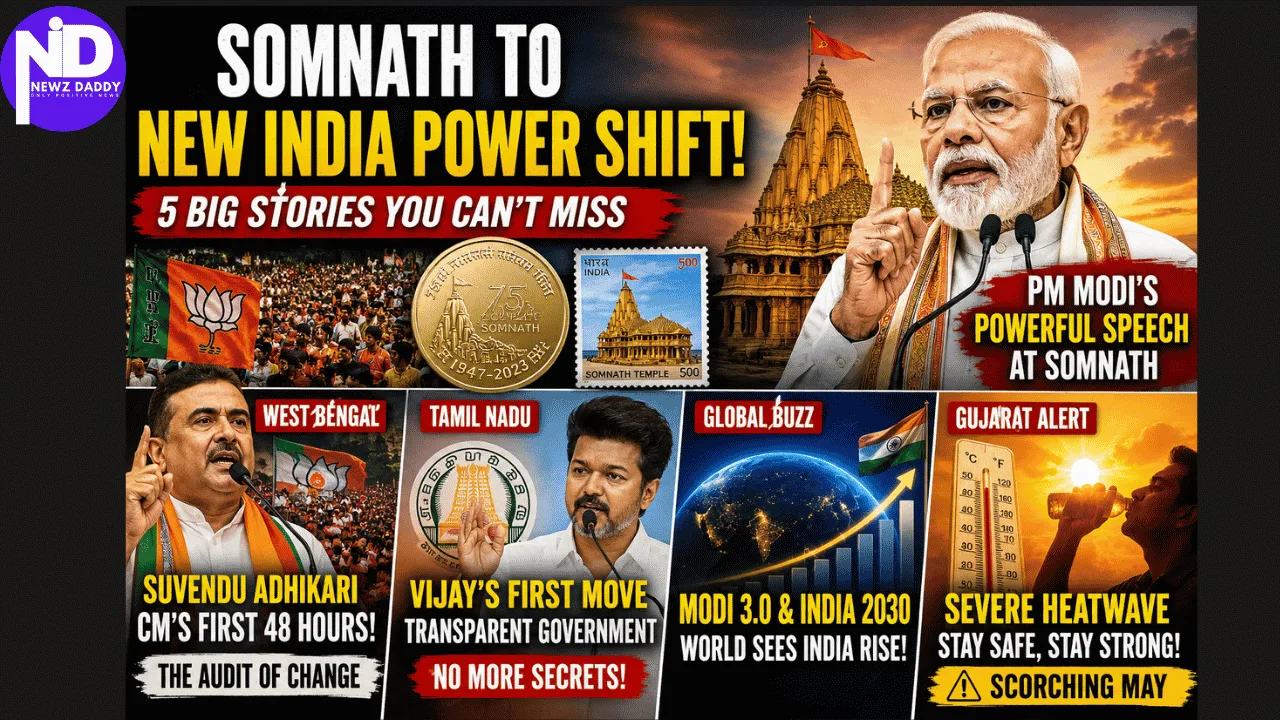
Prime Minister Narendra Modi’s visit to Somnath on Monday turned into one of the biggest political and cultural events in Gujarat this year. The occasion marked 75 years of the restoration and consecration of the Somnath Temple, a place many leaders describe as a symbol of India’s cultural identity and resilience. During the “Somnath Amrut Mahotsav” celebrations, PM Modi offered prayers, took part in religious ceremonies, and released a special ₹75 commemorative coin and a postal stamp dedicated to the temple’s history and spiritual importance.
In his speech, the Prime Minister sharply criticised what he called “appeasement politics”. He referred to the political debate around the rebuilding of Somnath after Independence and compared it with recent arguments surrounding the Ram Temple issue. PM Modi praised leaders like Sardar Vallabhbhai Patel and Dr Rajendra Prasad for supporting the temple’s reconstruction and said they chose “national self-respect” over political pressure.
The Somnath event was not only about religion. It also carried a strong political message ahead of future elections. BJP leaders presented the temple restoration as a moment tied to India’s civilisational identity. The release of the commemorative coin and stamp added a symbolic touch to the celebration. Many supporters on social media described the move as an effort to connect heritage with modern India’s development journey. The PM also said Somnath represents India’s strength and faith that survived repeated attacks throughout history.
While Gujarat was witnessing these celebrations, another major political shift was unfolding in West Bengal. Suvendu Adhikari has officially started his first working week as the state’s new Chief Minister after the BJP’s historic victory in Bengal. His swearing-in at Kolkata’s Brigade Parade Ground marked the first time the BJP formed a government in the state.
Within the first 48 hours, the new Bengal government moved quickly. Adhikari announced a financial audit covering the previous 15 years of administration. The BJP has said the audit will examine government spending, welfare funds, and pending projects. Supporters of the new government are calling it the “Audit of Change”, while opposition parties have accused the BJP of starting its term with political confrontation.
The first cabinet meeting also produced several major announcements. The Bengal government decided to begin implementing central schemes such as Ayushman Bharat, PM Vishwakarma, Beti Bachao Beti Padhao, and PM Fasal Bima Yojana in the state. At the same time, officials said existing Bengal welfare schemes would continue for now.
The BJP is promoting this as the beginning of “Double-Engine” governance, where the same party rules both the Centre and the state. Leaders claim this will help Bengal receive faster approvals for projects and better coordination with Delhi. The new government has also promised stronger border security and announced that land transfer work for BSF fencing will begin within 45 days.
However, the new administration has already faced pressure. The murder of Chief Minister Adhikari’s close aide Chandranath Rath became a major issue, with police arresting suspects from Uttar Pradesh and Bihar. The case has added tension during the first week of the government.
In the south, Tamil Nadu is also seeing a major political transition. Actor-turned-politician Vijay, now Chief Minister, continued his first full day in office by taking oath as an MLA and promising what he called a “transparent government”. In his first official address, Vijay announced that his administration would release a White Paper on Tamil Nadu’s finances. He accused the previous DMK government of leaving the state treasury under pressure and said people deserve to know the true financial condition of the state.
Vijay’s early speeches have focused strongly on accountability and public trust. He said his government would operate openly and promised quick action on corruption complaints. Women’s safety has been declared his top priority. The Tamil Nadu government has already announced special steps against drug crimes and plans for stronger security systems for women across cities and towns.
Political experts believe Vijay is trying to create an image very different from traditional Dravidian politics. His supporters see him as a fresh face who can attract young voters, while critics argue that promises alone will not solve Tamil Nadu’s financial and administrative challenges.
At the national level, international attention around Prime Minister Modi continues to grow. Reports in global publications such as Bloomberg and the Japan Times have suggested that Modi’s influence may continue well beyond 2030. Many foreign observers are closely watching India’s domestic politics because India is now one of the world’s fastest-growing major economies and an important global power in trade, technology, defence, and diplomacy.
India’s role in global manufacturing, digital payments, renewable energy, and international relations has increased sharply over the past decade. World leaders are paying close attention to political stability in India because it affects global markets and strategic partnerships. Analysts say Modi’s government has managed to build a strong political narrative around nationalism, infrastructure growth, welfare schemes, and India’s rising global image.
Back in Gujarat, politics and public gatherings are taking place under extremely difficult weather conditions. The India Meteorological Department has issued severe heatwave warnings for several parts of the state as temperatures continue to rise sharply. PM Modi is scheduled to visit Vadodara for the inauguration of the Sardardham Hostel project, where large crowds are expected.
Doctors and officials have advised people attending political rallies and public programmes to remain careful during the intense heat. Citizens have been asked to drink plenty of water, avoid direct sunlight for long periods, wear light cotton clothes, and watch for signs of dehydration or heatstroke. Elderly people and children are considered most at risk during the current weather conditions.
The coming weeks could shape the political mood across several states. Gujarat is witnessing a mix of culture, religion, and development politics. Bengal is entering a completely new political chapter under BJP rule. Tamil Nadu is testing whether Vijay can turn popularity into governance. At the same time, global attention on India’s political direction continues to grow stronger with every major development.