


Tarang Shakti 2026: Gujarat Hosts International Delegates
Exercise Tarang Shakti 2026: Foreign Observers Visit Statue of Unity, Arogya Van and C-295 Aircraft Facility in Gujarat
Delegates from 32 countries visit key sites in Gujarat, gaining a closer look at India’s national heritage, traditional wellness practices and growing aircraft manufacturing industry.
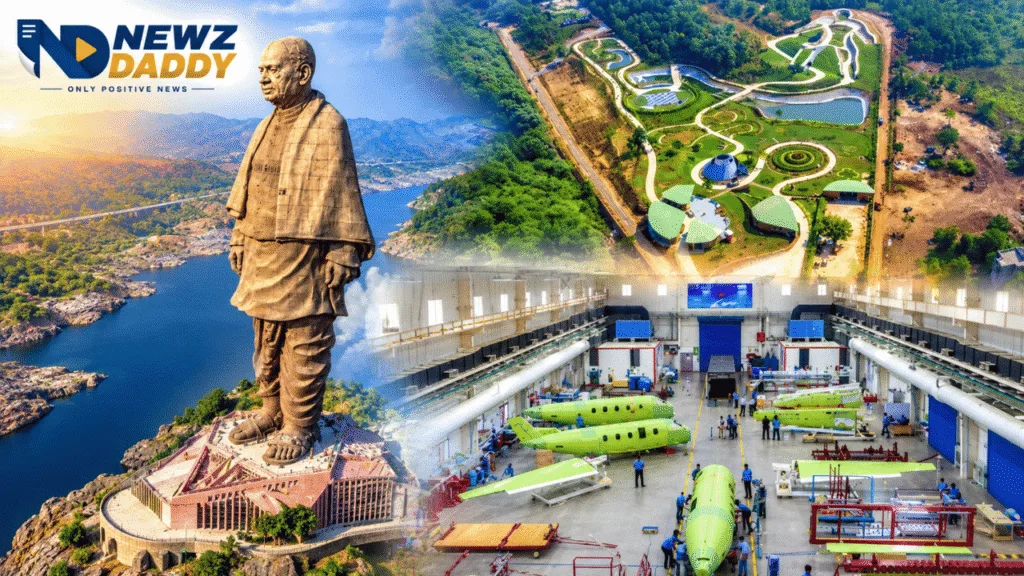
Gujarat became a meeting point for international defence observers as representatives from 32 countries visited the Statue of Unity, Arogya Van and Tata Advanced Systems Limited’s C-295 aircraft facility during Exercise Tarang Shakti 2026.
The visits offered the foreign observers an opportunity to learn about India’s history, its approach to health and well-being, and its expanding role in aerospace manufacturing. The programme also gave the visitors a view of how India’s cultural identity and industrial development form part of its wider international engagement.
The visits were organised as part of Exercise Tarang Shakti 2026, an Indian Air Force multinational air exercise that brings together air forces from different countries. Such exercises allow participating nations to observe military operations, exchange professional knowledge and build working relationships.
The presence of observers from 32 countries in Gujarat added a civilian and industrial dimension to the defence engagement. The locations included in the programme represent different parts of India’s development and public identity.
Patel played a central role in bringing hundreds of princely states together after India’s independence in 1947. His work helped shape the country’s political map and earned him the title of the Iron Man of India.
The monument was opened to the public on 31 October 2018, Patel’s birth anniversary. Since then, the site has become a major tourist destination, drawing visitors interested in India’s freedom struggle, history and architecture.
For the visiting defence observers, the site provided an opportunity to learn about the historical events behind India’s political unity. It also placed the country’s present-day international relationships in the context of its past.
Arogya Van features different sections dedicated to medicinal plants and health-related themes. Visitors can learn about plants used in traditional systems of medicine, including Ayurveda, which has a long history in India.
Traditional medicine remains part of India’s wider health and wellness sector. The World Health Organisation has recognised the importance of traditional medicine and works with countries to study its safety, quality and role in health services.
The visit offered the foreign delegates a look at a part of Indian culture that differs from military and industrial activities. It also allowed them to see how traditional knowledge is presented to the public through organised visitor facilities.
The visit to Tata Advanced Systems Limited’s C-295 facility in Vadodara brought the observers closer to India’s defence manufacturing plans.
The facility is part of a partnership between Tata Advanced Systems Limited and European aircraft manufacturer Airbus. The project supports the Indian Air Force’s plan to replace its ageing Avro transport aircraft with 56 C-295 military transport aircraft.
The contract, signed in September 2021, covers 16 aircraft built in Spain and 40 manufactured and assembled in India. The Vadodara final assembly line was inaugurated on 28 October 2024 by Prime Minister Narendra Modi and Spanish President Pedro Sánchez.
The project was among the first major efforts by an Indian private company to establish a final assembly line for a military aircraft in the country. It also forms part of the government’s Make in India and Aatmanirbhar Bharat programmes.
The C-295 is a medium transport aircraft used to carry troops and supplies. It can also support medical evacuation and other missions. Its ability to operate from shorter and less developed airstrips makes it useful for military transport work.
The Indian programme includes the production of around 13,000 aircraft parts in India, with 37 domestic suppliers involved. The first aircraft assembled in India was scheduled to roll out in September 2026, with deliveries of the 40 locally assembled aircraft planned to continue until August 2031.
The facility visit gave observers a view of the industrial work behind military aircraft, including assembly and the development of local supplier networks. It also brought attention to India’s efforts to increase domestic production and reduce dependence on imported defence equipment.
Observers have a different role from the air forces taking part in the flying activities. Their presence allows them to watch the exercise and gain a better understanding of the Indian Air Force’s work and its international defence relationships.
The Gujarat visits added another dimension to this engagement. By including a national monument, a wellness centre and an aircraft production facility, the programme introduced foreign observers to different aspects of India’s public life and industrial activity.
For Gujarat, the visits also brought international attention to locations that play different roles in tourism, traditional health practices and defence manufacturing.
The programme reflects the wider scope of India’s engagement with foreign nations. Defence relationships increasingly involve discussions and exchanges that extend beyond military exercises to include technology, industrial cooperation and cultural understanding.
The visit itself does not establish any new defence agreement or commercial partnership. Its value lies in giving the observers a direct look at India’s institutions, heritage and manufacturing capabilities while they attend a major international air exercise.
As Exercise Tarang Shakti continues in Rajasthan, the Gujarat visits form part of the wider engagement between India and the countries represented at the event.
Must Read:
Tarang Shakti 2026 Puts Foreign Air Crews to Work in Jodhpur