


Tarang Shakti 2026 Puts Foreign Air Crews to Work in Jodhpur
Exercise Tarang Shakti 2026 moves into flying phase at Jodhpur, bringing seven foreign air forces together
The Indian Air Force has begun the operational phase of Exercise Tarang Shakti 2026 at Air Force Station Jodhpur, bringing Indian aircraft into planned flying activity with air forces from seven foreign countries.
The exercise is being held from September 26 to October 12 under the theme “Power in Partnership”. Australia, the United States, the United Arab Emirates, France, Germany, Sri Lanka and Bangladesh are taking part with aircraft, while other countries are attending as observers.
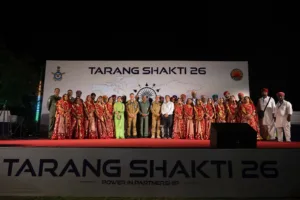

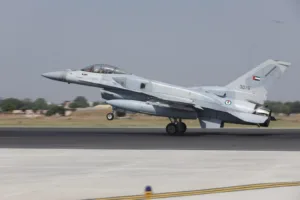
Tarang Shakti 2026The mix of aircraft gives the exercise a broad range of flying roles. The foreign contingent includes the US F-35 Lightning II, French Rafale, UAE F-16, Airbus A400M, MRTT tanker aircraft, C-130, C-130J and Australia’s KC-30A. These aircraft cover fighter operations, transport and air-to-air refuelling.
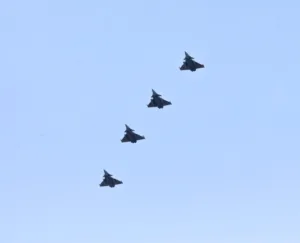
The presence of the F-35 is one of the most closely watched parts of this year’s exercise. Six US F-35 aircraft are taking part, marking the fighter’s first participation in Tarang Shakti. The aircraft had previously appeared in India at the Aero India show, but this exercise puts it into a multinational flying environment with the IAF.
For the IAF, the value of such an exercise lies in how different air forces work together during missions. Fighter pilots have to understand how other aircraft operate, while mission planners, controllers, engineers and ground teams must work with procedures used by partner forces.
That is particularly important when an exercise includes several types of aircraft. A fighter may need support from a tanker, transport aircraft may operate in the same wider mission area, and command teams must share information quickly. Training in such conditions gives aircrew and support personnel experience that cannot be gained from flying alone.
The IAF had outlined a wide range of missions before the exercise began, including counter-air operations, air defence, reconnaissance, airlift and air-to-air refuelling. Vice Chief of the Air Staff Air Marshal Ashutosh Dixit said the exercise was intended to help participating air forces learn from one another and prepare for changing air warfare conditions.

The 2026 exercise follows the first Tarang Shakti held in 2024. That edition was India’s first multinational air exercise of this scale. Across its two phases, 11 countries participated with air assets. The IAF said 45 aircraft flew 76 missions, producing more than 800 sorties.
Jodhpur also played an important role in the 2024 exercise. During that edition, the IAF held a multinational symposium on air domain awareness, with more than 50 delegates from 27 countries. Discussions covered airspace management, information sharing and ways to improve awareness of activity in the air domain.
The earlier exercise also allowed the IAF to operate its aircraft alongside foreign platforms. The Indian side used aircraft such as the Rafale, Tejas, Su-30MKI, Mirage-2000 and Jaguar. The 2024 exercise was followed by wider discussion of India’s aircraft manufacturing and defence industry, including an aviation exhibition at Jodhpur involving public sector companies, private firms, smaller manufacturers and start-ups.
That industry link remains part of the 2026 programme. Along with flying activity, the IAF has planned professional and public events, including a seminar, an industrial visit for foreign contingents, the Sekhon Marathon, heritage visits and yoga sessions.
For visiting air forces, these activities provide time outside flying schedules to meet Indian personnel and see parts of the country’s aerospace and defence sector. For India, the presence of foreign aircrew and support teams provides an opportunity to explain the systems and aircraft being developed and operated domestically.
The exercise also reflects the wider pattern of multinational air training involving the IAF. In 2024, Indian Rafale aircraft took part in the US-led Exercise Red Flag in Alaska. More than 100 sorties were flown by the Indian contingent during that exercise, giving its crews experience of large multinational air combat training.
Other recent exercises have also focused on working with foreign air forces. During Exercise Udara Shakti 2024 in Malaysia, Indian Su-30MKI fighters flew alongside Malaysian Su-30MKM aircraft, while technical teams exchanged maintenance practices.
Tarang Shakti 2026 therefore comes at a time when the IAF is using international exercises to train with a wider range of aircraft and operating methods. The Jodhpur phase places fighter aircraft, tankers, transport planes and support teams in the same exercise setting.
The presence of the US F-35 adds another layer to that training. The aircraft belongs to a class of fighter jets that the IAF does not operate, so flying alongside it allows Indian crews to observe how a fifth-generation aircraft fits into a larger multinational air operation.
For the seven participating foreign air forces, the exercise offers a chance to operate with the IAF and with aircraft from other countries at the same location. For India, the focus is on gaining flying experience with different partners while building working relationships that can support future military cooperation.
The flying activity at Jodhpur will continue until October 12. During that period, the exercise will bring together combat aircraft, transport planes, tankers and support personnel in a setting designed around joint missions rather than individual air force operations.