


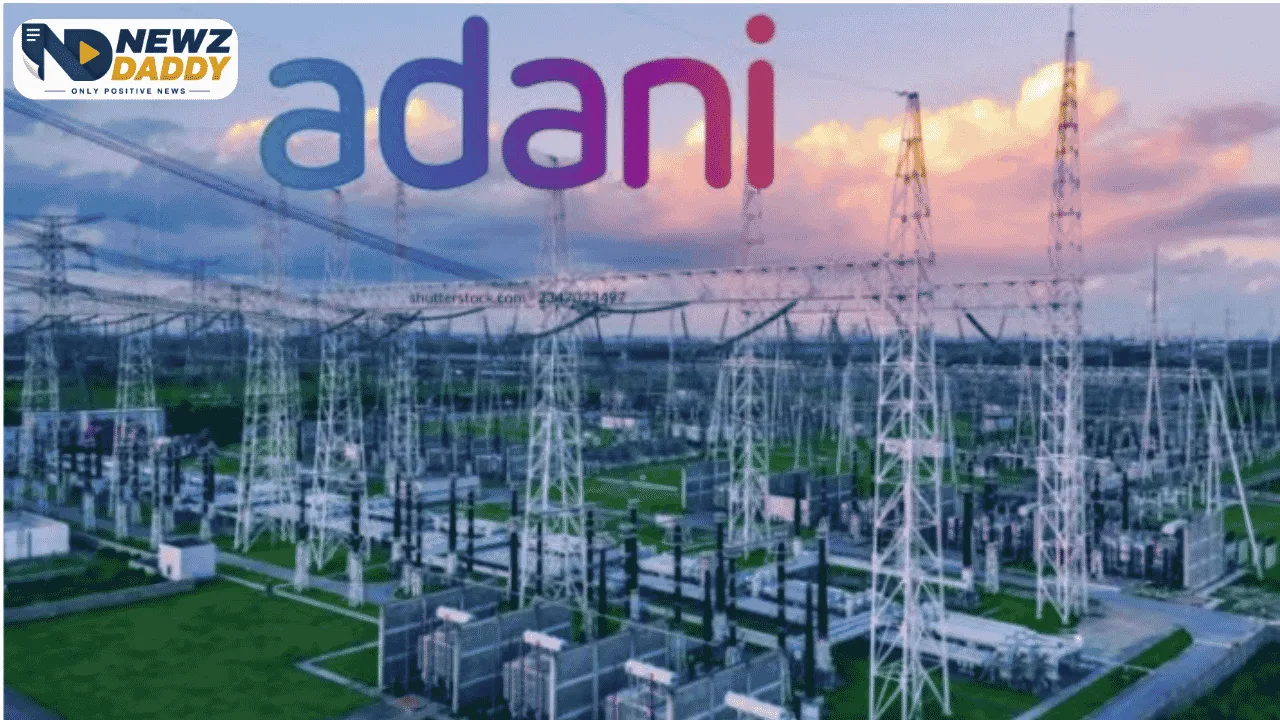
AESL wins ₹4,700 Crore Satara Project for 4,500 MW Power
AESL wins ₹4,700 Crore Maharashtra Transmission Project to Support 4,500 MW Renewable Power
Adani Energy Solutions Ltd (AESL) has won a ₹4,700 crore transmission project in Maharashtra that will help move up to 4,500 MW of renewable and storage power, including electricity linked to pumped storage projects around Satara, Pune and the Mumbai Metropolitan Region.
The project is expected to carry renewable power generated in Karnataka towards major electricity demand centres in Maharashtra. It will also strengthen the transmission link between the western and southern parts of India’s power grid. AESL said the project will be completed within 36 months.
Called the “Network Expansion Scheme in Western Region to Cater to Pumped Storage Potential near Satara (up to 4500 MW) – Part A”, the project was awarded through the Tariff Based Competitive Bidding process. AESL emerged as the lowest bidder.
The project will be housed under Satara Power Transmission Ltd, a special purpose vehicle created for the scheme. Once completed, it will add 562 circuit kilometres of transmission lines and 9,000 MVA of transformation capacity to AESL’s transmission portfolio. The company said this will take its cumulative transmission network to 29,739 circuit kilometres and its transformation capacity to 1,43,425 MVA.
The work includes a new 765/400 kV substation at Satara, a 765 kV double-circuit transmission line between Kolhapur and Satara, and an expansion of the Kolhapur pooling station. These facilities are intended to provide the network needed as renewable generation and pumped storage capacity increases in the region.
The tender documents published by Power Grid Corporation of India show that the Satara transmission line package was put out under the same TBCB route. The tender specifically covers the Kolhapur-PG Satara 765 kV double-circuit line and links it to the plan for handling up to 4,500 MW of pumped storage potential near Satara.
Pumped storage plants use electricity to move water to a higher reservoir when power is available. The stored water can later be released through turbines when electricity demand is high. This allows the plants to act as large energy storage facilities and can help balance power from sources such as solar and wind.
India’s Ministry of Power expects pumped storage plants to become an important part of the country’s future electricity system. Its 2025-26 annual report says the national transmission plan includes 35.6 GW of pumped storage capacity and 47 GW of battery storage to support the integration of renewable power.
The need is growing because solar and wind generation can change during the day. Solar power, for example, is strongest during daylight hours, while electricity demand can remain high after sunset. Storage can help shift some of the available power to periods when it is needed.
Maharashtra has also been expanding its plans for pumped storage. In April 2026, NTPC and the Maharashtra government revised the planned capacities of two projects under their existing agreement. The Amba pumped storage project was increased from 800 MW to 1,500 MW, while Kumbhe was revised from 1,000 MW to 1,100 MW.
The new Satara transmission project is therefore being developed as part of a wider increase in storage and renewable power capacity in the state. Its planned 4,500 MW capacity is larger than the combined revised capacity of the two NTPC projects mentioned above, although the AESL project is designed to cater to a wider pumped storage potential in the region.
The Satara award comes as AESL continues to add large transmission projects. In July, the company won an estimated ₹8,500 crore transmission project in Andhra Pradesh to supply power to proposed green hydrogen and green ammonia projects around Visakhapatnam. That project was also awarded through tariff-based competitive bidding.
With the Satara award, AESL said its transmission order book has risen to about ₹85,000 crore. Its annual report for 2025-26 lists several transmission projects under construction across India, including projects in Maharashtra, Gujarat, Rajasthan and other states.
The company’s transmission network has grown sharply in recent years. AESL reported 26,696 circuit kilometres of transmission network and 90,236 MVA of transformation capacity in its FY2025 operating metrics, covering operational and under-construction projects.
The wider industry is also preparing for a large increase in transmission demand. The Ministry of Power’s latest annual report says India’s transmission system is being planned around about 590 GW of generation capacity addition between 2023 and 2032. The plan includes 330 GW of solar, 124 GW of wind and 52 GW of hydro, including pumped storage projects.
India had about 272 GW of installed non-fossil fuel capacity as of January 31, 2026, according to the ministry. It says another 237.22 GW of renewable capacity, along with the required transmission network, needs to be added to meet the country’s 2030 target of 500 GW of non-fossil fuel capacity.
That makes transmission planning a key part of India’s renewable energy expansion. Power generation can be built in areas with strong sunlight, wind or suitable geography for hydro and pumped storage, but the electricity still has to reach cities, factories and other large consumers.
For the Satara project, the immediate task will be to build the new substation, transmission line and related facilities within the 36-month schedule. If completed as planned, the network will give Maharashtra additional capacity to receive renewable electricity and connect future storage projects with the wider western and southern grids.
AESL CEO Kandarp Patel said pumped storage projects were becoming an important part of India’s electricity transition and said the Satara project would support renewable power evacuation and storage deployment.
“Pumped storage projects are emerging as a critical enabler of India’s clean energy transition by providing the flexibility and reliability required to integrate large-scale renewable energy into the grid. The Satara transmission project will create a vital transmission backbone to support both renewable energy evacuation and energy storage deployment, strengthening power flows between Southern and Western India. AESL remains committed to building future-ready transmission infrastructure that enables renewable energy growth, enhances grid stability and supports India’s long-term decarbonisation goals,” he said.
For Maharashtra, the project adds another major piece to a transmission network that will have to handle more renewable generation and large-scale storage in the years ahead. For AESL, it adds ₹4,700 crore of planned investment and takes its stated transmission portfolio to 29,739 circuit kilometres and 1,43,425 MVA of transformation capacity.