

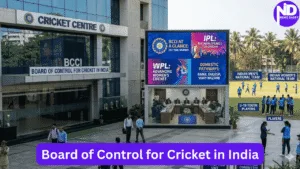
The Board of Control for Cricket in India, commonly known as the BCCI, is the principal national governing body for cricket in India. It controls cricket at the national level, manages the Indian national teams, organises domestic and franchise tournaments, and represents India in international cricket through the International Cricket Council (ICC).
The BCCI was formed in December 1928 in Rajasthan, with its headquarters now located at the Cricket Centre, Wankhede Stadium in Mumbai. India became a member of the Imperial Cricket Conference (now the ICC) in 1926, and the BCCI was created to formally govern the sport in the country. India played its first Test match in 1932, shortly after the BCCI’s formation.
One of the BCCI’s most important roles is managing the Indian men’s, women’s, and youth national teams. It selects players, arranges tours, and coordinates with other national boards for bilateral series and international tournaments. The BCCI also markets Indian cricket, sells broadcasting and sponsorship rights, and handles ticketing and logistics.
The BCCI is also the organiser of several major competitions. Its most famous event is the Indian Premier League (IPL), a T20 franchise league launched in 2007 that has become one of the biggest and most valuable sporting leagues in the world. The BCCI also runs the Women’s Premier League (WPL), which has grown rapidly since its launch.
In domestic cricket, the BCCI oversees first-class and List-A tournaments such as the Ranji Trophy, Duleep Trophy, Deodhar Trophy, Vijay Hazare Trophy, Irani Cup, and the U-19 Cricket League. These tournaments provide a pathway for players to move from state cricket to the national team.
The BCCI is widely regarded as the richest and most influential cricket board in the world. This is largely because of India’s massive cricket market, large fan base, and high-value media and sponsorship deals. Its financial strength allows it to invest heavily in infrastructure, training, coaching, and player development.
The BCCI’s structure includes state and union territory cricket associations as its full members. These members vote in elections and select the president and other officials of the BCCI. The board also has committees that handle selection, coaching, discipline, anti-corruption, and match refereeing.
In recent years, the BCCI has been active in promoting women’s cricket, youth cricket, and infrastructure across the country. It has invested in better facilities, training academies, and support systems for players at all levels. It also plays a key role in shaping cricket rules and policies alongside the ICC.
Overall, the BCCI is the central authority for cricket in India. It influences how the sport is played, how players are developed, and how cricket is presented to fans. For millions of Indians, the BCCI is the face of Indian cricket, both on and off the field.