


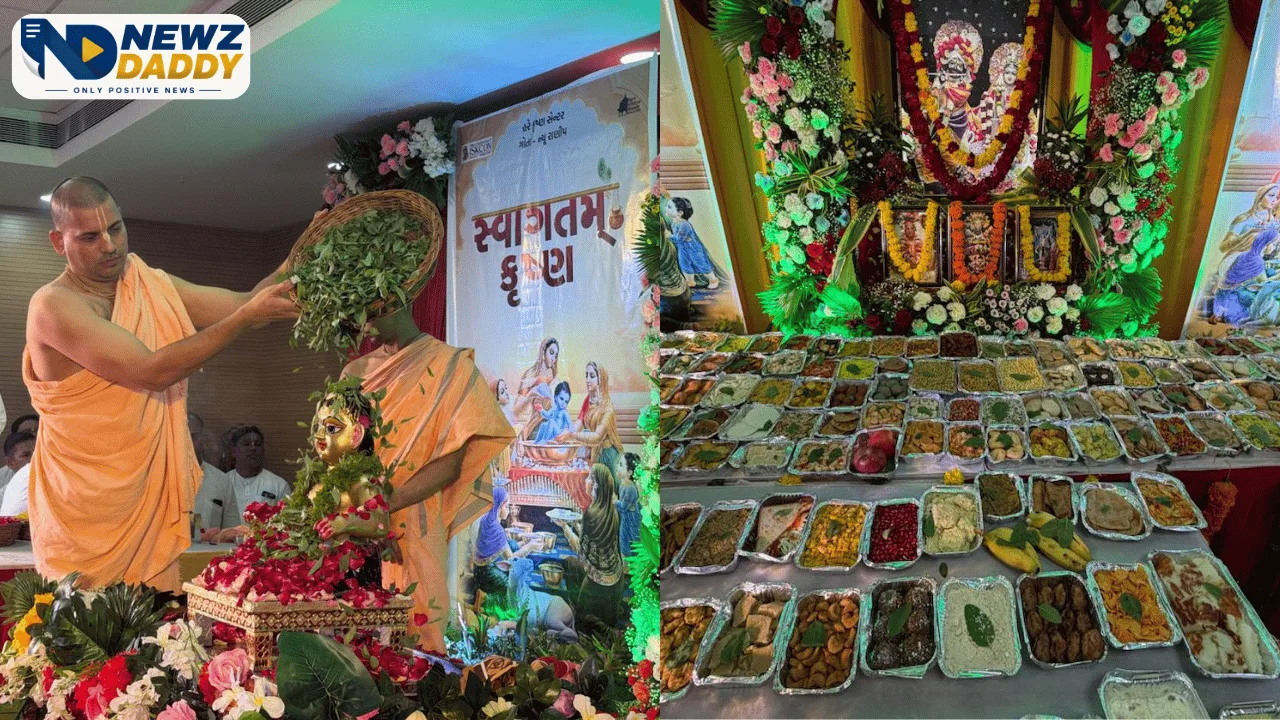
Swagatam Krishna Brings Janmashtami to Six Gujarat Areas
Krishna Janmashtami Celebrations Reach Six Gujarat Communities Through ‘Swagatam Krishna 2026’
Families and residents in six communities around Ahmedabad and nearby parts of Gujarat have taken part in Janmashtami programmes organised by the Hare Krishna Mandir, Bhadaj, under its “Swagatam Krishna 2026” programme.
Events were held at Chandlodiya, Adani Shantigram, Nikol, Kalol, Sanand and Maninagar. The programmes included kirtan, devotional music, cultural performances and talks about Lord Krishna and the meaning of his birth in Hindu tradition.
The programme comes ahead of Sri Krishna Janmashtami, which will be observed on September 4 this year. The ISKCON calendar for Ahmedabad places the main festival on September 4, with the midnight worship taking place in the early hours of September 5.
The idea behind “Swagatam Krishna 2026” is to take Janmashtami programmes outside the temple and into residential areas, towns and other local communities. The wider programme began on August 22 and is scheduled to continue until September 13, with events planned in places including Ahmedabad, Gandhinagar, Rajkot, Surat, Vadodara, Sanand, Viramgam, Kadi and Kalol. Programmes have also been planned in villages in Viramgam taluka.
Jaganmohan Krishna Dasa, President of Hare Krishna Movement Ahmedabad, said the purpose was to make the festival accessible to people who may not visit the temple during Janmashtami.
“The purpose of Swagatam Krishna is to bring people closer to the joyful and spiritual experience of Janmashtami. By taking these celebrations into communities, we hope that families, children and youth can connect with the timeless teachings of Lord Sri Krishna and experience the happiness of Krishna consciousness.”
Programmes across Ahmedabad and nearby areas
At Chandlodiya, residents gathered for devotional singing, talks and cultural activities. The programme focused on the story and religious meaning associated with Krishna’s birth.
At Adani Shantigram, the celebrations were held within the residential community. Kirtan, devotional music and cultural presentations formed part of the programme, allowing residents to take part without travelling to the Bhadaj temple.
The Nikol programme drew families and young people. Music and kirtan were used along with cultural presentations about Krishna and the traditions linked with Janmashtami.
In Kalol, the organisers continued the same approach of holding the festival in a local setting. The programme brought together religious activities and cultural performances while explaining the meaning of Janmashtami to those attending.
Sanand also hosted a gathering centred on devotional singing, music and cultural activities. The event gave residents a chance to mark the festival together and hear about Krishna’s teachings.
The Maninagar programme was held at Ved Mandir. It included kirtan, devotional music and cultural presentations and formed part of the series of community events held on August 30. The published schedule also lists programmes in Sanand and Kalol on the same day.
The organisers have described the six events as part of a larger Gujarat programme rather than as isolated local celebrations. The schedule includes further events in Surat and Vadodara on September 4, followed by a programme at Kadi Town Hall on September 13.
Janmashtami falls on September 4
Janmashtami marks the birth of Lord Krishna and is observed with fasting, prayer, devotional singing and midnight worship. In Ahmedabad, the 2026 ISKCON calendar lists September 4 as the festival date. The Ashtami lunar date begins at 2:25 am on September 4 and ends at 12:13 am on September 5. Rohini Nakshatra is listed from 12:29 am on September 4 until 11:04 pm that day.
Hare Krishna Mandir, Bhadaj, is also preparing for its main Janmashtami celebrations. The temple’s own festival information lists services and religious activities connected with the occasion, including offerings, abhishekam and Jhulan Seva.
The temple is located in Bhadaj near Science City in Ahmedabad and is run by Hare Krishna Movement Ahmedabad. The organisation’s current leadership page lists Jaganmohan Krishna Dasa as President of Hare Krishna Movement Ahmedabad.
A tradition that began in New York
The wider organisation behind the programmes is the International Society for Krishna Consciousness, commonly known as ISKCON. A.C. Bhaktivedanta Swami Prabhupada founded ISKCON in New York in July 1966 after arriving in the United States in 1965.
Prabhupada’s work centred on teaching the Bhagavad-gita, Srimad Bhagavatam and the practice of bhakti, along with the chanting of the Hare Krishna Mahamantra. ISKCON says the movement now has hundreds of temples and centres around the world, along with rural communities, vegetarian restaurants and other community programmes.
For Hare Krishna Mandir, Bhadaj, the Gujarat programmes follow that same effort to take religious teaching into local communities. The temple has held public festivals and other cultural and devotional events for years.
This year’s programme also places greater attention on taking part closer to home. For residents of Chandlodiya, Nikol, Sanand, Kalol, Maninagar and Adani Shantigram, the events have offered a local way to mark Janmashtami before the main festival on September 4.
The next major gathering will be the Sri Krishna Janmashtami Mahotsav at Hare Krishna Mandir, Bhadaj. According to the published schedule, the Bhadaj temple will hold its Janmashtami programme on September 4, alongside another celebration at Sector 1 in Gandhinagar. Further programmes will continue in Gujarat through September 13.