


BRICS Training Brings AML and CFT Experts to Gandhinagar
Gandhinagar to Host BRICS Training on Money Laundering and Terror Financing
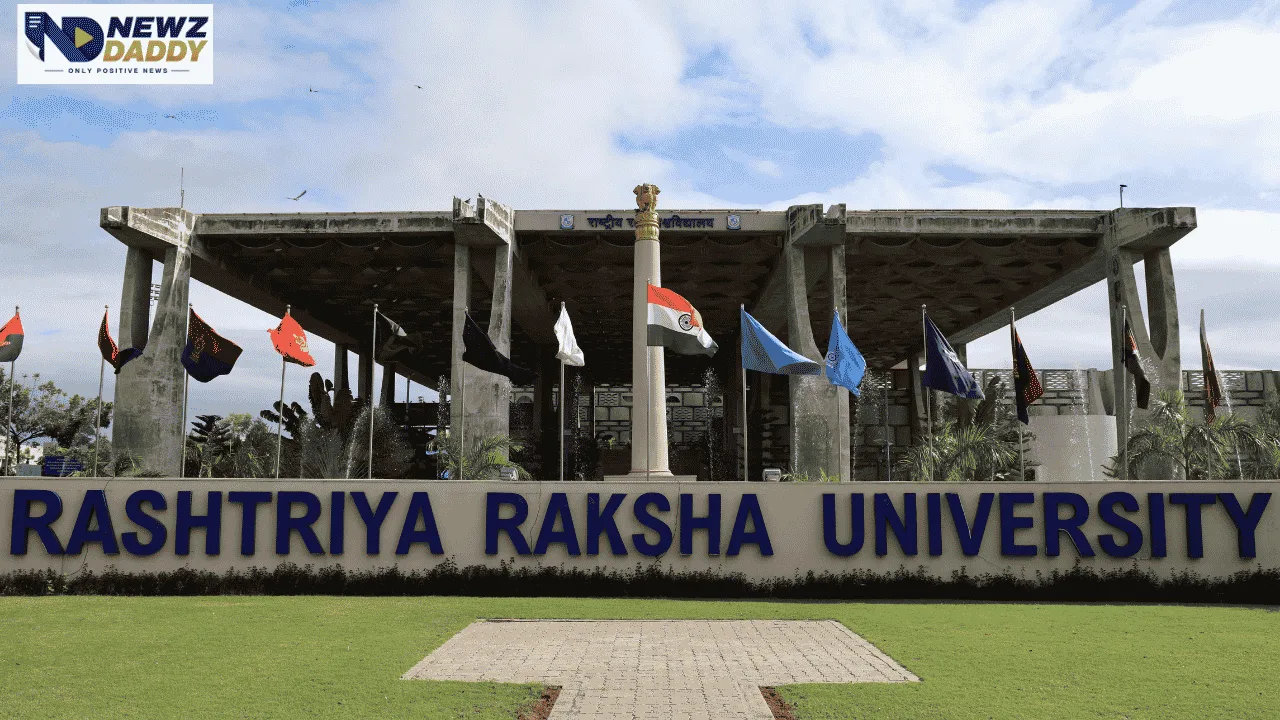
Rashtriya Raksha University (RRU) in Lavad, Gandhinagar, will host a five-day BRICS training programme on money laundering and terrorist financing from September 7 to 11, as India uses its 2026 BRICS chairship to bring financial crime cooperation into its wider security agenda.
The programme, titled “Emerging Risks, FATF Methodologies & BRICS Best Practices”, is being organised by RRU in association with the FATF Cell of the Department of Revenue, Ministry of Finance, Government of India. The opening session is scheduled for 9.30 am on September 7 at the university campus.
The timing is significant. India took over the BRICS chairmanship for 2026 after Brazil’s term in 2025. The chairship is being conducted under the theme “Building for Resilience, Innovation, Cooperation and Sustainability.” India will also host the 18th BRICS Leaders’ Summit in New Delhi from September 11 to 13.
For the Gandhinagar programme, the focus will be more technical than political. Officials and specialists from BRICS countries are expected to discuss how financial crime is changing, how countries apply Financial Action Task Force (FATF) standards and how agencies can work together when illegal money crosses borders.
Money laundering allows criminals to hide the source of illegally obtained money and place it into the legitimate financial system. Terrorist financing involves raising, moving or using funds to support terrorism.
Both problems can cross national borders quickly. A transaction may involve a bank account in one country, a company registered in another and an individual operating somewhere else. Digital payments, virtual assets and other forms of technology have added new areas that financial investigators must understand.
The FATF, the international body that sets standards for tackling money laundering and terrorist financing, updated its assessment methodology in 2022. The organisation began its fifth round of mutual evaluations in 2024 using the revised system. The methodology looks at both technical compliance and whether countries’ systems actually work in practice.
FATF ministers in April 2026 also pointed to the growing scale of fraud and the misuse of legal companies, virtual assets and emerging technologies, including artificial intelligence. They called for stronger use of measures to prevent money laundering, terrorist financing and proliferation financing.
These developments give the Gandhinagar training a wider context. Financial crime agencies increasingly have to understand technology, corporate structures, international transactions and information held by agencies in other countries.
India’s own experience with the FATF process will be relevant to discussions on the subject.
The FATF’s 2024 mutual evaluation found that India had a high level of technical compliance with its requirements and that its system was producing good results in areas including understanding money laundering and terrorist-financing risks, international cooperation, access to beneficial ownership information, financial intelligence and recovery of criminal assets.
The assessment also identified areas where India needed to improve. These included supervision and preventive measures in some non-financial sectors, delays in completing money laundering and terrorist-financing prosecutions, and the implementation of safeguards against the misuse of non-profit organisations for terrorist financing.
India has been a FATF member since 2010. The Department of Economic Affairs says India became an observer in 2006 before being admitted as the 34th FATF member in June 2010.
The Department of Revenue has also said its FATF Cell was established in 2017. Its latest annual report says India’s 2024 mutual evaluation placed the country in the FATF regular follow-up category, alongside only four other G20 countries at that time.
The RRU programme will bring together policymakers, Financial Intelligence Units, supervisory authorities, law-enforcement agencies, prosecution agencies and subject experts from BRICS member states.
The sessions are planned around expert presentations, country-level presentations and discussions. Participants will study emerging financial crime risks and the FATF methods used to assess national systems.
A key part of the programme will be the exchange of working experience between agencies. This matters because financial investigations often require information from more than one jurisdiction. A national agency may identify a suspicious transaction but need information from another country to establish the ownership of a company, trace funds or understand a wider network.
The BRICS framework itself has expanded considerably in recent years. Its presidency rotates each year, and the group does not have a permanent secretariat or constitutive treaty. Its work is carried out through meetings, working groups and cooperation between member governments.
Financial crime cooperation therefore depends heavily on regular contact between national institutions.
The programme also adds to RRU’s international training work. According to the university, it has organised 61 specialised training programmes involving more than 2,000 participants from 85 countries. Its work covers security-related subjects and includes international capacity-building programmes.
RRU is an Institution of National Importance under the Ministry of Home Affairs. Its work combines education, research and professional training in security-related fields.
Financial and economic security has become one part of this wider work. The university has also developed academic and training activity around financial crime and related subjects.
The role of RRU was referred to by Union Finance Minister Nirmala Sitharaman during the university’s fourth convocation. She said: “The institution fills a critical niche by professionally training and certifying stakeholders across internal security, national security, and economic security through domain experts.”
The September programme puts that work into a multilateral setting, with participants from BRICS institutions dealing with financial crime and related risks.
India’s BRICS chairship has already included meetings on trade, energy, agriculture, health, youth affairs and science and technology during 2026. The government has described the chairship as centred on resilience, innovation, cooperation and sustainability.
The RRU programme adds financial crime to that calendar.
Its immediate value will depend on what participants take back to their own agencies after five days in Gandhinagar. Training cannot by itself remove differences between national laws or investigative systems. But regular contact between financial intelligence units, regulators, police and prosecutors can make it easier to share information and understand how another country handles a financial crime case.
The first session begins on September 7. The programme runs until September 11, the same day the BRICS Leaders’ Summit is scheduled to begin in New Delhi. For India, the Gandhinagar meeting places a specialised financial crime discussion alongside a much larger year of BRICS diplomatic activity.
The immediate subject is money. The larger issue is how governments trace it when criminal networks move it across borders.
Must Read:
Rashtriya Raksha University MoU Focuses on Prison Mental Health