

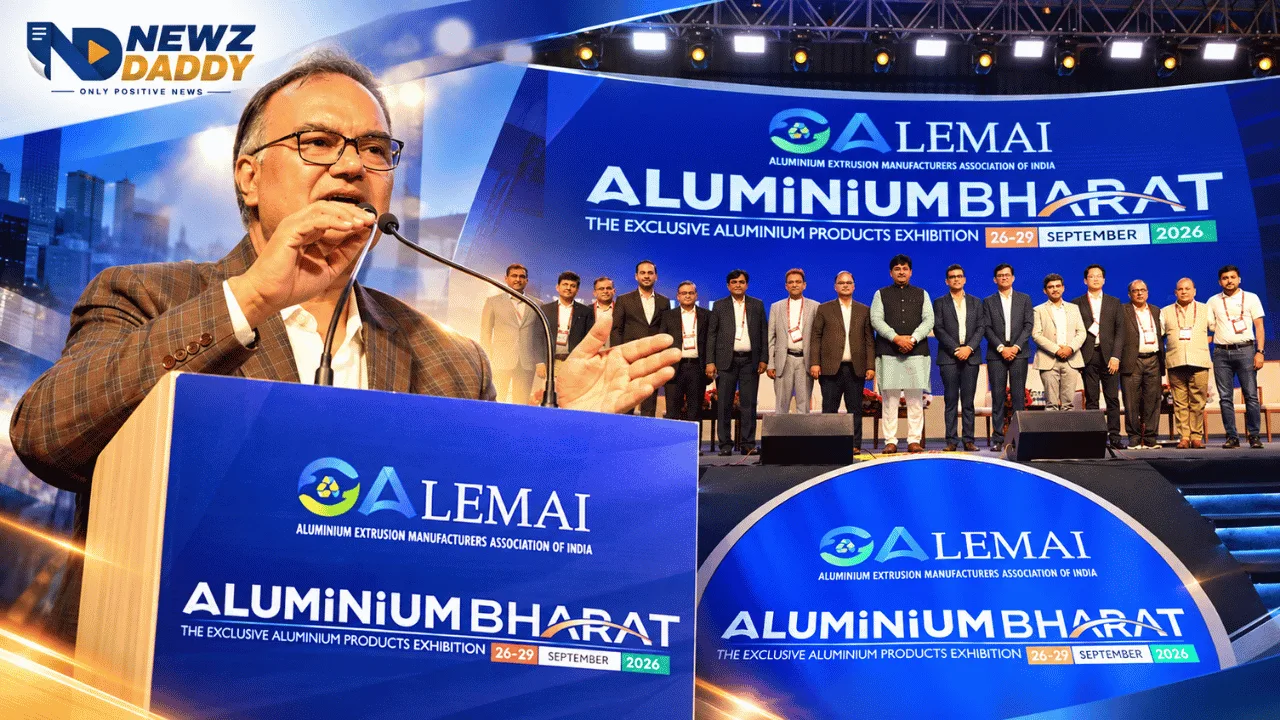
Aluminium Bharat 2026 Opens in Gandhinagar with 500 Exhibitors
Aluminium Bharat 2026 Puts India’s Downstream Manufacturing Capacity Under Scrutiny
India’s aluminium industry is facing a gap between the amount of metal the country can produce and the volume of finished and semi-finished aluminium products made within India. The issue came into focus at ALUMINIUM BHARAT 2026, which opened at the Helipad Exhibition Centre in Gandhinagar on Saturday.
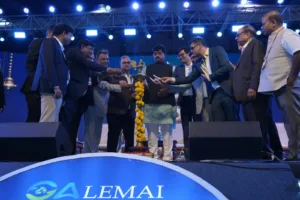
Organised by The Aluminium Extrusion Manufacturers Association of India (ALEMAI), the four-day exhibition runs from September 26 to 29 alongside ALUMEX INDIA 2026. The event has brought manufacturers, recyclers, technology companies, buyers, policymakers and overseas industry representatives together.
ALEMAI says the exhibition covers more than 30,000 square metres, with over 500 exhibitors and an expected footfall of more than 50,000 visitors. The exhibition includes primary aluminium producers, extrusion and rolling companies, recyclers, equipment makers and downstream manufacturers.
For India, the discussion comes at a time when aluminium is being used more widely in vehicles, electric mobility, power systems, construction, renewable energy and engineering products.
The larger question is whether Indian companies can capture more of the manufacturing work that takes place after aluminium is produced.
ALEMAI estimates that India’s aluminium extrusion industry has installed capacity of about 30 lakh tonnes a year. Actual production, however, is around 10 to 12 lakh tonnes. The association also estimates annual imports of downstream aluminium products at about 12 to 15 lakh tonnes.
These figures point to unused capacity within the domestic industry while finished products continue to arrive from overseas.
Government trade data gives another view of the issue. NITI Aayog’s recent trade analysis says India exported about $6.8 billion worth of aluminium and aluminium products in 2025, while imports were about $9.9 billion. The figures mean India remained a net importer in this category, even as aluminium exports grew from about $2.7 billion in 2015.
The gap matters because finished aluminium products generally carry more manufacturing work than primary metal. More domestic processing can support factories, suppliers and jobs, provided Indian manufacturers can compete on cost.
Raw material prices are one part of that calculation.
The standard basic customs duty on primary aluminium products such as ingots and billets is 7.5 per cent. Aluminium scrap has a lower basic customs duty of 2.5 per cent. The difference has become part of a wider debate within the industry over the cost of raw materials, recycling and the position of downstream manufacturers.
The Ministry of Mines has also been examining the issue. In July, the ministry recommended removing the 2.5 per cent basic customs duty on aluminium scrap, arguing that cheaper scrap could help recyclers and downstream manufacturers. At the same time, primary aluminium producers have raised concerns about the quality and volume of imported scrap.
The debate shows that there is no single view within the aluminium industry on how import duties should be changed.
ALEMAI is asking the government to review the tariff structure for raw materials and finished products. The association has also raised concerns about situations where imported downstream goods may receive preferential treatment under Free Trade Agreements while Indian manufacturers pay duties on some inputs.
Jitendra Chopra, President, ALEMAI, said, “India has the resources, manufacturing base and technical capabilities to significantly expand its position in value-added aluminium products. The immediate opportunity is to make better use of the capacity that is already available and create the right conditions for new investment. Today, our industry is dealing with high input costs, tariff asymmetries, energy expenses and increasing competition from imported downstream products.”
“We are seeking a constructive policy dialogue with the Government on a more balanced policy framework that can help improve capacity utilisation, support MSMEs, attract investment and enable Indian manufacturers to compete more effectively in global markets. ALUMINIUM BHARAT 2026 is an important platform to bring industry, policymakers and global stakeholders together around this opportunity,” he added.
Amit Thaker, MLA, Vejalpur, said, “India’s manufacturing ambitions depend on strengthening industries that create employment, encourage innovation and contribute to economic growth. The aluminium industry has significant potential, particularly in downstream manufacturing, where better capacity utilisation and greater domestic value addition can create new opportunities for MSMEs. Platforms such as ALUMINIUM BHARAT 2026 bring industry stakeholders together to discuss existing challenges, explore solutions and identify opportunities for future growth,”
The pressure on manufacturers is also being shaped by events outside India. The United States has continued to apply Section 232 tariffs on aluminium, with a 50 per cent rate applying to many aluminium articles and derivatives under measures introduced in 2026. Such trade barriers can affect global supply patterns and the prices faced by manufacturers in different markets.
Supply risks have also risen because of the conflict affecting Middle Eastern shipping and energy routes. Brent crude moved above $100 a barrel in September as attacks and disruptions affected oil flows. Higher energy costs matter to aluminium producers because smelting is one of the most electricity-intensive stages of aluminium production.
China remains the largest aluminium producer and continues to have a major influence on global supply. Reuters reported in September that Chinese aluminium production had reached levels above the country’s nominal 45-million-tonne capacity ceiling, while producers were also expanding overseas.
India is trying to increase its role in the same global market. The Ministry of Mines released its Aluminium Vision Document in 2025, setting out a long-term plan covering domestic production, recycling, resource security, lower-carbon production and higher value addition. The document projects a much larger Indian share of global aluminium trade by 2047.
The exhibition in Gandhinagar therefore arrives at a point when the industry is dealing with two related questions: how to keep Indian manufacturing costs under control and how to move more aluminium into higher-value products made in India.
ALUMINIUM BHARAT 2026 will run until September 29. For the companies taking part, the discussions around tariffs, energy, imports, recycling and capacity use are closely linked to the cost of making the next aluminium product in an Indian factory.