


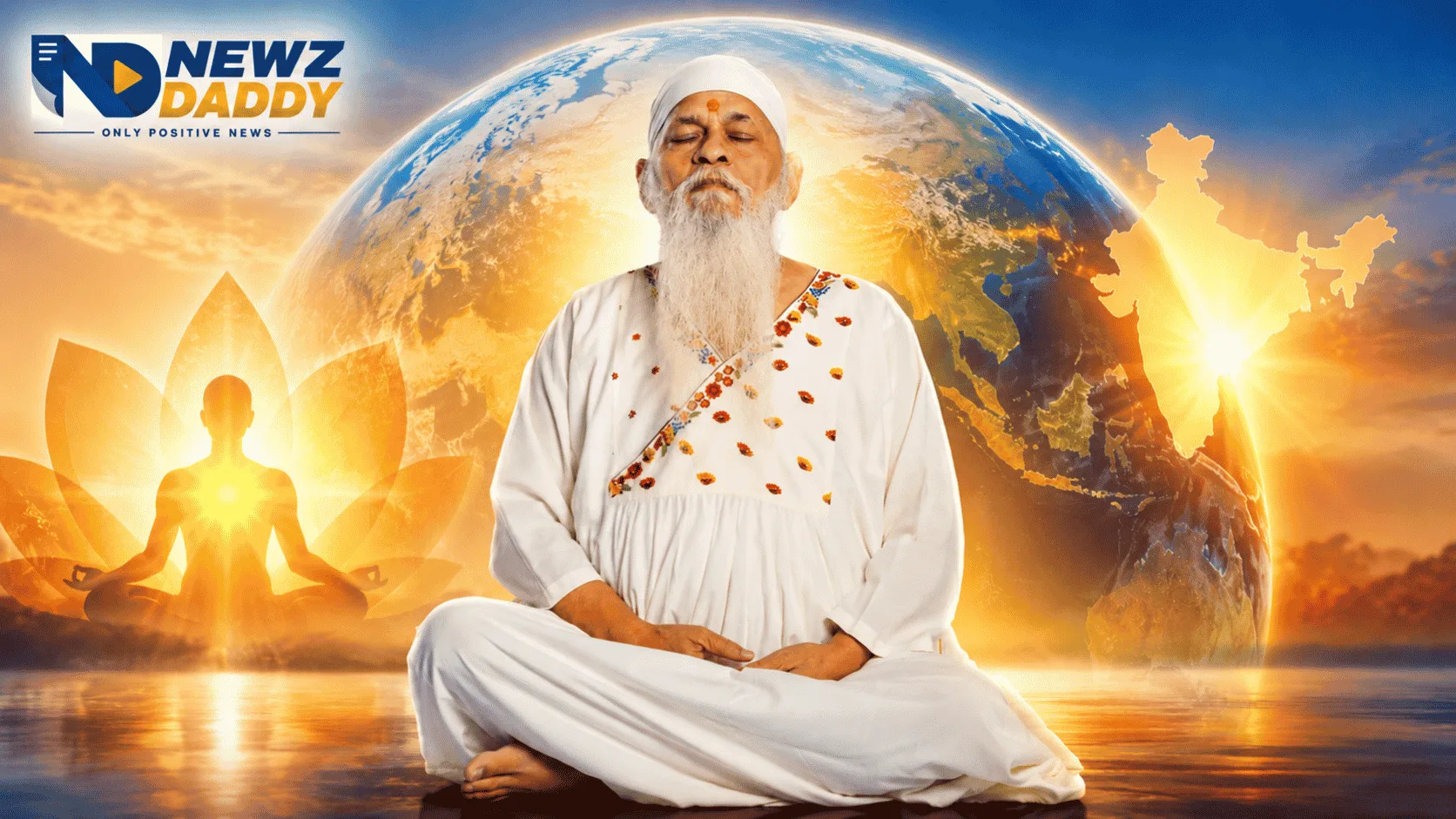
Shivkrupanand Swami Takes Indian Meditation to Global Stage
Shree Shivkrupanand Swami Named Vice Chair of World Meditation Day Governance Committee
Indian spiritual teacher Shree Shivkrupanand Swami has been appointed Vice Chair of the World
Meditation Day Governance Committee and is Chairperson for the Southern Asia Region, placing him in a leadership role in an international initiative promoting meditation.
The appointment was announced through a joint accord between the World Meditation Day Association and the World Meditation Foundation. Swamiji, who founded Himalayan Samarpan Meditation, will represent India on the committee’s international bureau alongside other spiritual and professional figures, including Acting Chair Enrico Somma of Liechtenstein.
The appointment comes as preparations continue for World Meditation Day, observed every year on 21 December. The United Nations General Assembly adopted Resolution A/RES/79/137 on 6 December 2024, establishing the annual observance to raise awareness of meditation and its possible benefits for physical and mental health.
India was among the six countries that led the proposal at the United Nations, along with Andorra, Liechtenstein, Mexico, Nepal and Sri Lanka. The resolution received support from 71 co-sponsoring countries, giving the initiative backing from nations across several regions.
Swamiji’s new role brings an Indian teacher of Himalayan meditation into the international body’s leadership. The appointment also adds to India’s involvement in efforts to make meditation more widely known and accessible.
The World Meditation Day Governance Committee oversees the direction of the international observance. Its wider structure includes the World Meditation Foundation, which handles fundraising and grants, the World Meditation Day Association, which manages operations, and the World Federation of Meditation Centers, which connects meditation centres and communities.
The committee also lists expert groups dealing with meditation practices, scientific research, ethics, arts and humanities. These bodies are intended to bring different forms of knowledge and experience into discussions about meditation and its place in public life.
Shree Shivkrupanand Swami began teaching Himalayan Samarpan Meditation in 1994. According to information published by his organisation, the practice has reached more than 3 million seekers in over 72 countries. His teachings draw on meditation traditions associated with Himalayan spiritual teachers, with an emphasis on personal practice and self-realisation.
Samarpan Meditation is presented by its organisation as a practice open to people regardless of religion, nationality or social background. The organisation says it offers its teachings without charge. This approach places it among several meditation movements that seek to make spiritual practices available beyond established religious communities.
The new appointment also comes as governments and international organisations give greater attention to mental well-being. Meditation is often used to help people manage stress and improve attention. The United Nations has referred to its possible benefits as part of its work on physical and mental health. However, results can vary from person to person, and meditation should not be treated as a replacement for professional medical care when needed.
India’s experience in promoting yoga internationally offers a useful comparison. The United Nations declared 21 June as International Yoga Day in 2014, following a proposal led by India. The annual event has since provided a platform for yoga activities in many countries. World Meditation Day follows a similar international approach, with a separate focus on meditation.
The World Meditation Day initiative also plans to explore the relationship between meditation and artificial intelligence. The announcement concerning Swamiji’s appointment states that the official global platform and governance portal are expected to be presented during the second International Symposium on AI + Meditation.
There is a timing detail that requires clarification. Public updates from the World Meditation Foundation describe the second edition of the AI + Meditation symposium as having taken place on 30 September 2026 at ETH Zurich in Switzerland. The appointment announcement, dated October 2026, refers to the symposium as upcoming. Further information is needed to establish whether the portal launch relates to a separate event or a revised schedule.
The growing use of artificial intelligence has prompted wider discussions about attention, decision-making and mental health. Meetings that bring together researchers, technology specialists and meditation practitioners can provide a setting to examine these questions. Any claims about the effects of meditation, however, need to be assessed through reliable research rather than spiritual belief alone.
For India, Swamiji’s appointment adds another representative to an international initiative that began with support from a group of countries, including India. His role will place him within a committee working to guide the annual observance and coordinate activities among participating organisations.
The work ahead will depend on how the committee turns its plans into public programmes, supports research and reaches people beyond existing meditation communities. World Meditation Day falls on 21 December, giving participating countries and organisations an annual occasion to promote the practice and examine its place in modern life.