


Asian Games: India Begins Final Push After 107 Medals in 2023
India’s Asian Games Contingent Gets Send-off in Delhi as Aichi-Nagoya Campaign Nears
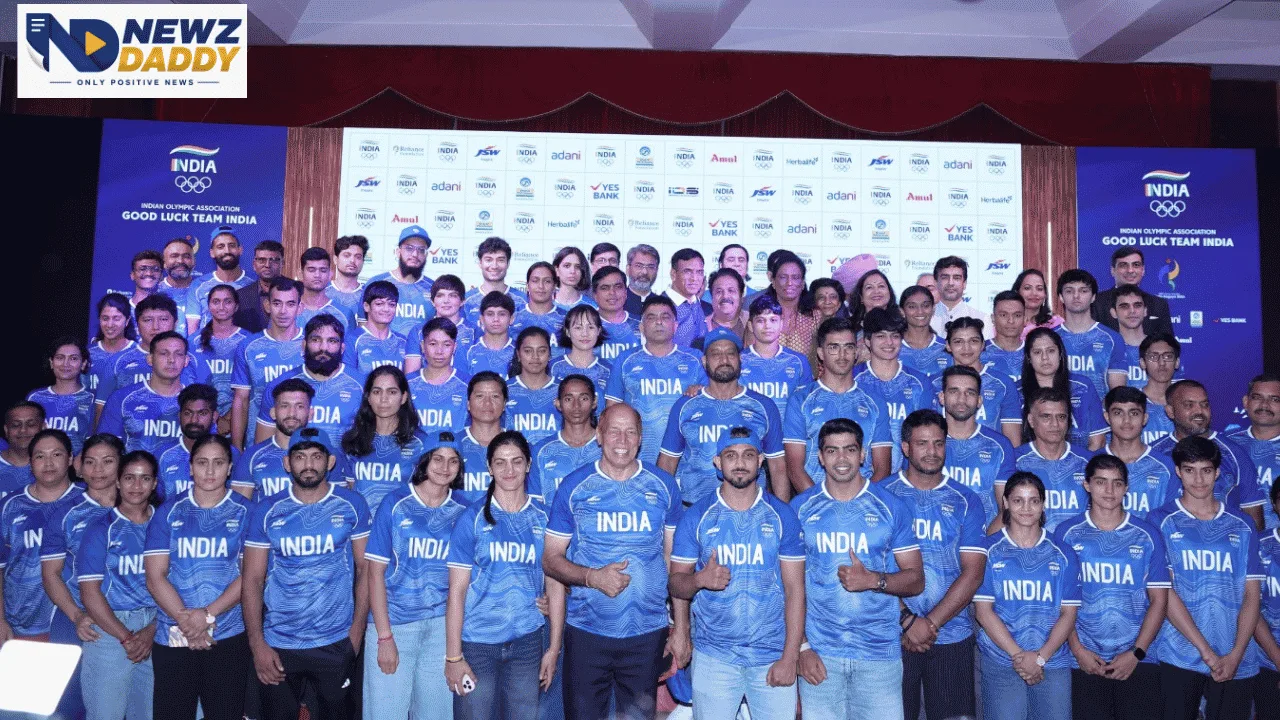
India’s preparations for the 2026 Asian Games moved into their final phase on Tuesday as the Indian Olympic Association (IOA) held a send-off ceremony for the national contingent in New Delhi.
The Games will be held in Aichi-Nagoya, Japan, from September 19 to October 4. India will enter the competition after its best-ever medal return at the Asian Games in Hangzhou in 2023, where the country won 107 medals, including 28 gold, 38 silver and 41 bronze.
Union Youth Affairs and Sports Minister Dr Mansukh Mandaviya and Indian Olympic Association president Dr PT Usha attended Tuesday’s event along with athletes, coaches and support staff. The official contingent jersey was also unveiled at the ceremony.
Mandaviya told the athletes that handling pressure would be an important part of their campaign.
“There is no shortage of talent in this country. Day by day, year by year, we are moving forward, and we have to change the pressure into performance, the opponent into an opportunity, and the opportunity into an achievement. I have complete faith that our contingent will perform well at the Asian Games and increase the pride of the country.”
The latest Sports Ministry information puts the Indian contingent at 503 members, including athletes and support staff. More than 300 of the athletes are first-time Asian Games participants. The figure points to a sizeable group of athletes getting their first taste of the continent’s biggest multi-sport competition.
The scale of the wider competition is also considerable. Aichi-Nagoya 2026 has 43 sports on its programme, with events spread across 53 competition venues. The programme includes athletics, shooting, boxing, wrestling, badminton, hockey, cricket, judo, kabaddi, weightlifting and several other sports.
Japan is hosting the Asian Games for the third time. The country last hosted the event in Hiroshima in 1994. Aichi and Nagoya will now stage the competition, bringing athletes from across Asia to venues in and around the region.
For India, the immediate reference point is the performance in Hangzhou.
The 2023 Asian Games produced 107 medals for India, the country’s highest total at the event. India won 57 medals in 2014 at Incheon and 69 at Jakarta in 2018. The 2023 result marked a sharp rise, with athletics contributing 29 medals and shooting 22.
The pressure on the 2026 team therefore comes with a clear record to follow. The Indian side does not have to match a formal target to make the campaign successful, but the previous medal haul has changed public expectations around the country’s performance at major multi-sport events.
Usha, speaking to the athletes at the Delhi ceremony, asked them to focus on the competition rather than the weight of expectations.
“Do not be overwhelmed by occasion; make the occasion remember you. Look at yourself and remember how far you have come. You have earned your place among the best in Asia. Don’t carry the weight of expectations, carry the strength of them. Go out there, enjoy the competition, and give everything you have. Go with confidence, courage, humility and the belief that you can compete with anyone in Asia.”
A panel at the ceremony brought together athletes from several disciplines, including Olympic medallist Swapnil Kusale, Commonwealth Games gold medallist Asmita Dey, Commonwealth Games medallist and weightlifter Gyaneshwari Yadav, and kabaddi player Pawan Sehrawat.
Dey spoke about the challenge waiting in the judo competition. Japan has a long history in the sport, and she said several athletes in her weight category are ranked inside the world’s top 15.
“The Asian Games are very tough. Judo itself comes from Japan, and there are judo masters in my weight category, players ranked 7th, 8th, 14th in the world. To win this medal, I’ll have to prepare like never before and be ready to defeat every one of them.”
Her comments underline one of the main difficulties facing Indian athletes in Aichi-Nagoya. Several events will bring them up against athletes from countries with long-established records in particular sports. The Asian Games also provide a level of competition that can be different from Olympic or world championship events because of the strength of countries across the continent.
The Games will also include newer events alongside established Asian sports. The official programme lists mixed martial arts, esports, surfing and teqball, among others. Cricket will be played in the T20 format.
India’s preparations have also included efforts to familiarise athletes with conditions in Japan. The Sports Authority of India built temporary container-style accommodation at its Bengaluru campus after Aichi-Nagoya organisers chose a different accommodation model from the traditional athletes’ village. The arrangements in Japan include hotels, a cruise ship and temporary accommodation.
The build-up has also included some practical concerns. Indian cricket teams, for example, will stay in accommodation designated by the Games organisers in Nagoya. The Board of Control for Cricket in India confirmed that the arrangements were acceptable after reviewing the facilities.
The Indian team arrives in Japan with the memory of Hangzhou and a larger group of first-time athletes. For the experienced competitors, the task is to perform under familiar international pressure. For the newcomers, the weeks ahead will provide their first Asian Games test.
Competition begins on September 19. By October 4, the medal table will show whether India has been able to build on the 107-medal performance of 2023.