

Caste Census: Congress Raises OBC Data Concerns
Caste Census Becomes Fresh Flashpoint Between Congress and Modi Government
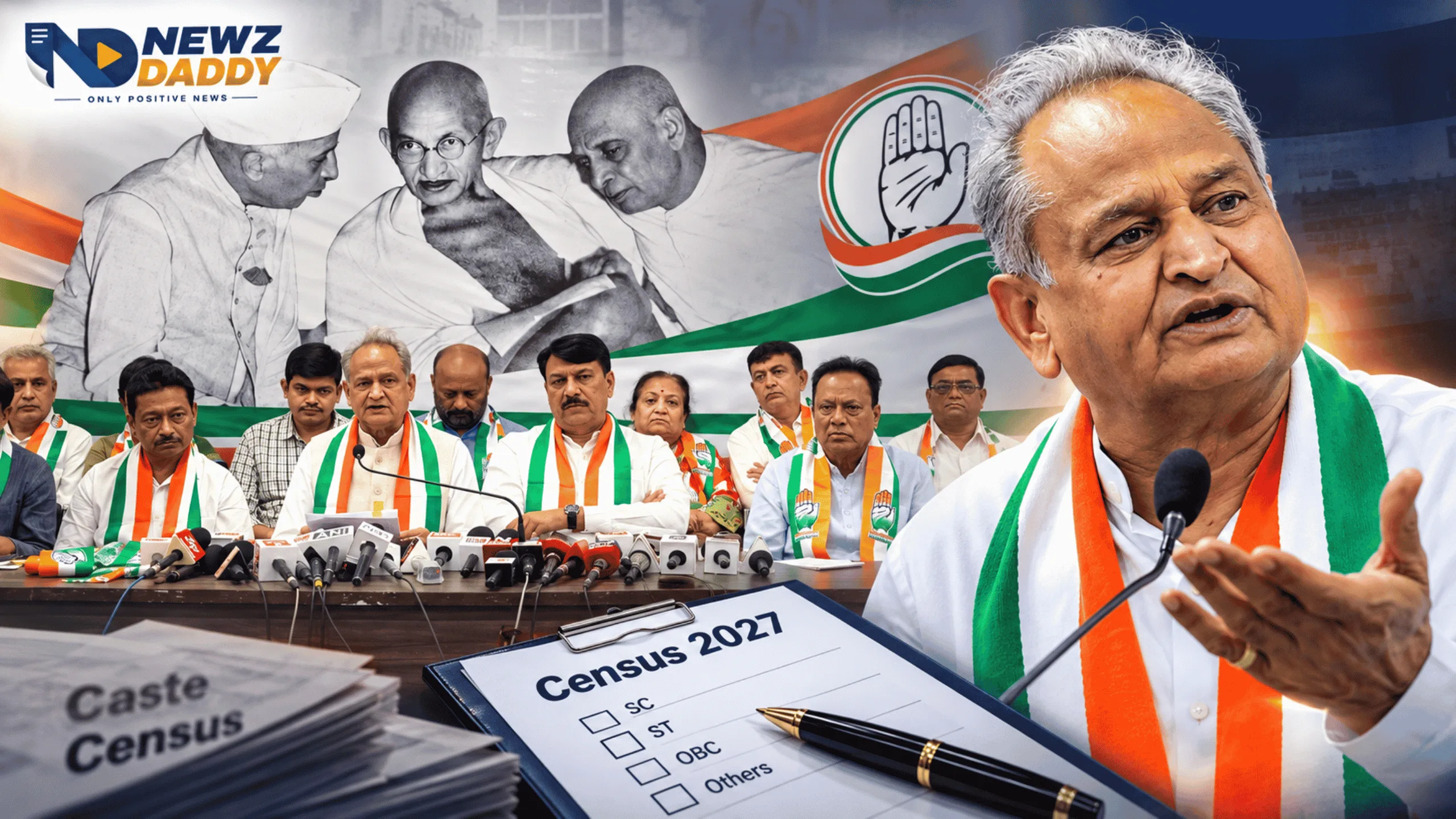
The caste census has become a fresh point of conflict between the Congress and the BJP-led Union government, with Congress leaders questioning how caste details will be recorded in Census 2027.
Former Rajasthan Chief Minister and senior Congress leader Ashok Gehlot has criticised the government over the issue. He said Congress has been asking for a proper caste census for several years. According to him, the demand has been pending since 2021, while Leader of the Opposition in the Lok Sabha Rahul Gandhi has been raising the issue since 2023.
Congress President Mallikarjun Kharge had written to Prime Minister Narendra Modi on 16 April 2023 seeking an updated caste census. He wrote another letter on 5 May 2025 with suggestions on how the exercise should be conducted. Congress says neither letter received a reply. Kharge and Rahul Gandhi also wrote jointly to Modi on 20 August over the latest concerns.
The dispute now centres on the format being used to record caste.
The Union government has included caste in the second phase of Census 2027. The 40-question questionnaire places “Scheduled Caste (SC)/Scheduled Tribe (ST)/Caste” at Question 10. Unlike a fixed list, the caste field allows the respondent to state the caste or sub-caste, which the enumerator records. The government has said the questions for the second phase were finalised through the prescribed process.
The exercise began in August in Ladakh and snow-bound areas of Jammu and Kashmir, Himachal Pradesh and Uttarakhand. The main population enumeration is scheduled for February 2027 across the rest of India.
Congress has objected to the open-ended caste question. Its leaders want a recognised list or dropdown system to help census workers record caste names in a more uniform way.
The concern is linked to the large number of caste and sub-caste names used across India. A single community may have different names in different regions. Differences in spelling, local names and sub-castes could make it harder to group responses correctly.
This issue has been discussed outside Congress as well. Reports on the census process have noted that officials considered options such as a dropdown system but faced difficulties because Central and state OBC lists do not always match. The Central list itself contains thousands of OBC entries, while states maintain their own lists.
Congress argues that the quality of caste data will affect future policy decisions. The party says figures on education, scholarships, skill development, government employment and welfare schemes need sound population data. It also says such figures could help assess the representation of OBC and EBC communities in legislatures, government services, the judiciary and other institutions.
India has not had a full caste count of this kind in the regular Census since 1931. The 2011 Socio-Economic and Caste Census collected caste information, but the caste data was never officially published in a usable national form. The new exercise will therefore attract close attention from political parties, researchers and social groups.
The debate is also connected to the wider question of reservation and social welfare. Kharge’s May 2025 letter had suggested using the Telangana model while preparing the national exercise. He also raised issues linked to the 50 per cent reservation ceiling and Article 15(5) of the Constitution.
The second dispute raised by Congress concerns an incident in Haldwani, Uttarakhand.
After Mallikarjun Kharge addressed a public meeting at Ramlila Maidan on 8 August, a havan and what was described as a ‘purification’ ritual were held at the venue. Kharge objected to the incident and raised the matter in the Rajya Sabha on 13 August. BJP leader J.P. Nadda said the BJP had no role in the ritual and assured the House that the matter would be looked into.
Kharge later wrote to Nadda, saying that no FIR had been registered even after 24 days. Congress demanded an investigation under the SC/ST (Prevention of Atrocities) Act, the Protection of Civil Rights Act and other applicable laws. It also asked that the people and organisations involved be identified.
The situation has since moved further. On 5 September, Bengaluru Police registered a Zero FIR after a complaint over the Haldwani incident. The complaint alleged that the ritual carried a caste-based message. The case is being sent to Uttarakhand for further investigation. An FIR had also been registered in Haldwani against Rahul Gandhi after he criticised the ritual and described it as linked to untouchability.
For Congress, both issues are linked to its demand for social justice and accurate representation. The party wants the government to review the caste census format after discussion with political parties, experts and the public.
The Union government, on its part, has already notified the 40-question schedule and moved ahead with the census process. The main test now will be whether the open-ended caste question can produce data that is consistent enough for future government policy.
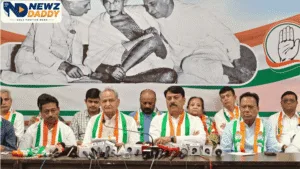
At the Gujarat Pradesh Congress Committee’s special press conference at Rajiv Gandhi Bhavan, Gujarat Congress President Amit Chavda, Congress Legislature Party leader Dr Tushar Chaudhary, CWC member Jagdish Thakor, CEC member Dr Amiben Yagnik, Odisha in-charge Lalji Desai, AICC Secretary Ritvik Makwana, Dr Palak Verma, Nileshbhai Patel, MLA Amrut Thakor, State Media Convener Dr Manish Doshi, OBC Department Chairman Mahesh Rajput, former Mayor Himatsinh Patel, Ahmedabad City Congress President Sonalben Patel, spokesperson Hemang Raval, Dr Hiren Banker, Dr Parthivrajsinh Kathwadia, Dr Amit Nayak and other senior leaders were present.
The caste census will now be watched closely as the country moves towards the nationwide population enumeration in February 2027.