


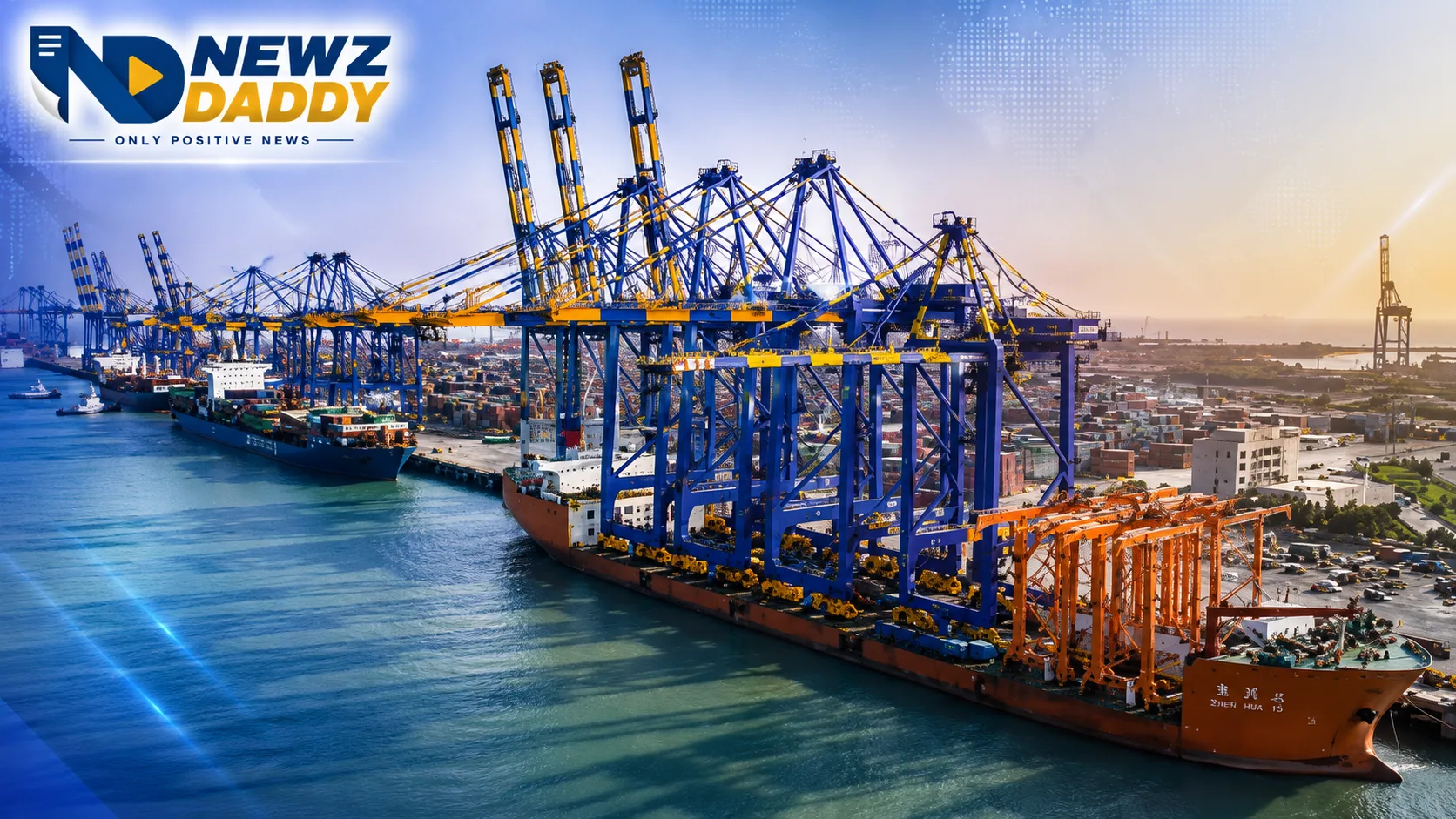
MSC Investment in Vizhinjam Port Marks Major Foreign Deal
MSC Invests $1.4 Billion in Vizhinjam Port as Adani Partnership Expands
A major new investment at Kerala’s Vizhinjam International Seaport is expected to strengthen India’s position in global container shipping and reduce the country’s dependence on foreign ports for cargo transfers.
Adani Ports and Special Economic Zone Limited (APSEZ) and Terminal Investment Limited (TiL), the port operating arm of the Mediterranean Shipping Company (MSC) Group, have signed an agreement under which TiL will acquire a 49 per cent stake in Adani Vizhinjam Port Private Limited (AVPPL), the company operating the port.
The deal values the project at USD 2.85 billion, with TiL investing USD 1.397 billion for its shareholding. APSEZ said the transaction remains subject to regulatory and customary approvals.
The agreement represents one of the largest foreign private investments made in India’s port sector and further deepens the relationship between the Adani Group and MSC, the world’s largest container shipping company. The two companies already work together at container terminals in Mundra in Gujarat and Ennore in Tamil Nadu. This is their third major partnership in India.
The investment comes at a time when India is trying to increase its share of global maritime trade and develop ports capable of competing with long-established transhipment hubs in countries such as Singapore, Sri Lanka and the United Arab Emirates.
For decades, a large share of Indian cargo destined for international markets has been routed through overseas ports, especially Colombo in Sri Lanka. Industry experts have long argued that a large domestic transhipment port could save time and costs for exporters and shipping companies while improving supply chain reliability.
Vizhinjam has quickly emerged as one of India’s most closely watched infrastructure projects in this effort.
Located near Thiruvananthapuram on the Kerala coast, the port sits around ten nautical miles from the busy East-West international shipping route linking Europe, the Persian Gulf and East Asia. Thousands of vessels use this corridor every year, making the location attractive for container transfer operations.
Commercial operations at the first phase of Vizhinjam began in December 2024. Since then, the port has recorded rapid growth in cargo movement and vessel traffic.
According to APSEZ, Vizhinjam became the first Indian port to cross the two million TEU mark within 18 months of starting operations. TEU, or Twenty-foot Equivalent Unit, is the standard measurement used in the container shipping industry.
During the financial year 2025-26, the port handled 1.3 million TEUs. During its first year of operations, it processed 1.3 million TEUs and welcomed 615 vessels. Within 18 months, the figures rose to more than two million TEUs and 950 vessels. In June 2026, the port received its 1,000th vessel. It has also handled more than 70 Ultra Large Container Vessels, the highest number recorded by any Indian port. More than 280 vessels longer than 300 metres and nearly 100 vessels requiring drafts deeper than 16 metres have called at the port.
The port currently has a container handling capacity of 1.6 million TEUs. Expansion work is underway and is expected to increase capacity to 5.7 million TEUs by the end of 2028, turning Vizhinjam into one of South Asia’s largest container hubs. Earlier this year, APSEZ announced plans to invest around ₹16,000 crore in the next stage of development.
Vizhinjam is India’s first deep-water mega transshipment port and also the country’s first fully automated port. It has a natural draft of 18 to 20 metres, reducing the need for large-scale dredging and allowing the world’s largest container ships to berth directly at the terminal.
The facility currently includes an 800-metre berth, a 2.9-kilometre breakwater, eight quay cranes and twenty-four automated yard cranes. Operations are supported by an advanced information technology platform and an artificial intelligence enabled Vessel Traffic Management System designed in India.
APSEZ Chief Executive Officer and Whole-time Director Ashwani Gupta said the company expected the partnership to support the next phase of the port’s development.
“Vizhinjam port has emerged as a premier transhipment hub and ramped up at an unprecedented pace, becoming the first Indian port to earn the unique distinction of crossing 2 million TEUs within 18 months of operations,” said Mr Ashwani Gupta.
“I am delighted to expand APSEZ’s long-standing partnership with MSC to Vizhinjam, as we prepare for the port’s next leg of its journey. I am confident that our association will deliver enhanced supply chain efficiencies at a global scale and improve India’s access to key global mature and developing markets,” he said.
APSEZ believes the partnership could bring additional cargo traffic to Vizhinjam, increase the share of cargo from Bangladesh and strengthen trade links with East African markets. The agreement may also help shift cargo currently moving through competing Asian ports to the Kerala facility.
TiL operates more than 100 container terminals across five continents and handles over 70 million TEUs every year through its global network. The company forms part of MSC Group, which has grown into the world’s largest container shipping line and logistics company.
The latest agreement reflects a wider trend in global shipping where port operators and shipping companies increasingly work together to secure capacity, improve efficiency and reduce supply chain risks that became visible during recent disruptions in international trade.
For India, the success of Vizhinjam could have implications far beyond Kerala. Maritime experts believe the port could strengthen India’s role in international trade routes and support the country’s ambition of becoming a larger manufacturing and export hub in the coming decades.
Must Read:
Adani Ports expands globally while breaking logistics records at home
Vizhinjam International Seaport Expansion Puts Kerala on the World Map