


Palm Oil Truth Sparks Powerful Change at Kolkata Meet
Newzdaddy Business Updates
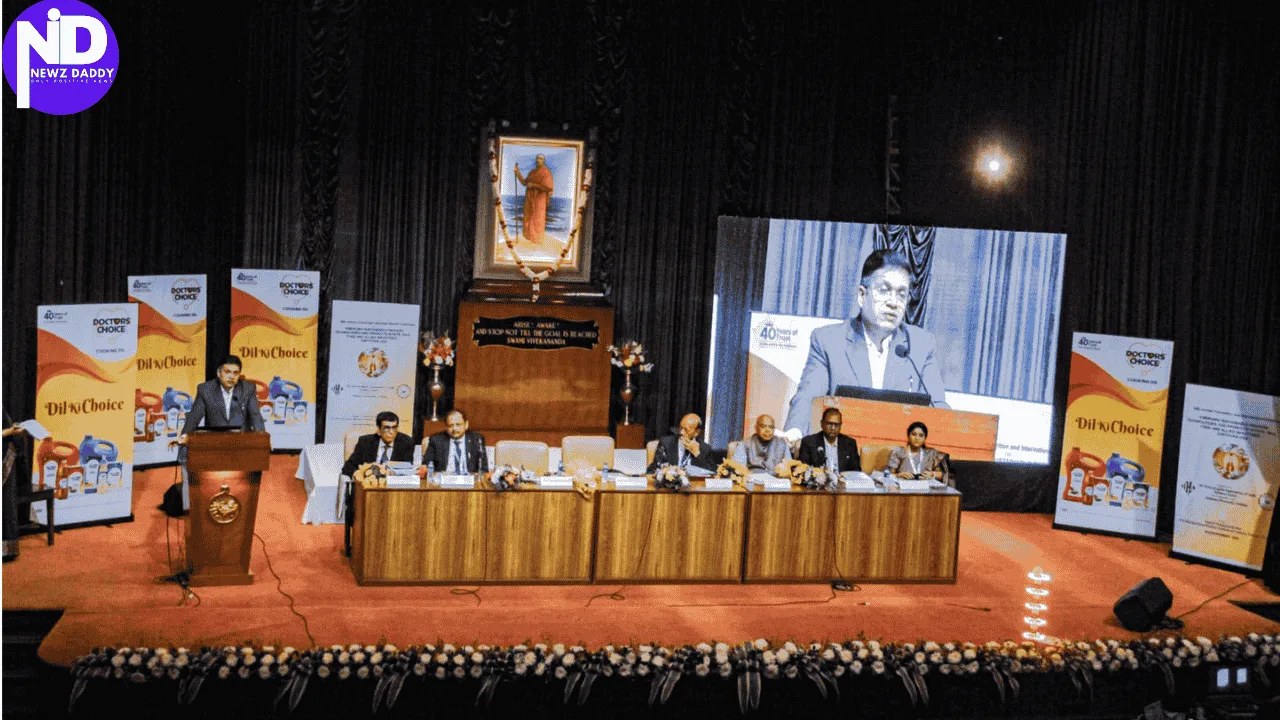
A seminar session was organised by the Oil Technologists’ Association of India, Eastern Zone, in collaboration with the Malaysian Palm Oil Council (MPOC) and supported by Jadavpur University, Kolkata. The event was held at the Ramakrishna Mission Institute of Culture (RMIC), Golpark, as part of the 80th Annual Convention and International Conference on “Emerging Sustainable Process Technologies and Products in Fats, Oils, Food and Allied Industries” (ESPT-FOFA 2025).
The seminar session on “Unveiling Palm Oil Science, Society, Innovation, Sustainability and the Way Forward” was created to bring clear and evidence-based information on one of the world’s most talked-about agricultural products. Palm oil is widely used in food, cosmetics, soaps, medicines, and even biofuels. Because of this wide use, it often becomes part of debates around health, farming practices, and the environment. This initiative brought together scientists, industry leaders, doctors, policymakers, students and innovators to build a balanced view of the future of palm oil.
Speakers at the seminar focused on removing long-standing myths about palm oil. They pointed out that palm oil is naturally free from trans fats and has a stable fatty acid profile. Palm oil also contains antioxidants like vitamin E, which help protect cells from damage. As a cooking oil, its high heat stability makes it well-suited for Indian kitchens, where deep-frying and high-heat cooking are common.
At the centre of the initiative was a strong focus on scientific research and transparency. Experts highlighted ongoing studies on soil health, farming techniques, land use and changes in forest cover. Research has shown that large parts of palm oil production can improve when farmers get better training, tools and fair income support. In recent years, major producing countries like Malaysia have adopted strict sustainability standards to manage land responsibly and protect wildlife areas. These points helped the audience understand that palm oil’s impact depends on how it is grown, rather than the crop itself.
The seminar also shared how palm oil supports the livelihoods of millions of small farmers across Asia, Africa and Latin America. In many rural regions, it is one of the few crops that provides a steady income. For these families, palm oil farming is not just a business but a way of life. This event reminded participants of the human side of the industry, including rural development, fair trade and the cultural value of farming communities. By focusing on people, the seminar encouraged a more compassionate and balanced view of global supply chains.
This seminar session was aligned with the National Mission on Edible Oils – Oil Palm (NMEO-OP), launched by the Indian government in 2021. The mission aims to reduce India’s import dependence on edible oils and promote domestic oil palm cultivation in a sustainable way. The seminar noted that with proper planning, India can expand oil palm farming without harming biodiversity by using non-forest land and modern farming systems.
Sustainability remained the heart of the initiative. Unveiling Palm Oil supported alignment with global frameworks such as the UN Sustainable Development Goals (SDGs). Experts discussed the need for better certification schemes, transparent supply chains, digital tracking tools and stronger monitoring. Many countries are now promoting certification systems that help farmers meet environmental rules while receiving better prices for responsible production. Innovation in the sector includes methane capture in mills, waste-to-energy projects and satellite-based land monitoring.
This initiative brought together people from many sectors to share ideas and find solutions. Industrialists, researchers, entrepreneurs, students and consumers took part in open discussions. They aimed to build trust, promote science-based decision-making and encourage responsible growth for the palm oil industry. The conclusion of the seminar reinforced that progress happens when all stakeholders work together with honesty and shared responsibility.
Overall, this was a detailed and meaningful effort to reshape understanding and promote responsible, science-backed development within the palm oil sector. The discussions highlighted not only the challenges but also the opportunities ahead for sustainable palm oil production.
Must Read:
Phoenix Business Advisory Launches PHX Prime Properties
Rural Financial Institutions Transformation: Powering India’s Future