

Sanghakaya Proposes Buddhist Tourism Council for Gujarat
Sanghakaya Foundation Proposes Buddhist Heritage Council to Boost Gujarat’s Global Tourism Reach
The proposed council seeks to develop Buddhist heritage sites, attract international pilgrims, build tourism infrastructure and create jobs, with a long-term master plan extending to 2040.
Gujarat could see a new push to promote its Buddhist heritage following a proposal by the Sanghakaya Foundation to set up a state-level council in partnership with the Gujarat Tourism Department. The proposed Gujarat Buddhist Heritage and Global Buddhist Tourism Development Council would focus on heritage conservation, international tourism, research and investment in Buddhist sites across the state.
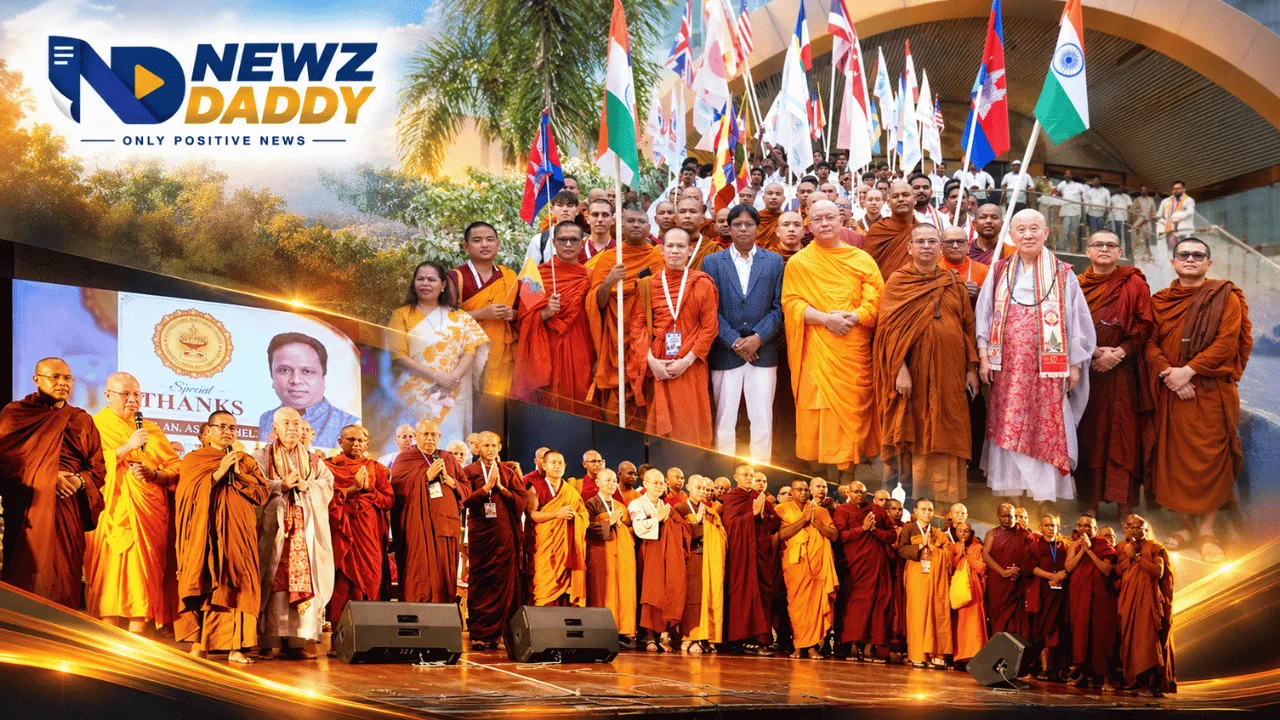
The proposal comes after the 7th International Buddhist Conference on Buddhist Heritage in Gujarat, organised by the Sanghakaya Foundation with support from the Gujarat Tourism Department, the Government of Gujarat and the International Buddhist Confederation under the Ministry of Culture, Government of India.
The proposed council would bring together government departments, Buddhist organisations, researchers and international partners. Its work could include improving facilities at heritage sites, promoting Buddhist pilgrimage routes, encouraging tourism-related investment and arranging cultural exchanges with Buddhist countries.
The proposal is still awaiting consideration and approval from the Gujarat government. No formal decision on the council’s formation has been announced in the supplied information.
Gujarat has several archaeological sites linked to its Buddhist past. These include Devni Mori, Vadnagar, Vallabhipur, Junagadh, Uparkot, Khambhalida, Sana Caves, Talaja and Siyot. The sites offer evidence of the region’s links with Buddhist religious life, art and architecture.
Devni Mori, near Shamlaji in northern Gujarat, is known for its Buddhist remains, including a stupa and a monastery complex. Vadnagar, which has a long history of settlement, has also produced archaeological evidence of Buddhist activity. The remains at these places give researchers a chance to study how Buddhism spread and developed in western India.
The proposed council would look at ways to make such locations easier for visitors to reach and understand. Better roads, signs, museums, interpretation centres and visitor facilities could help tourists learn about the history of each site. Conservation would also be important as more visitors arrive.
International interest in Gujarat’s Buddhist history has already featured in official exchanges. In 2025, a Thai Buddhist delegation met Gujarat officials and expressed interest in the public display of sacred relics. The state government discussed the request and advised the delegation to approach the Government of India. Such contacts show how religious ties and heritage visits can form part of international tourism relations.
The plan could also examine the role of museums, meditation centres, interpretation centres, hotels and pilgrimage facilities. These services would require investment and coordination among government bodies, local authorities, tourism businesses and heritage experts. The Foundation has suggested that local communities, small businesses and hospitality operators could benefit through jobs and tourism-related activity.
The economic impact, however, would depend on visitor numbers, spending, infrastructure costs and the ability to protect heritage sites. More visitors can bring income to nearby communities, but poorly managed tourism can also place pressure on old structures and local resources. Any development plan would need to balance access with conservation.
The delegation also met Dr Kuldeep Arya, IAS, Secretary, Tourism, Government of Gujarat, and Dr Vipin Garg, IAS, Managing Director, Tourism Corporation of Gujarat Limited. Discussions focused on promoting the state’s Buddhist heritage and increasing its presence in international tourism.
Two further events were proposed during these discussions: a major International Buddhist Conference in Vadnagar and an International Peace Walk linking Vadnagar, Gandhinagar and Vadodara. These events would require further planning and approval.
Bhante Prashil Ratna Gautam, Founder President of the Sanghakaya Foundation, said, “Gujarat has a remarkable Buddhist heritage that can contribute significantly to the State’s tourism and economic development. Our proposal is to bring heritage, tourism, international cooperation and local development together through a structured platform. With the support of the Government of Gujarat and Gujarat Tourism, we believe Gujarat can attract more Buddhist pilgrims, scholars and international visitors while creating opportunities for local communities, MSMEs, hospitality businesses and tourism-related services.”
He added, “The proposed Council can provide a long-term framework for developing Buddhist tourism circuits, improving visitor facilities, encouraging investment and building international partnerships. It can also create opportunities for employment and community-based tourism around heritage sites. Our objective is to preserve Gujarat’s Buddhist legacy while making it a source of sustainable economic and tourism opportunities for the State.”
The Foundation has offered to support the proposed council as an institutional, knowledge and international coordination partner, subject to government approval.
The next step rests with the Gujarat government. Its decision will determine whether the proposal moves towards a formal council, a long-term tourism plan and new projects at Buddhist heritage sites. For visitors and local communities, the outcome could shape how Gujarat’s Buddhist history is preserved, presented and experienced in the years ahead.