


Dairy Industry Debate Reaches Vadodara Youth Today
Vadodara street play brings dairy debate from KBC to the public
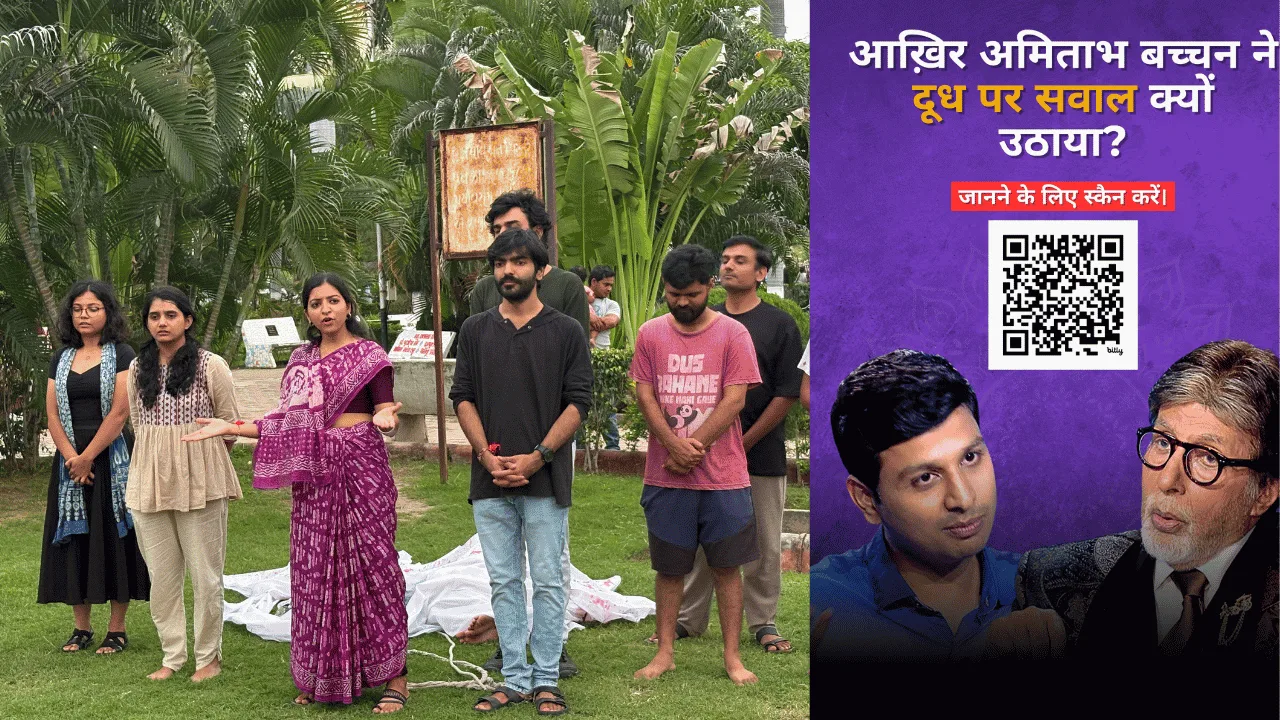
A street play in Vadodara has brought a debate about milk and the treatment of dairy animals into a public park, several months after a Kaun Banega Crorepati conversation between actor Amitabh Bachchan and contestant Siddharth Sharma spread widely online.
Youth activists staged a 10-minute Nukkad Natak at Subhanpura Garden on 25 August as part of a campaign planned across 10 Indian cities. The performance questioned common ideas about dairy farming and focused on the treatment of cows, buffaloes and calves. Organisers said the campaign is aimed mainly at younger audiences and is calling for wider use of plant-based foods.
The street play follows a television exchange that drew attention in November 2025. Sharma, who said he had followed a vegan lifestyle for seven years, told Bachchan during Season 17 of KBC that he avoids products that come from animals. He argued that milk is meant for a calf and raised concerns about the repeated pregnancies and artificial insemination of dairy animals. Bachchan replied that the discussion had troubled him and said, “You have opened my eyes.” The exchange was later widely shared on social media. Indian Express reported at the time that one version of the clip had received nearly a million views, while later campaign material has put the combined reach of the video at 200 crore views.
That larger figure could not be independently confirmed from publicly available platform data. The campaign describes the clip as one of the most viewed reels globally. What can be established is that the KBC exchange became a recurring subject in vegan and animal-welfare discussions, including a later podcast featuring Sharma.
The Vadodara event came in August, after International Youth Day was observed globally on 12 August. The day draws attention to issues affecting young people. In India, 2026 programmes included youth activities on digital participation and community work.
“The overwhelming response to this clip suggests that many young Indians are re-examining long-held assumptions about the dairy industry. Our Nukkad Natak was designed to bring those conversations into public spaces,” said event organiser Gaurav.
India’s dairy sector is large enough that any discussion about changing milk consumption has an economic side. The Department of Animal Husbandry and Dairying reported that India produced 239.30 million tonnes of milk in 2023-24, up 3.78 per cent from 230.58 million tonnes the previous year. The department estimates production at 254.19 million tonnes for 2024-25. Per-person milk availability reached 471 grams a day in 2023-24.
Dairying also supports rural incomes. The department says most of India’s milk is produced by small and marginal farmers and landless labourers, while dairy work provides income and employment to millions of rural households, with women playing an important role. About 37 per cent of milk is consumed by producers or sold within rural areas, while the remaining 63 per cent is available to organised and unorganised buyers.
Those figures show why a call to reduce dairy use raises questions beyond animal welfare. For farmers, milk is a regular source of income. For consumers, dairy is part of everyday diets. Campaigners argue that food choices can change without adding to animal suffering.
Road safety has added another part to the debate. In a judgment delivered on 31 July 2026 in a case involving stray cattle in Punjab, the Supreme Court said animals left on roads create a danger to motorists and pedestrians. The court described stray cattle on roads as a “constant invitation to death” and said owners should be responsible for animals that are released because of old age, infirmity or other reasons. The case involved the death of a man after a collision with a stray bull, and the court restored compensation for his widow.
The court’s comments do not establish that dairy farms are responsible for every stray animal. They do, however, address a problem that can arise when cattle are left without safe shelter or proper care. The judgment also called for systems that can move stray cattle to shelters and for measures to deal with accidents caused by animals on roads.
The issue has been reported in Indian cities for years. A 2019 Ludhiana report quoted civic officials as saying some dairy farmers abandoned cattle after the animals stopped producing milk. That local account cannot prove a national pattern, but it shows why the fate of animals after their productive years remains part of the debate.
“This Naatak was a way to connect with the public, especially youngsters who care, in the most direct and accessible way possible, while ensuring that the unethical realities of dairy are heard out loud,” said Gurjot.
The environmental question is also part of the campaign’s message. Dairy farming requires feed, land and water, and cattle produce methane as part of digestion. The scale of India’s milk sector means that changes in production and consumption can have wider effects. At the same time, the dairy industry provides food, jobs and income, so environmental arguments have to be considered alongside the needs of farmers and consumers.
The campaign’s organisers are asking policymakers and institutions to support the growth of plant-based food systems. The Vadodara street play therefore takes a debate that began on a television set into a public setting, where the questions are less about a celebrity conversation and more about what happens to animals, farmers, consumers and roads when the demand for milk meets the realities of dairy production.