


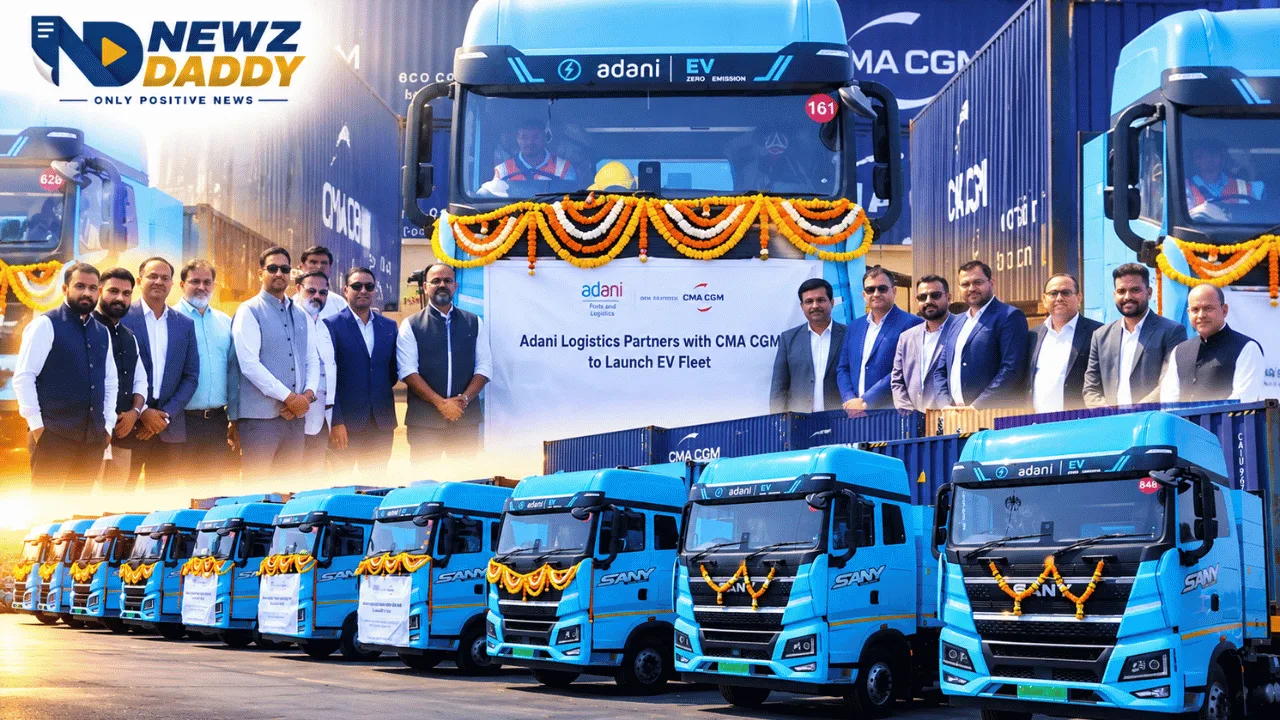
Electric Trucks Join Adani Logistics’ Container Delivery Fleet
Adani Logistics and CMA CGM Bring Electric Trucks to Gujarat’s Container Freight Network
Adani Logistics Limited (ALL), part of Adani Ports and Special Economic Zone Limited (APSEZ), has joined hands with global shipping group CMA CGM to introduce electric trucks for container deliveries from its Inland Container Depot (ICD) at Tumb, Vapi, in Gujarat. The service will use electric vehicles to move shipping containers from the depot to customers’ factories and warehouses, bringing battery-powered transport into a part of the freight chain that relies heavily on diesel trucks.
CMA CGM is the first shipping line to use the newly deployed electric trucks. Its containers formed the first consignment moved during the flag-off ceremony. The number of trucks deployed, their carrying capacity, the charging arrangements and the expected annual reduction in emissions have not been disclosed in the information available for this announcement.
The deployment forms part of what the companies describe as India’s largest truck fleet for container movement. It extends the use of electric vehicles beyond passenger transport and urban delivery services into the movement of goods between inland logistics facilities and industrial customers.
The Inland Container Depot at Tumb, near Vapi, handles containers moving through the wider port and industrial network. Such depots allow importers and exporters to manage container-related work away from seaports, helping connect factories and warehouses with shipping services.
Adani Logistics acquired the Tumb facility from Navkar Corporation in 2022. The depot is positioned between Hazira port and Jawaharlal Nehru Port, also known as Nhava Sheva, and serves industrial areas in Gujarat and neighbouring Maharashtra. Its location gives businesses access to port-linked transport and container handling services.
For manufacturers, the road journey between a depot and a factory can form a regular part of the supply chain. Containers carrying imported materials may travel to production sites, while goods prepared for export move in the opposite direction towards shipping networks.
Under the store-door delivery model, containers are taken by road from the depot directly to customers’ premises. Electric trucks will perform this part of the journey under the new arrangement. Their use on regular delivery routes could help operators assess how battery-powered vehicles perform under actual freight conditions.
The companies have not provided details of the routes covered, the distance travelled by each truck or whether the vehicles will operate on fixed daily schedules. Such information would help establish the scale of the deployment and its effect on transport costs.
India depends heavily on road transport to move goods between factories, distribution centres, warehouses and ports. Diesel trucks remain widely used because they can cover long distances, refuel quickly and carry heavy loads. Their fuel use also makes road freight a major source of transport-related pollution.
A report released by the Office of the Principal Scientific Adviser to the Government of India in July 2025 examined the possible effects of adopting battery-electric trucks. It found that medium and heavy-duty trucks account for nearly 70 per cent of India’s logistics operations. The report also identified the sector’s heavy fuel consumption and emissions as reasons to expand the use of cleaner vehicles.
Electric trucks produce no exhaust emissions from their tailpipes while operating. Replacing diesel vehicles with battery-powered alternatives can therefore reduce pollution along roads used for freight movement, including routes near industrial areas and busy transport corridors.
The climate benefit depends partly on how the electricity used to charge the vehicles is generated. Charging with electricity from renewable sources can deliver greater emissions savings than relying on power generated mainly from fossil fuels. Manufacturing batteries and vehicles also creates emissions, which need to be considered when measuring the full environmental effect.
The scale of the benefit from the Tumb deployment cannot yet be measured because the number of trucks, their mileage, electricity consumption and diesel vehicles displaced have not been made public.
Electric trucks face practical challenges that differ from those encountered by electric cars. Heavy loads can increase energy use, while battery size affects vehicle weight and the amount of cargo that can be carried. Charging time and access to suitable charging points can also affect how many deliveries a truck completes in a working day.
These factors matter in container transport, where delivery schedules often depend on the availability of vehicles, drivers and loading facilities. Operators must plan charging around delivery requirements to avoid delays.
Purchase prices can also be higher than those of comparable diesel trucks. Savings on fuel and maintenance may help recover the extra cost over time, but the result depends on vehicle utilisation, electricity tariffs, financing and repair expenses.
Research by the International Transport Forum at the Organisation for Economic Co-operation and Development has examined the conditions needed for wider adoption of zero-emission trucks in India. Its work points to the need for suitable charging infrastructure, workable financing arrangements and policies that support the shift away from diesel.
The Indian government has also introduced support for electric trucks under the PM E-DRIVE scheme. Announced in July 2025, the dedicated incentive programme covers eligible medium and heavy electric trucks, subject to its rules and conditions.
The Adani Logistics and CMA CGM arrangement adds an industry example to these wider efforts. Its longer-term value will depend on how well the vehicles perform in routine container deliveries and whether operators can expand their use at a commercially workable cost.
For Gujarat’s industrial customers, cleaner freight services could offer a way to reduce the pollution linked to goods movement. The next measure of progress will be operational evidence, including the distance covered, delivery reliability, charging needs and emissions saved. Those figures will help show whether the Tumb deployment can support wider use of electric trucks in India’s container transport sector.